


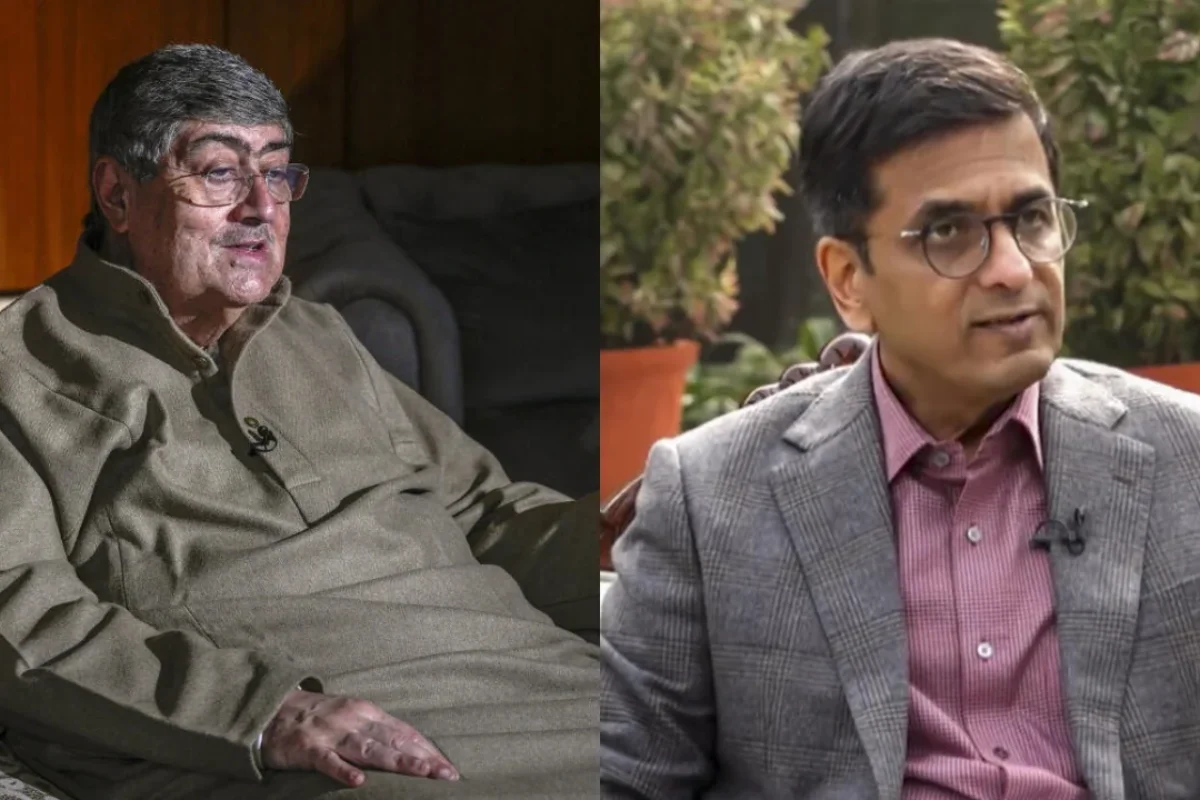
Justice Sanjay Kishan Kaul, who has returned to the Supreme Court after a five-year stint on the panel of 25 judges that hears petitions on appointments and transfers, has thrown light on why he went after the former CJI DY Chandrachud in interviews and why he believes the judiciary should take all appointment decisions and approach the government in these matters only after self-correction and self-rectification.
Why does Justice Sanjay Kishan Kaul criticize DY Chandrachud?
Kaul argues that Chandrachud changed the approach to appointments of judges in the Court during his time as chief justice. Kaul writes about a controversy over the manner in which the Supreme Court Collegium ought to recommend and deal with the government in his book Without Fear or Favour. Kaul said the Collegium should consider appointments on its own before communicating recommendations to the government. “How can you discuss with the government, when the matter hasn’t been finalised by the Collegium? How does one know when the discussions are over?” he questioned. In an interview to India Today, Kaul had earlier clarified that he was not implying Chandrachud’s performance and expertise but only questioning whether he should have been appointed as a judge.
What Shapes Judicial Appointments in India?
Court judges are appointed by a Collegium which is a body of senior judges who makes recommendations for the appointment and transfer of Supreme Court and high court judges. The government considers the recommendations before taking a decision. Kaul maintains the collegium must screen candidates and form its own opinions before seeking the go ahead from the government. Discussions with the administration should come after the constitution of the collegium and the sanctified use of the recommendations. He has also stated that it can be argued that government will always prefer judges with the same values as themselves. This, he stated, is the reason why it is necessary to maintain judicial independence and the separation between judicial and political decision-making.
Justice Kaul Turns Praise on UU Lalit
Separately, Kaul has lauded former Chief Justice of India UU Lalit, who presided over the bench for less than three months in 2022. The quotes refer to Lalit’s reform of the manner in which cases were allocated in the Supreme Court. By Kaul’s own account, Lalit had attempted to list a set of cases and had excluded cases marked sensitive to avoid being on the regular hearing list. Kaul questioned why so many cases were marked sensitive and emphasized on getting the matter to the courts. But case listing and allocation is an important administrative matter as it determines the hearing date of a case and also as to which benches will hear the matter.
DON'T MISS
The Collegium System and the Government’s Role
The dispute has triggered fresh conversations on the powers of the judiciary and the executive in judicial appointments. Though the collegium system has been established to preserve judicial independence, the long delays in clearing recommendations and leadership debates over candidates have fostered persistent doubts. Kaul said the judiciary should be willing to defend its own recommendations and justify its rulings. His remarks also set off debate on whether the current system provides enough transparency and accountability. The controversy is not between two individual judges but also involves the institutional question of how India can guarantee an independent judiciary that makes appointments without delay and a process that earns public trust.
DY Chandrachud’s Response to the Criticism
Chandrachud has a fresh view on the functioning of the collegium. He relied on resolutions passed by the collegium and said the collegium’s recommendations during the period in question were unanimous. These stark differences in versions also serve to illustrate the divergent attitudes of the former senior judges about the appointment process and the degree of interaction with the government. They also demonstrate the value of comparing the recollections of individuals with official records.
The Importance of Justice Kaul’s Comments
Kaul’s remarks have brought the spotlight back onto judicial appointments at a time when public attention is still focused on the topic, given the issues around independence, accountability, and delay in the higher judiciary. By criticizing how Chandrachud runs cases and by lauding how Lalit runs cases, is he itself demonstrating the impact of varying judicial styles on the management of cases and judges? In the end, it all comes down to one question: how can the process for appointing judges be independent, transparent, and speedy, but at the same time sustain the correct equilibrium between the judiciary and the government? This debate will probably go on as legal analysts dissect Kaul’s version, Chandrachud’s response, and the general concern over the process of collegium.