

India’s security story is not only about powerful weapons. It starts with a jawan at a remote border outpost and ends with a missile on a launcher. Two recent developments show how both ends are getting stronger.
Sashastra Seema Bal: Guarding India’s Open Borders
The Sashastra Seema Bal (SSB) guards the open borders with Nepal and Bhutan, a stretch of roughly 2,450 km. The force was raised in 1963, after the 1962 conflict with China.
DON'T MISS
These borders are open by design, and the traffic is huge. Over 46,000 vehicles and more than 3.25 lakh people cross the Nepal border every day. A wall cannot solve that, so the SSB relies on smart monitoring. It now uses drones, handheld thermal imagers, and CCTV with face and number-plate recognition. Over the last decade, about ₹5,000 crore has been allocated for its modernisation.
Pralay Missile: Precision Power for the Armed Forces
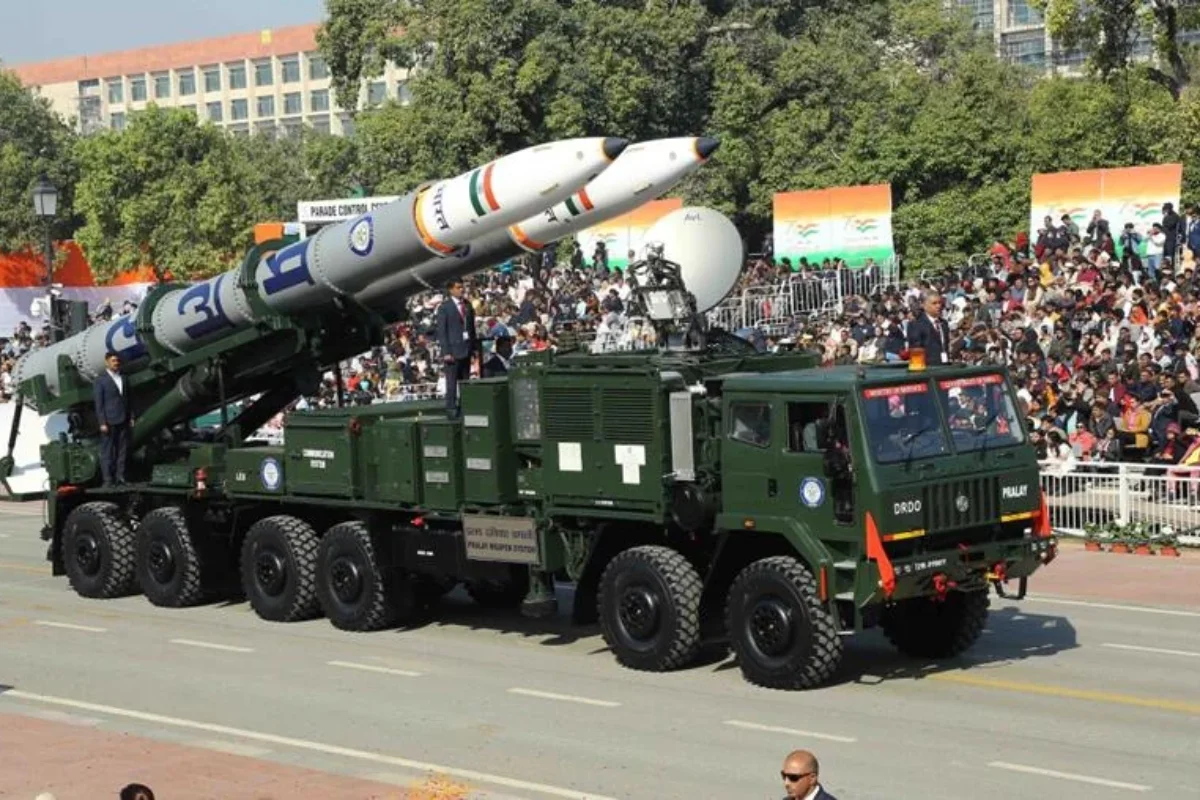
On 5 November 2026, DRDO flight-tested the indigenous Pralay missile off the Odisha coast, and the Defence Minister said all trial objectives were met. The test moves the missile closer to operational deployment.
Pralay is a short-range, solid-fuel, quasi-ballistic missile with a reported range of around 150 to 500 km. Because it can alter its path in flight, it is harder for an enemy to intercept. Earlier, two Pralay missiles were fired in quick succession from the same launcher, showing it can strike in salvos. It is developed by DRDO’s Research Centre Imarat and manufactured by Bharat Dynamics Limited, so it is made in India.
Should China and Pakistan Worry?
Both countries will certainly take note, but the answer is more about deterrence than war. Pralay is a conventional missile, meaning it carries regular explosives, not nuclear warheads. It gives India a way to hit military targets quickly without climbing the nuclear ladder. One commentator calls this a shift from a reactive posture to proactive, precision punishment.
China and Pakistan have strong missile forces of their own, so this is not a one-sided race. The practical message is that any border adventure would now carry a higher cost.
Why This Matters to Ordinary Citizens
Strong security is not just a military matter. Safer borders mean smoother trade, protected villages, and fewer smuggling and infiltration risks. Homegrown weapons reduce dependence on imports and create jobs in India.


