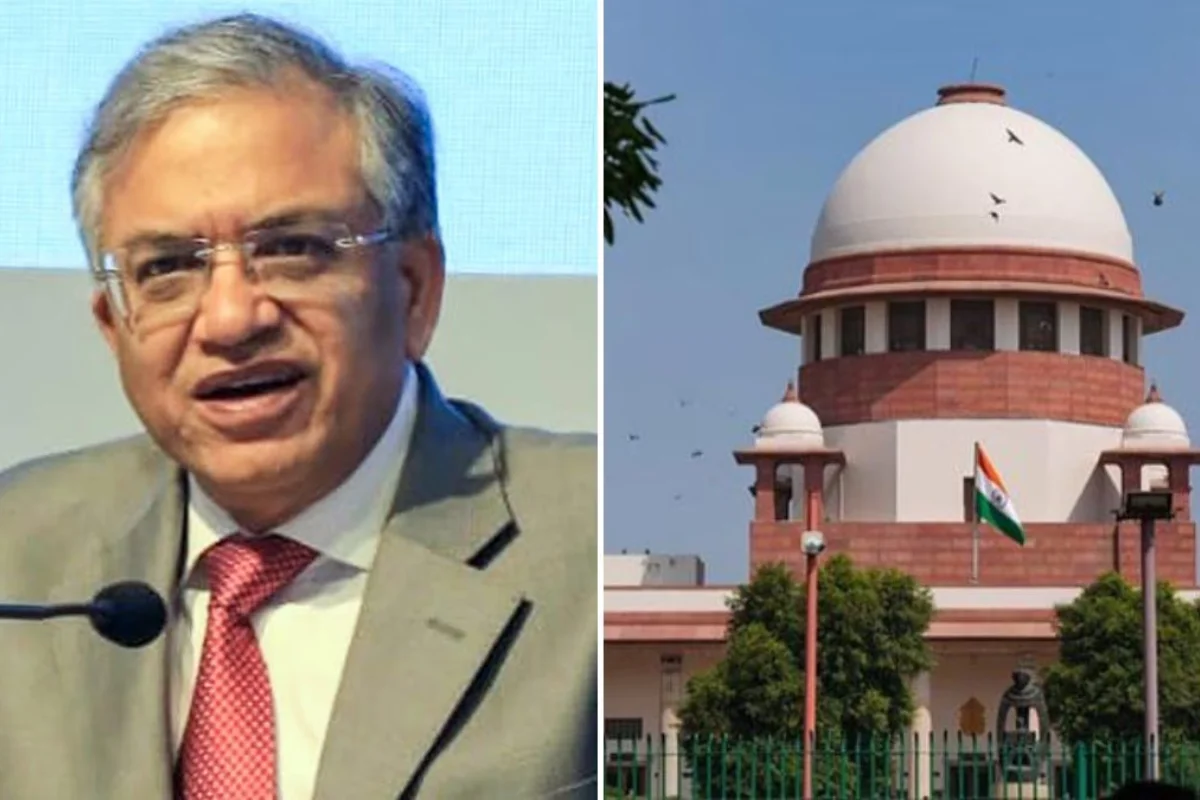
Gyanesh Kumar, Chief Election Commissioner of on at Election Commission of India (ECI), is being tested anew by the courts as the Supreme Court is hearing petitions questioning decisions taken during his tenure.
What is the Supreme Court examining?
A three-judge bench led by Chief Justice Surya Kant, comprising Justices Joymalya Bagchi and V. Mohana, is hearing the petitions challenging the functioning of the ECI (Election Commission of India) headed by Gyanesh Kumar. One of the key points raised in the petition is whether the CEC is authorized to take all the decisions single-handedly that were ostensibly to be taken by the ECI in a multi-member body. According to the petitions, they are challenging certain proceedings in the national SIR exercise and demand examination of decisions, rules, and changes in technology that have been introduced without the consent of the other Election Commissioners.
DON'T MISS
Why is Gyanesh Kumar being criticized?
As the controversy deepened with news that two Election Commissioners, Sukhbir Singh Sandhu and Vivek Joshi, had filed dissent notes at least 14 times on orders and decisions related to the SIR process, petitioners have pointed to these documented dissent decisions as evidence that the commission had flown in the face of its usual collective decision-making. But the fight is not over. The Election Commission has argued that its objections were administrative and questioned the process adopted by it. The Supreme Court hearing thus is important as it can reveal the applicability of the multi-member Election Commission mandated in the Constitution to the choice of big decisions.
The larger SIR controversy
The SIR process is about the update and audit of electoral rolls. Opponents have questioned whether all legitimate voters are included in the rolls, but the Election Commission of India (ECI) has described the process as a verification to ensure the validity of the rolls. The Supreme Court is now examining the petitions, how the poll panel operates, and what legal powers are enjoyed by the CEC, which also come under scrutiny.