
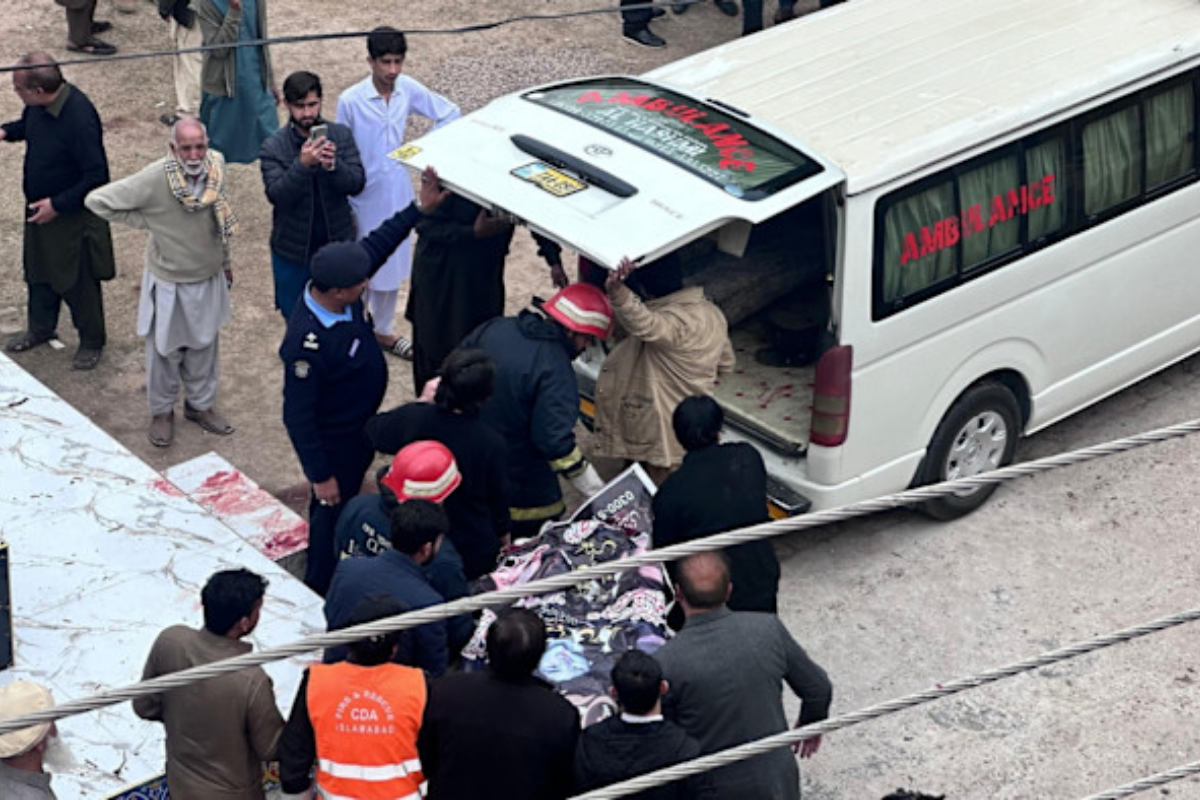
A devastating suicide bombing tore through a Shia mosque in Islamabad’s Tarlai Kalan area on February 6, 2026, killing at least 31 worshippers and injuring more than 160 others during Friday prayers. The attack, one of the deadliest in the Pakistani capital in recent years, has intensified scrutiny of Pakistan’s internal security and counterterror framework.
Suicide Attack During Friday Prayers
According to security officials, the attacker first opened fire on guards stationed outside the mosque before entering the prayer hall and detonating an explosive vest amid the congregation. The blast caused widespread devastation, overwhelming emergency services and nearby hospitals. Medical facilities issued urgent appeals for blood donations as rescue teams worked through scenes described by witnesses as chaotic and gruesome.
DON'T MISS
ISIS Claims Responsibility
The Islamic State (ISIS) claimed responsibility for the bombing through its propaganda channels, identifying the attacker as a Pakistani national with a history of travel to Afghanistan. Authorities have linked the attack to ISIS networks operating in the region, reinforcing concerns about the group’s continued ability to strike high-profile targets despite repeated security operations.
Pressure Mounts on Pakistan’s Leadership
The attack has placed Prime Minister Shehbaz Sharif and Army Chief General Asim Munir under intense pressure, coming after another major security incident in Islamabad. Critics argue that repeated attacks in the capital expose serious intelligence lapses and raise questions about the effectiveness of Pakistan’s counterterrorism strategy.
While there have been no official accusations against India in connection with the February 2026 bombing, past attacks in Islamabad have seen Pakistani leaders point fingers at “external proxies” without presenting evidence.
India’s MEA Pushes Back
India’s Ministry of External Affairs has rejected such allegations as baseless, stating that they are often used to divert attention from Pakistan’s internal security failures. In this case, no fresh statement has been issued by New Delhi, with investigators clearly attributing the attack to ISIS-linked elements rather than cross-border involvement.