

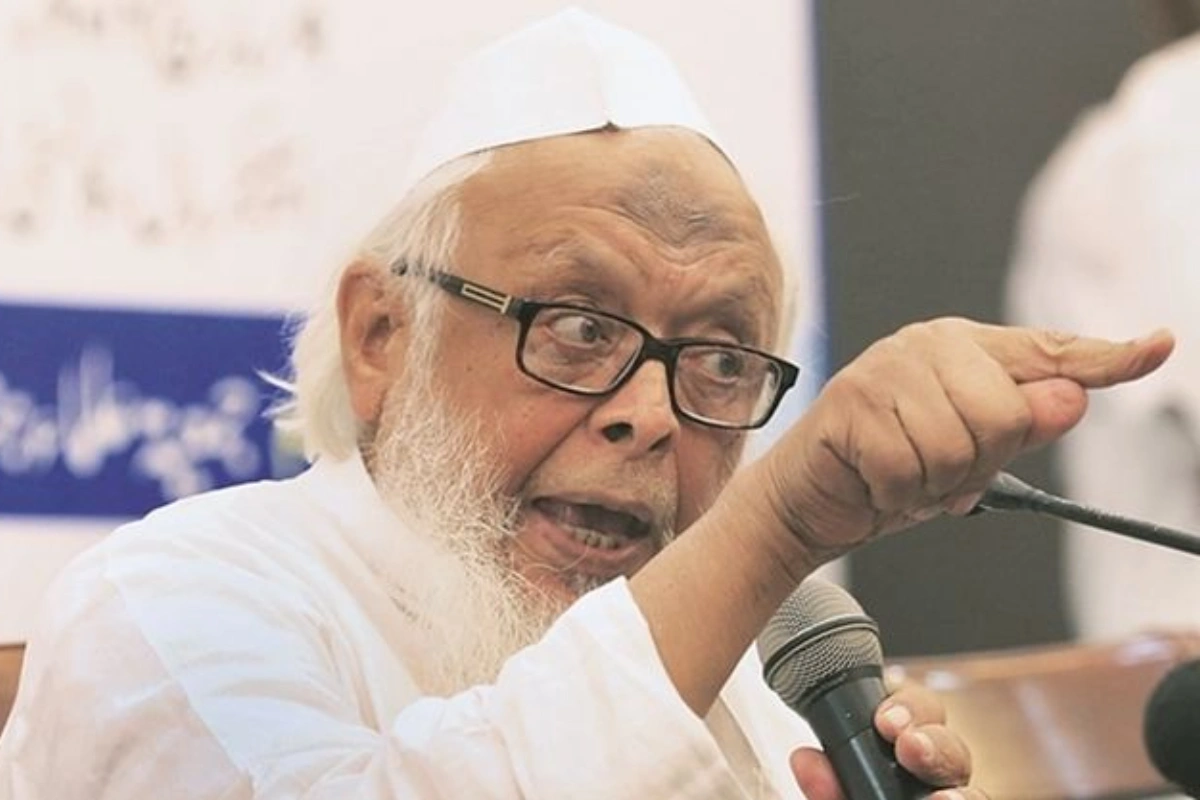
Maulana Arshad Madani, who is the president of Jamiat Ulama-i-Hind, strongly opposes the idea of making Vande Mataram compulsory. He said, “Muslims may not object to others singing it, but they cannot recite it themselves.”
Madani’s point of view is that the phrase “Vande Mataram,” which translates to “Mother, I worship you,” contradicts Islamic principles, and according to him, saying that a nation is comparable to gods like Durga is shirking, which Islam does not allow.
Cites Constitutional Rights
Madani specified that India’s Constitution provides freedom of religion under Article 25 and freedom of expression under Article 19. He explained that no citizen of India should be made to do something that is against their religion. According to him, patriotism is not measured by one’s ability to sing a song.
He has also warned that if anyone tries to impose it by means of mandate, it might even face judicial examination.
BJP Hits Back in Parliament
The BJP leaders quickly reacted to Madani’s statements during the debates to mark the 150th anniversary of Vande Mataram. They claimed that Madani was using similar Muslim League rhetoric by advocating those statements. They argued that Vande Mataram is a symbol of India’s freedom struggle.
The BJP has also charged earlier state governments with “appeasement politics,” claiming that Vande Mataram is a part of national unity and not division.
Political and Social Debate Continues
The topic has polarised the political climate in late 2025 as each side seeks to position the debate according to their values of national identity. Although the song is an emblem of patriotism for one side, the other contends that coercion here threatens to compromise the secular identity of India.
As discussions are held, the controversy continues to demonstrate the balance struck between national symbols and religious freedom in a diverse democracy.


