

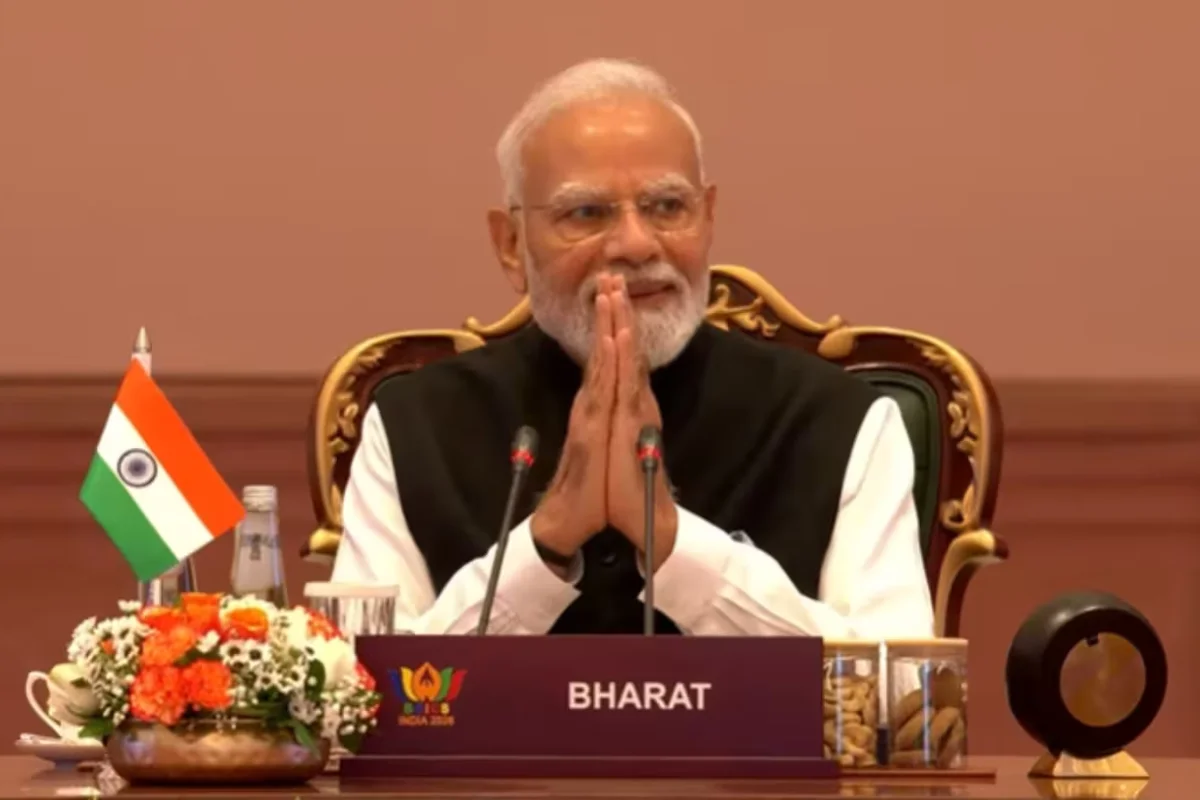
PM Modi: Prime Minister Narendra Modi has completed 25 years in government leadership, marking a political journey that began as Gujarat Chief Minister in 2001 and continued with his tenure as Prime Minister from 2014. On October 6, 2026, the Union Cabinet passed a resolution marking the milestone and highlighting reforms across banking, infrastructure, technology, welfare and manufacturing. Beyond the political significance, the period has also brought changes to several everyday systems.
Banking moved closer to ordinary households
One of the biggest changes came through the Pradhan Mantri Jan Dhan Yojana, launched in 2014 to expand financial inclusion. The program aimed to bring people without bank accounts into the formal financial system and connect them with savings accounts, credit, insurance, and pension services. The scale of the program has grown considerably. Government data shows that Jan Dhan accounts increased from 14.72 crore in 2015 to 57.71 crore by March 2026, while deposits rose to ₹2.94 lakh crore.
DON'T MISS
UPI changed the way India pays
If banking expanded access, UPI changed the experience of making payments.The Unified Payments Interface made it possible for users to transfer money directly between bank accounts using mobile applications. Small businesses, street vendors, and consumers increasingly adopted QR-code payments, reducing dependence on cash for everyday transactions. UPI has since developed into a major part of India’s digital public infrastructure. Government data cited by NDTV shows that UPI recorded more than 24,162 crore transactions during 2025-26.
Infrastructure shifted towards bigger and faster networks
Physical infrastructure has been another defining part of the period. The government has significantly increased public capital expenditure while expanding highways, railways, and other transport networks. The Union Cabinet’s latest resolution noted that public capital expenditure had risen from around ₹2 lakh crore to more than ₹12 lakh crore during the period highlighted by the government. Road expansion, railway electrification, metro networks, and regional air connectivity have also changed how people and goods move across the country.
Digital connectivity became part of everyday life
PM Modi: India’s transformation has also taken place through smartphones and Internet access.The Digital India program, launched in 2015, sought to make government services more accessible through technology. BharatNet has expanded broadband connectivity into rural areas, while platforms such as DigiLocker and Aadhaar have reduced the need for physical documents and repeated visits to government offices. By January 2026, around 2.15 lakh Gram Panchayats had been connected under BharatNet, with nearly 7 lakh kilometers of optical fibre laid across the country.


