


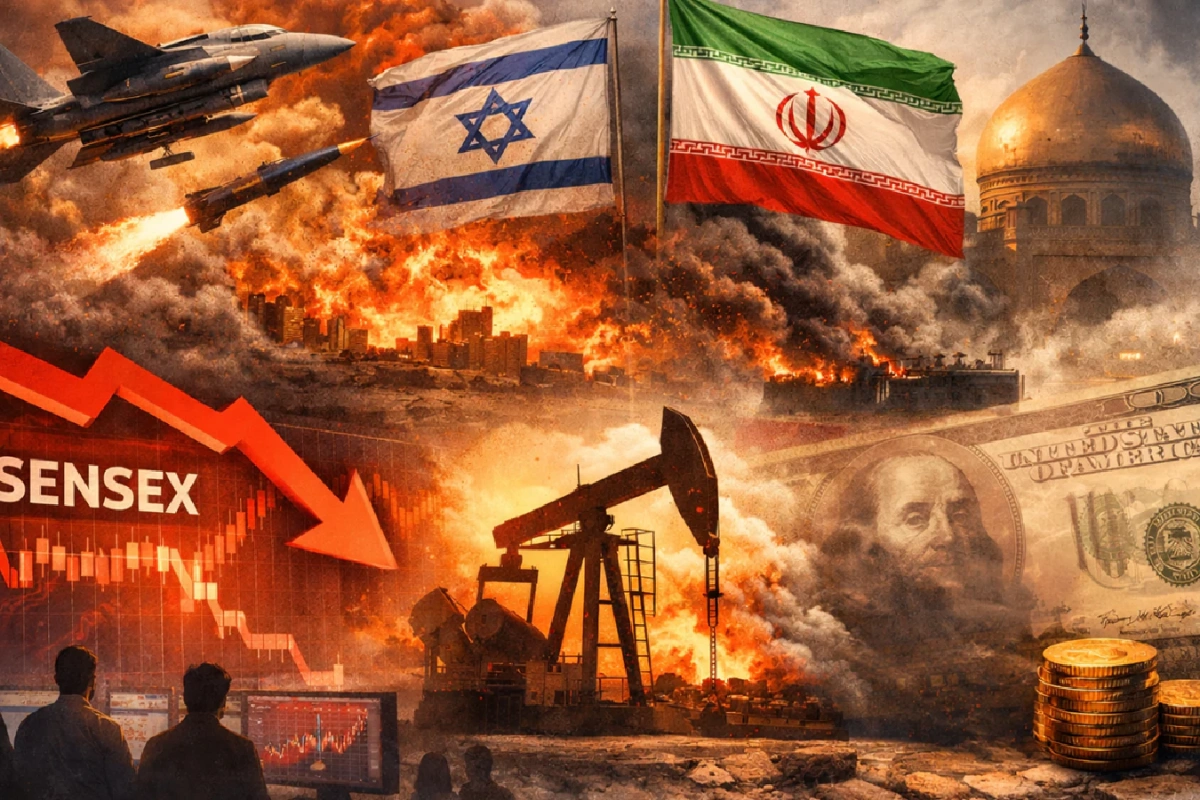
US Israel Iran War: For billions of Indians, the ongoing Middle East crisis is no longer just a distant war. The US Israel Iran war is now severely hitting the economy of India as the Indian Rupee has now fallen to a historic law of Rs. 93 against the United States dollar. This has now triggered massive fears of rising costs, inflation and financial stress for India’s common man.
US Israel Iran War-Impact On Indian Rupee
With a weakening Indian Rupee, India would now require more dollars to buy expensive crude oil. The primary reason why the country is so vulnerable to oil and gas shortage is because India is heavily reliant on imports for energy. Approximately 80-85 percent of India’s crude oil requirements are imported.
DON'T MISS
High oil prices would translate to higher imports, resulting in a weaker rupee and higher inflation in the country.
How Common Man Will Get Impacted?
Oil imported by India is priced in United States dollars. A weak Indian rupee would translate to costlier fuel imports, translating into increased petrol, diesel and LPG prices in the country.
A weak Indian rupee would result in an increase in food prices, delivery charges and tighter household budgets. For foreign travel and overseas education, this would mean increased costs for studying abroad and costly hotel stays & travel tickets for overseas travel.
This would also translate to costlier imports and electronics such as electrical appliances, smartphones, laptops, car parts and batteries, televisions and air conditioners. Inflationary push could force the Reserve Bank of India to increase interest rates leading to an increase in home loan EMIs and costlier personal loans.
A weak Indian rupee could “force” foreign investors to pull money out of India, resulting in high market volatility and unstable markets. Jobs and businesses in India may get impacted as companies would face higher costs, resulting in hiring slowdown and pressure on small businesses.
In the immediate short term, the Union Government would deploy a series of tools to control inflation to ensure Indian economy is relatively stable. RBI intervention is also likely and it may resort to the sale of US dollars. However, risks could prevail if war continues for long. It could then lead to supply disruptions, continuous rupee fall and prolonged high oil prices.