


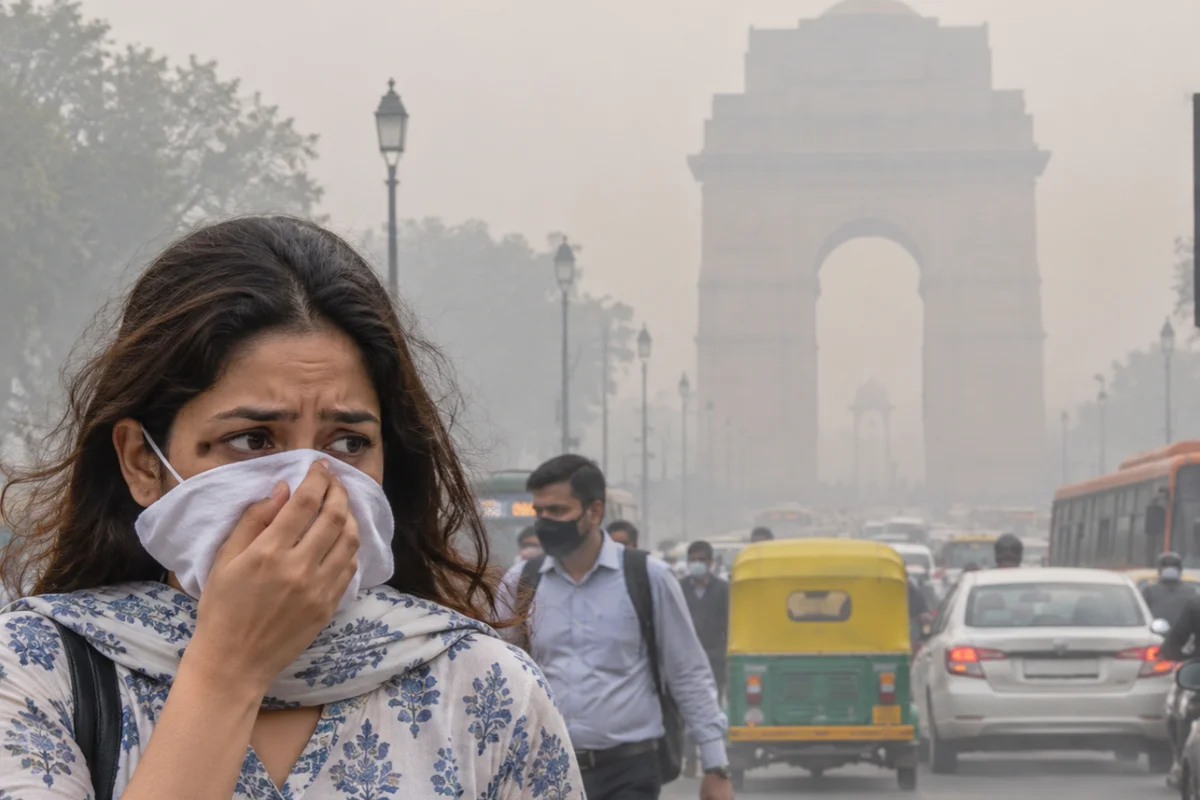
Delhi woke up to another smoggy morning on Saturday, November 21. The overall Air Quality Index (AQI) was 279 at 7 am, in the ‘poor’ category, according to the Central Pollution Control Board (CPCB).
Delhi AQI Today
Several stations recorded ‘very poor’ air. AIIMS logged 369 and Chandni Chowk 365. Wazirpur stood at 332, Anand Vihar at 327 and IIT Delhi at 308. CPCB classifies an AQI of 301 to 400 as ‘very poor’ and 401 to 500 as ‘severe’.
DON'T MISS
Why Polluted Air Hits Children Hardest
Children breathe faster, and their lungs and immune systems are still developing. Former WHO chief scientist Soumya Swaminathan has warned that air pollution can stunt lung development and affect learning capacity. Doctors also report children developing asthma-like symptoms and prolonged respiratory infections in smoggy weeks.
5 Things That Reduce The Risk
1. Check the AQI daily. Look at CPCB or a reliable app before sending children outdoors, and keep them indoors on high-AQI days.
2. Move play indoors. Doctors advise avoiding morning and evening outdoor activity, when pollutants peak, and shifting exercise indoors.
3. Use a well-fitted mask outside. Doctors recommend properly fitted N95 masks for outdoor trips. Ask your paediatrician about the right option for younger children.
4. Clean the air at home. A HEPA purifier in the child’s bedroom can cut indoor PM2.5 and lower night-time exposure. Keep windows closed on bad-air days.
5. Watch symptoms and keep medication handy. Persistent cough, wheezing, breathlessness or throat irritation needs a doctor’s attention. Children with asthma should continue prescribed medicines. A nutritious diet and plenty of fluids also help.
What Authorities Are Doing
According to the early warning system, Delhi is currently under GRAP Stage 1 restrictions. Earlier this season, outdoor sports were postponed, and primary classes shifted to hybrid mode to limit children’s exposure.