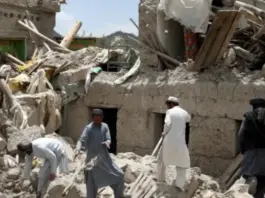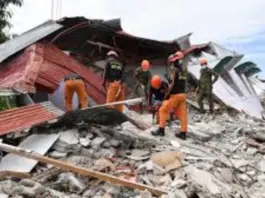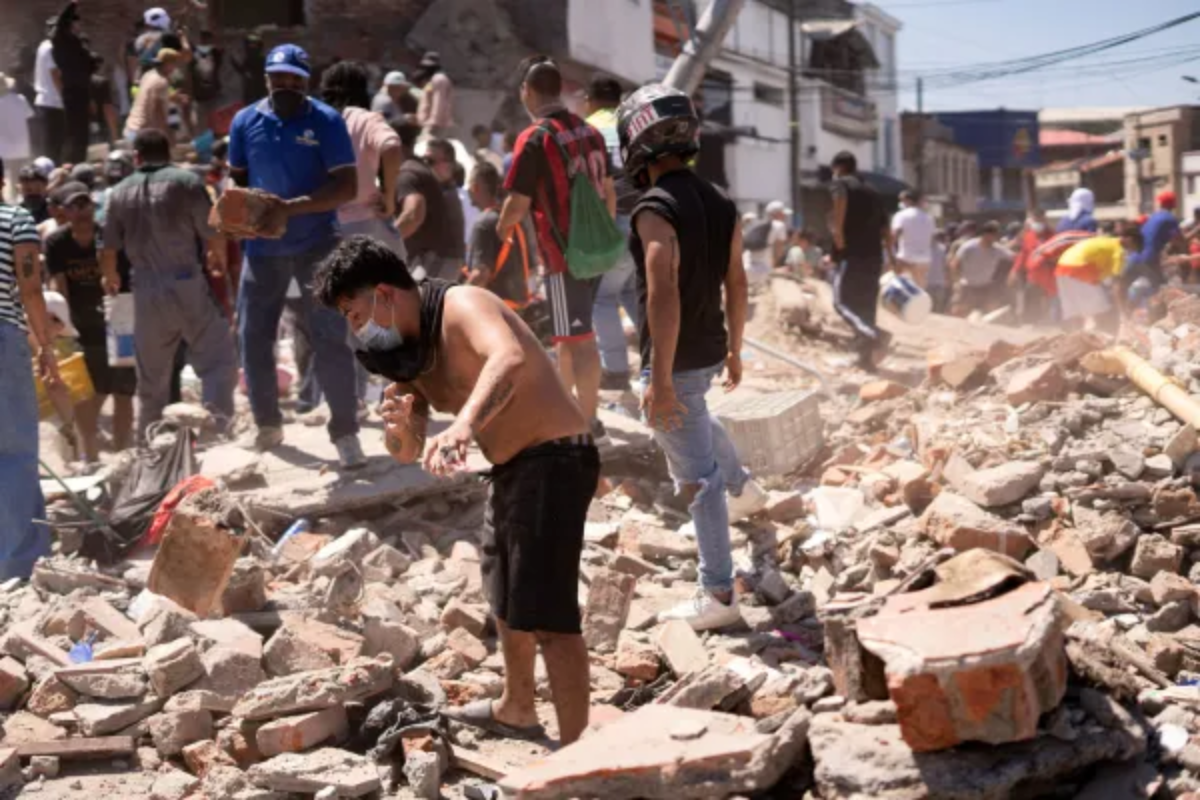
A powerful earthquake has struck western Colombia, leaving behind a trail of destruction and grief. The magnitude 7.4 quake hit early Monday morning, and the death toll has already crossed 130, with hundreds more injured. It is being called one of the strongest earthquakes to hit the country in decades.
Where and When the Earthquake Struck
The quake originated near San José del Palmar, a small town in Colombia’s Chocó region, roughly 250 miles west of the capital, Bogotá. It struck deep underground, at a depth of over 60 miles, which is one reason its shaking was felt across a huge area, including neighboring Ecuador and Panama. Cities like Cali, Pereira, Quibdó, and Manizales bore the brunt of the damage.
Rising Death Toll and Widespread Damage
According to local authorities, more than 130 people have died so far, and over 500 have been injured. The city of Pereira alone reported dozens of deaths. Nearly 90 buildings have collapsed nationwide, and several airports were forced to suspend flights. In Cali, close to 190 people are still reported missing, and rescue crews are digging through rubble in hopes of finding survivors.
DON'T MISS
Government and Emergency Response
Colombia’s newly sworn-in president declared a national state of emergency within hours of the quake, promising that every available resource would go toward rescue operations. Five major cities are currently under a red alert. The United States has already pledged over $15 million in aid for shelter, food, and emergency assessments, and is also assisting American tourists caught up in the disaster.
Why This Earthquake Is So Dangerous
Colombia sits on the Pacific Ring of Fire, a zone known for frequent earthquakes and volcanic activity. Experts warn that dozens of aftershocks could continue to rattle the region in the coming days, making rescue work even riskier. Officials have also not ruled out the possibility of the casualty count climbing much higher as more areas are reached. Some geological agencies estimate there is a real chance the disaster could eventually be counted among the deadliest in the country’s modern history, drawing comparisons to a devastating 1999 earthquake that struck the same coffee-growing region.
Relief Efforts and the Road to Recovery
Communication remains difficult in several rural areas, which is slowing down accurate damage assessments. Power outages, blocked roads, and unstable buildings are all complicating relief efforts on the ground. Aid organizations are now working alongside the government to set up temporary shelters for the thousands of people who have lost their homes.
As search-and-rescue teams continue working around the clock, the coming days will be critical in determining the true scale of this tragedy. We will continue to update this story as new information becomes available.