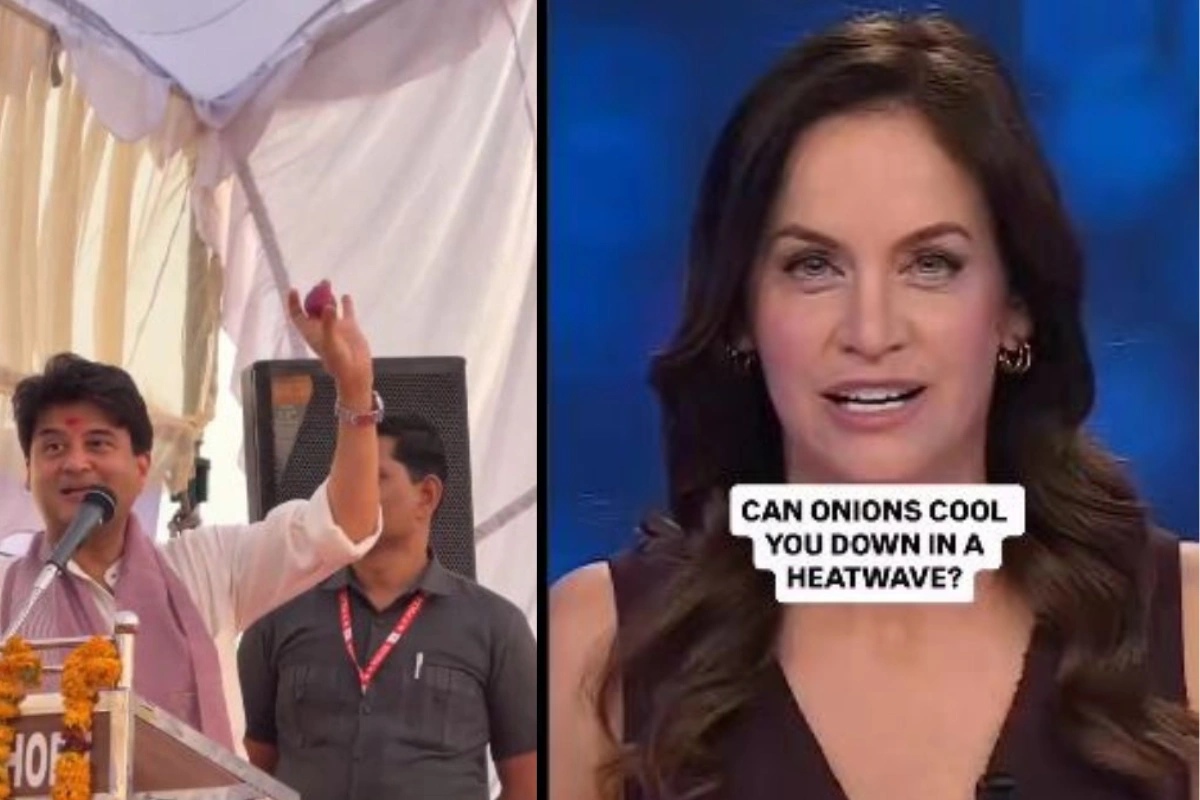
Jyotiraditya Scindia: Former Rajya Sabha member Priyanka Chaturvedi has taken a dig at Jyotiraditya Scindia, the Minister of Communications of India, on how he uses onions to cope with extreme heat while avoiding air conditioners.
Turn Of Events
Priyanka Chaturvedi shared a video of a foreign journalist who could be seen mocking the thought of Jyotiraditya Scindia to keep an onion to stay cool during heat waves.
In the now viral video, a foreign journalist could be seen framing the minister’s statement as a symbol of outdated or unscientific approaches to a real and escalating environmental threat.
Jyotiraditya Scindia Remark: Personal Habit Or Wrong Public Messaging?
In a rally, Jyotiraditya Scindia remarked that he does not use air conditioner in his car and does not like to sit in an air-conditioned environment.
Scindia had remarked that he carries an onion to beat the heat in summer. While the comment may have been intended to project personal resilience or a grounded lifestyle, its reception reveals disconnect between anecdotal practices and public health realities.
The Onion Myth: Cultural Belief Versus Scientific Evidence
The idea that onions can protect against heatstroke is not new. It is rooted in traditional beliefs across parts of India, where onions are often associated with “cooling” properties. Some households encourage carrying or consuming onions during peak summer months, believing they help regulate body temperature. However, modern science offers little support for this claim.
From a physiological standpoint, heatwaves affect the body by overwhelming its natural cooling mechanisms, primarily sweating and circulation. Preventing heat-related illnesses requires maintaining hydration, avoiding prolonged exposure to high temperatures, and ensuring adequate ventilation or cooling. Onions, whether carried in a pocket or consumed in meals, do not influence these mechanisms in any meaningful way.
Nutritionally, onions do contain water and certain antioxidants, but these attributes are not unique or potent enough to counteract extreme heat stress. The body’s thermoregulation system is far more complex, relying on fluid balance, electrolyte levels, and environmental conditions. The suggestion that an onion can serve as a protective tool risks is nothing less than diverting attention from proven strategies such as drinking water, using cooling shelters and recognizing early symptoms of heat exhaustion.
Medical experts emphasize that heatwave preparedness must be grounded in evidence-based practices. The perpetuation of myths, even if culturally ingrained, can be dangerous when they create a false sense of security. In extreme conditions, relying on ineffective remedies can delay critical interventions, increasing the risk of severe outcomes.