


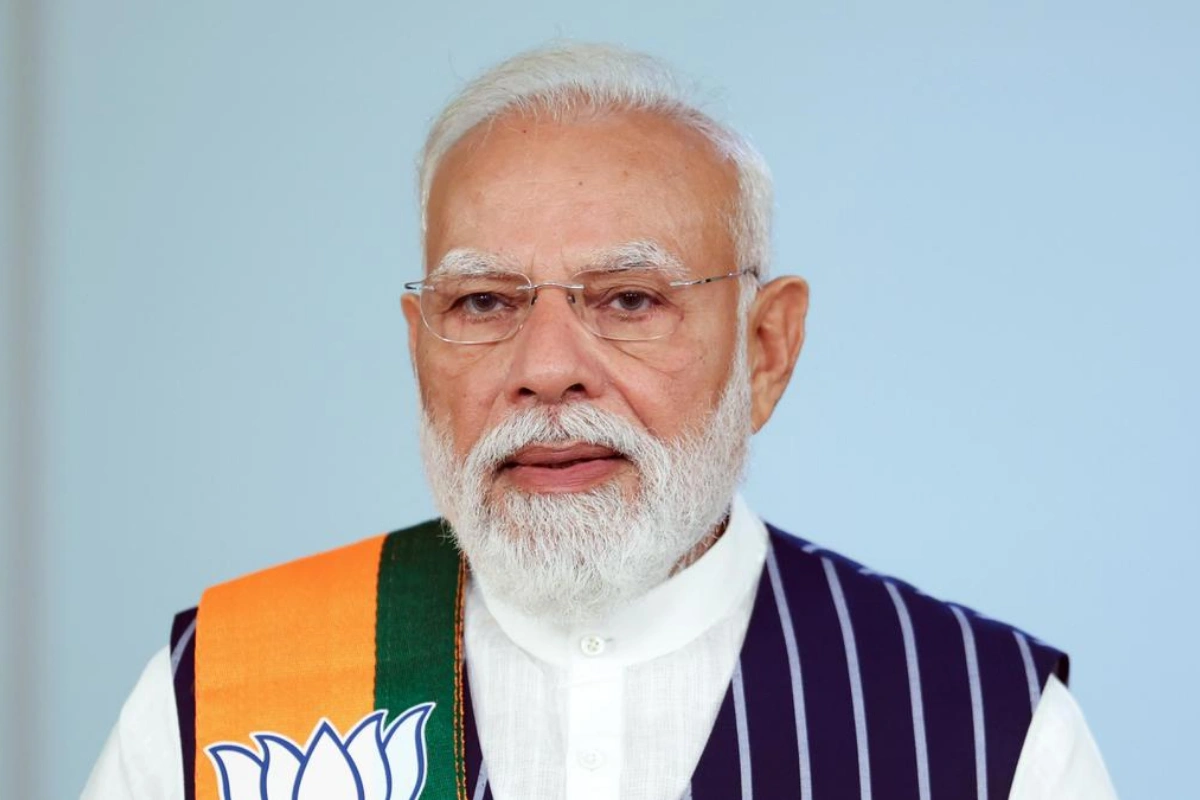
Narendra Modi: Indian Prime Minister Narendra Modi has remarked that the Union Government is actively pursuing positive and serious discussions to implement the ‘One Nation, One Election’ (ONOE) and the Uniform Civil Code (UCC).
Narendra Modi-ONOE And UCC Implementation
Speaking on the occasion of the 47th Foundation Day of the Bharatiya Janata Party (BJP), Modi remarked that our mission to implement UCC and ONOE is still ongoing so that we could together build a developed India, a self-reliant India and a powerful India for which each one of us have to work relentlessly and selflessly.
DON'T MISS
UCC is one of BJP’s three ideological issues. The ruling party has already fulfilled the remaining two in the form of a Ram Temple in Ayodhya and the abrogation of Article 370. Till now, Uttarakhand and Gujarat have rolled out UCC.
Modi lauded the initiatives taken by the NDA government since 2014. This included a nationwide ban on instant triple talaq via legislation, reservations for economically weaker sections (EWSs), the construction of a new Parliament building, and powerful reply to Pakistan during Operation Sindoor, India’s diplomatic efforts and the construction of the Ram Temple.
Would Implementation Trigger A National Firestorm?
Envisioned under Article 44 of the Indian Constitution, the Uniform Civil Code seeks to replace personal laws based on religion with a common set of laws governing inheritance, adoption, marriage, divorce and more for every citizen of the country.
The government’s contention is that it would strengthen national integration, brotherhood and gender justice. On the other hand, several communities such as the Muslims perceive these laws as an interference to their religion and hence discriminatory.
In contrast, the One Nation One Election would help synchronize elections for the Lok Sabha and all state assemblies. Frequent elections disrupt governance, impose significant financial costs and strain administrative resources. A unified electoral cycle would help in improving the concept of policy continuity and allow governments to stay focused on long-term development rather than perpetual campaigning. Critics argue that regional issues could get diluted by simultaneous elections, overshadowing them with national narratives dominated by larger parties.