


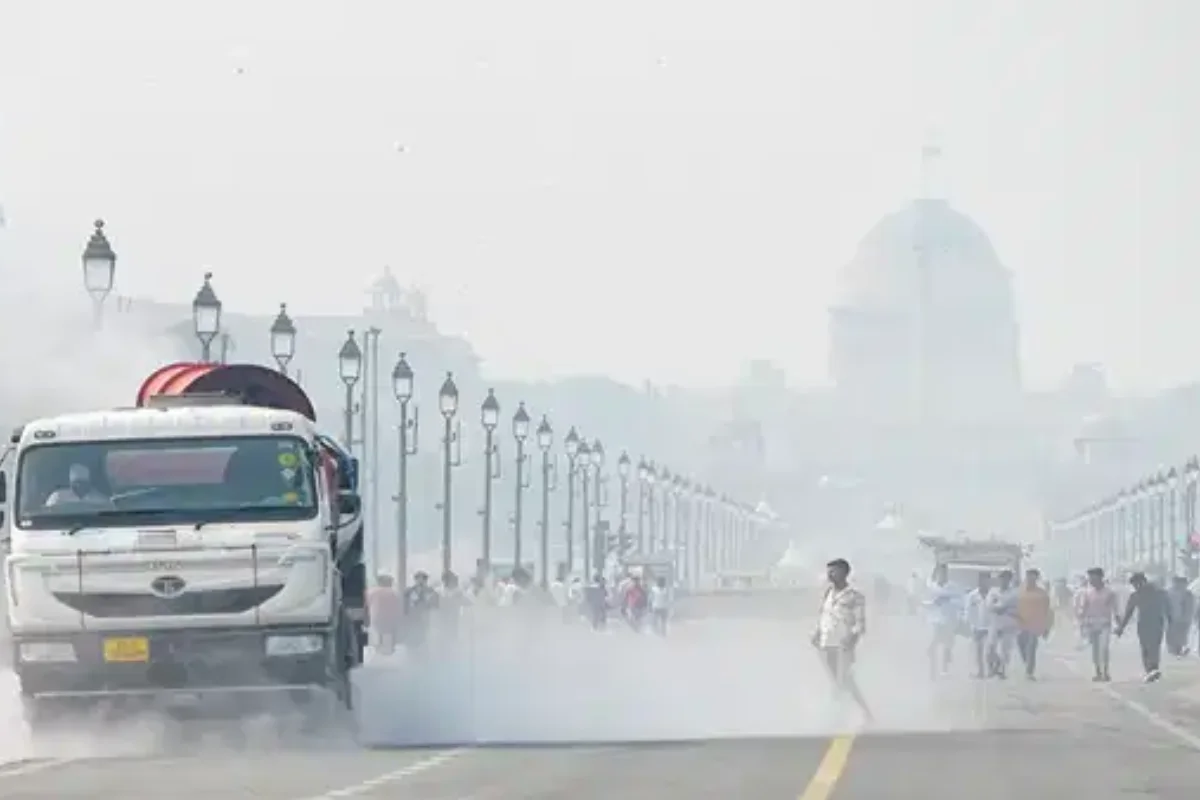
The national capital is once again battling a tough fight against deteriorating air quality as Delhi’s pollution levels are on the rise. On Thursday, November 12, the AQI of Delhi was 323, which falls under the ‘Very Poor’ category. The air quality in the IIT Delhi monitoring station, however, was more worrisome and recorded an AQI of 414, which is classified as the ‘Severe’ category. Additional air pollution worries have been raised by mild wind speeds, adverse meteorological conditions, and ongoing burning of farm residues in neighboring states. As the pollutants got collected near the surface, the air quality became poorer and poor once again.
Delhi’s AQI rises to 323 as pollution worsens
Delhi‘s AQI at 7 a.m. Thursday was 321 and has increased to 323 at 8 am, which is 8 points more than average of 8 a.m. to 7 a.m. on 13 March, which was 313. As per the data of the Central Pollution Control Board, 57 stations are providing data, and most of them are in the ‘Very Poor’ category.
DON'T MISS
IIT Delhi Records Severe Air Quality At AQI 414
One of the worst pollution levels was observed at the IIT Delhi monitoring station, which showed an AQI of 414. The station was categorized under the ‘Severe’ category and the lowest as compared to other stations in the city. The AQI at the Cantonment monitoring station stood at 128, which was categorized under the ‘Moderate’ category.
Farm fires in Punjab and Haryana contribute to Delhi pollution concerns.
Farm fires in neighbouring Punjab and Haryana still pose a seasonal threat to Delhi-NCR’s air quality. On November 11, 128 farm fires were recorded by satellites in Punjab and Haryana. Winds at upper levels were blowing from the farm fire belt towards Delhi, which could have been carrying some of the smoke towards the city and helping increase its pollution levels. But farm-fire contributions are weather-dependent.
Gentle winds and weather traps pollutants
Poor weather conditions have further added to the recent air quality issues. Light winds overnight meant any pollution was unable to disperse, with a band of warmer air trapped above the land surface preventing pollution from dispersing, causing emissions from vehicles and other sources to build up. PM2.5 has been the main pollutant at 48 of the 57 monitors showing data.
Delhi Pollution Emergency Kicks Up Fears for Next Days
As the national capital remains in the ‘Very Poor’ category of air quality, worries about the next few days persist. Farm-fire smoke, vehicular pollution and adverse weather conditions are not helping the situation of pollution in the city. Citizens are still battling the stifling air quality while the latest AQI indices are warning of their persistence in the near future.