


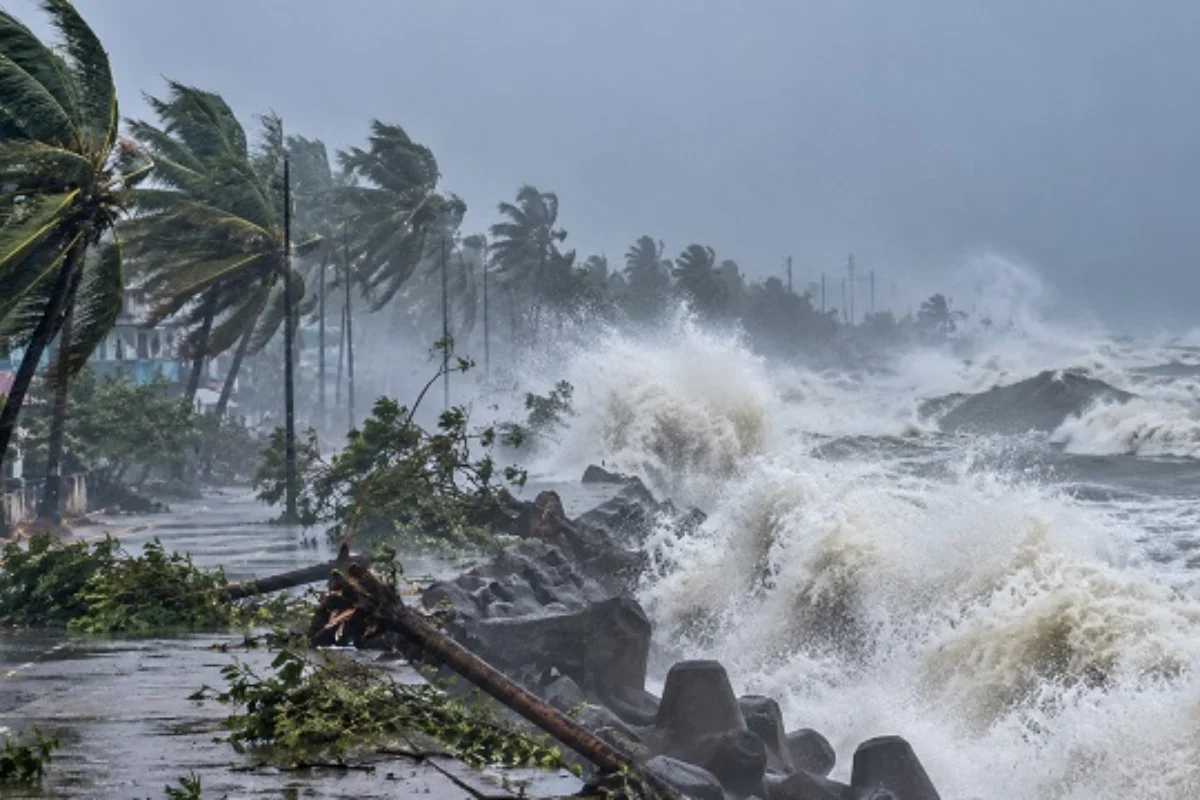
Cyclone Murasu is gathering strength in the Bay of Bengal and will make landfall on the Andhra Pradesh coast between Nellore and Narsapur tonight, 2nd November. The India Meteorological Department (IMD) is predicting the cyclone will have wind speeds of 100-110 kmph with gusts of 120 kmph. Heavy rainfall, choppy sea conditions and the threat of damage has prompted warnings across coastal districts.
Cyclone Murasu Gains Power Over the Bay of Bengal
Cyclonic storm ‘Murasu’ has intensified over southwest and adjoining west-central Bay of Bengal. The IMD bulletin quoted by The New Indian Express said the deep depression over the southwest Bay of Bengal remained nearly stationary with a west-northwestward movement at a speed of 25 kmph. The system is also likely to intensify into a Severe Cyclonic Storm before reaching the Andhra Pradesh coast. As the system moves towards the coast, authorities are on high alert and preparing a response plan for the threatened area.
Nellore–Narsapur Coast strong winds 110 km/h tonight
Meanwhile, the Nellore-Narsapur coastal stretch is likely to experience high winds as Murasu makes landfall. The IMD has predicted they will be in the range of 100-110 kmph with gusts of 120 kmph. The forecast for landfall is during the period of around 11:30 pm on November 2 through to 4 am on November 3. The local authorities advised the residents by saying that these kinds of gusts can topple electric poles, knock down trees, hurt temporary structures and disrupt transportation. People along the coast are warned to be vigilant. The sea state will also deteriorate to hazardous levels along the cyclone’s track. All fishermen and small fishing vessels are advised not to enter the zones affected by the cyclone and adhere to marine warnings.
Heavy rain alert throughout Andhra Pradesh
Cyclone Murasu will also bring scattered heavy rainfall along with gusty winds across the southern and central coastal Andhra Pradesh. The report said on the 2nd, rainfall will be extremely isolated, while some parts will see heavy to very heavy rainfall on the 3rd and 4th. The worst affected districts are Eluru, Krishna, NTR, West Godavari, Guntur and Bapatla.Prolonged heavy rain might cause waterlogging, urban flooding, increase water level in reservoirs and cause inconvenience. People living in low-lying areas should follow weather updates and weather warnings.
DON'T MISS
Andhra Pradesh Government Steps Up Cyclone Preparedness
Chief Minister N Chandrababu Naidu has asked the officials to be ready for relief and rescue operations as cyclone Murasu makes its way to the coast. The state government has been directed to keep relief workers and equipment ready in the affected areas. Authorities have also been directed to prepare restoration of power when high winds damage power supply lines.
Another threat is the potential failure of mobile networks. CM has directed the mobile telecoms operators to take preventative measures to ensure the retention of communication services in the likely areas of extreme weather.
Odisha continues to remain on alert with Cyclone Murasu in the offing
Cyclone Murasu is not predicted to only have an effect in Andhra Pradesh. The Odisha authorities also issued a high alert for the state’s southern space. Disaster Management Minister Suresh Pujari said evacuations were being ordered for residents of low-lying areas and hilltops. As per the weather forecast, Odisha will witness rain from 2nd November and then the intensity of it is expected to go up on 3rd and 4th of November. Public authorities are making contingency plans for excessive rains, water-logging and other weather-related operations failure in risk prone areas.
What Should Residents Do During Cyclone Murasu?
Residents in low-lying areas and coastal areas should listen to and follow the instructions issued by the local administration based on weather updates. Residents are advised to stay away from the beach, flooded areas, and the sea during dangerous weather conditions. Recommended also are storing basic medicines, potable water, food, power banks and emergency kits. In addition, loose objects on the ground should be stored away by residents while avoiding nearby electrical poles and lines. The fisherman are advised to strictly adhere to the IMD warnings and refrain from venturing into the sea in the said/area till it is declared open.