
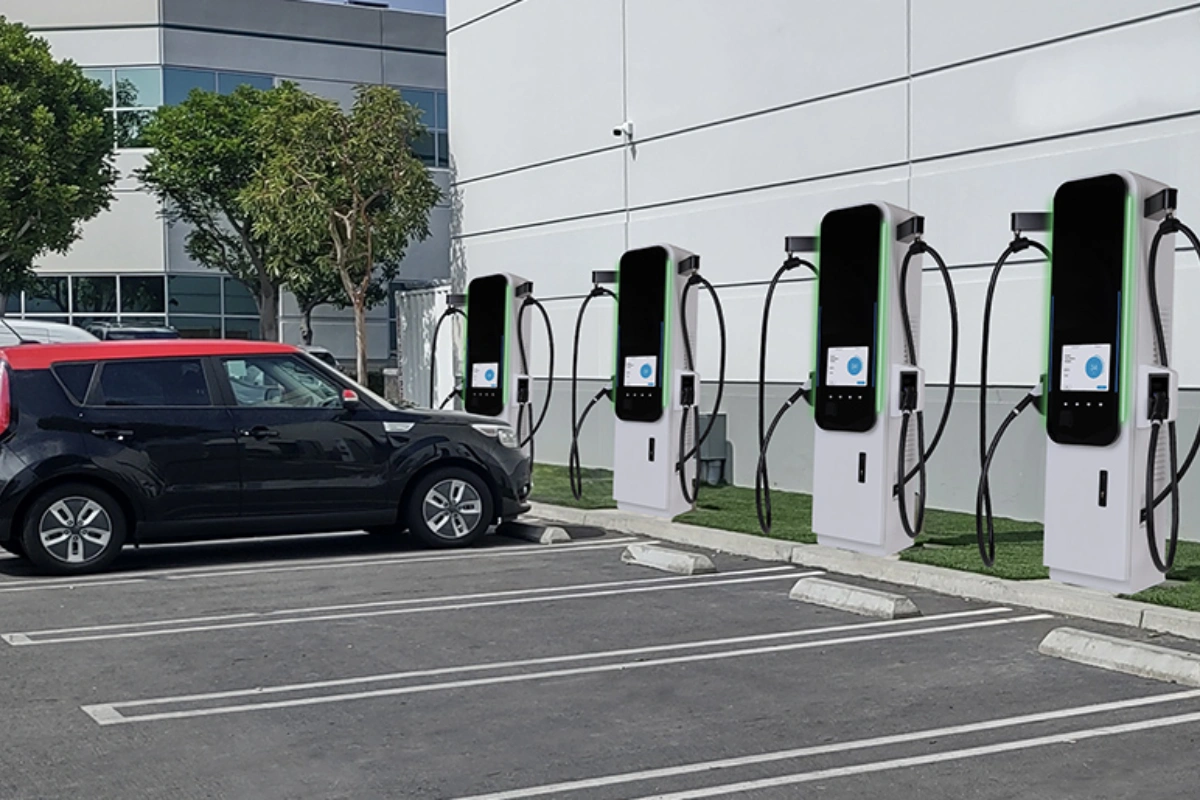
Haryana News: The Haryana government under the leadership of Nayab Singh Saini has proposed a series of amendments to the Haryana Building Code 2017 to expedite the adoption of electronic vehicles (EVs) in the state. The amendments would make EV charging infrastructure mandatory in residential and non-residential projects.
A public notice seeking suggestions and complaints by May 26 from stakeholders has been issued by the Department of Town and Country Planning (DTCP).
Haryana News-What’s Special?
Under the draft amendments introduced by the state, EV charging infrastructure would now be exempted from floor area ratio (FAR) calculations. The move would help real estate developers add charging facilities for EVs without worrying about the built-up area.
DON'T MISS
The proposal also sets clear norms to install EV stations across building categories. For instance, non-residential projects including malls, offices, office spaces and shopping complexes would require at least 1 charging point for every 3 parking spaces.
Furthermore, 100 percent of parking spaces in renovated and new buildings must be EV ready. In contrast, cooperative housing and RWA-managed complexes would require at least 1 EV charging point for every 5 parking spaces.
The shift reflects a broader realization as without accessible and reliable charging the EV revolution cannot truly take off. For years, potential buyers have hesitated, not because they doubt electric technology, but because of practical concerns such as range anxiety, limited charging points and long charging times.
Why The Change?
The ongoing instability in the Middle East, a region that plays a pivotal role in global oil supply has repeatedly demonstrated how fragile fuel pricing can be. Even minor disruptions in supply chains or political tensions can lead to sharp spikes in petrol and diesel prices. For the average consumer, this translates into unpredictability in daily expenses, making long-term financial planning more difficult.
In contrast, electric vehicles offer a compelling alternative on multiple fronts. First and foremost, they promise significantly lower running costs. Electricity, even when sourced from conventional grids, is generally cheaper than petrol or diesel on a per-kilometre basis. Additionally, EVs have fewer mechanical components, which reduce maintenance requirements and associated costs over time.