

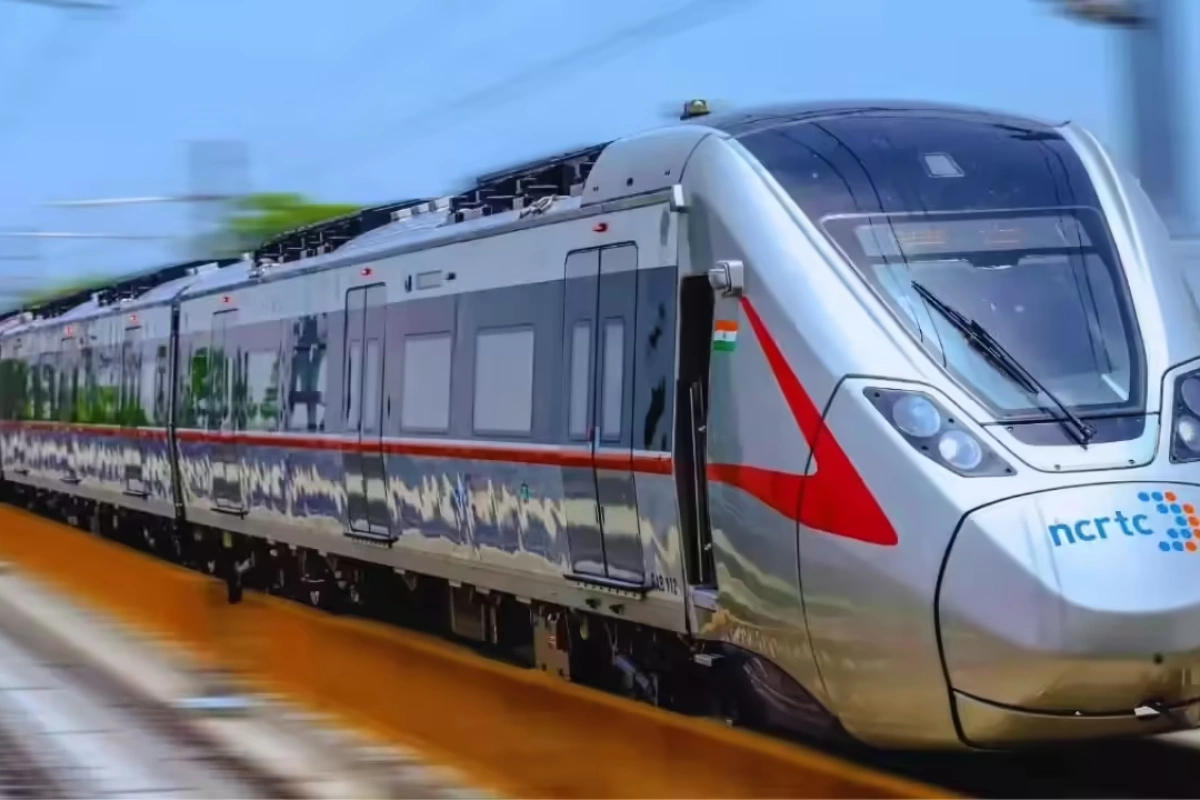
Namo Bharat RRTS: Haryana Chief Minister Nayab Singh Saini has cleared the final alignment for the Gurugram Faridabad Noida Namo Bharat Regional Rapid Transit System (RRTS) corridor.
The project that is estimated to cost around Rs. 15,000 crore would stretch approximately 64 kilometres. The project, which is designed as a reimagination of cross-city mobility, could transform journeys that currently take up to two hours into less than 40-minute commutes to fundamentally alter the geography of work and residence in the NCR.
Namo Bharat RRTS Updates
Presently, a trip from Gurugram to Noida can take anywhere between 90 minutes and two hours, depending on traffic conditions along key arterial routes like the Delhi-Gurugram Expressway and stretches of Delhi’s congested road network. Under the RRTS plan, that same journey is expected to take just 38 to 40 minutes.
DON'T MISS
Similarly, Gurugram to Faridabad travel time is projected to drop from over an hour to about 20 minutes. For millions who depend on intercity travel for work, healthcare and education, this shift is not incremental but also structural.
The trains, branded under the Namo Bharat initiative, are expected to run at speeds of up to 180 km/h, placing them among the fastest regional rail systems in India. With frequencies of every 5 to 7 minutes, the system aims to eliminate long waiting times and reduce reliance on private vehicles, which currently dominate NCR road traffic.
Route And Stations
The Gurugram section, spanning 14.5 kilometres, begins at IFFCO Chowk and passes through Millennium City Centre, Sector-52 and Gwal Pahari. This stretch is particularly significant as it integrates corporate hubs, residential zones and emerging commercial districts.
The Faridabad segment, about 16 kilometres long, will traverse densely populated areas including Sainik Colony, NIT and Bata Chowk before extending toward Badshahpur.
The Noida and Greater Noida alignment will connect through the FNG Expressway corridor, linking Sector 141/168 and culminating at Surajpur Junction.
Construction is expected to begin by December 2026, subject to final procedural clearances. If timelines are maintained, the corridor could become operational within the next few years, marking one of the most significant transport interventions in NCR’s recent history.