


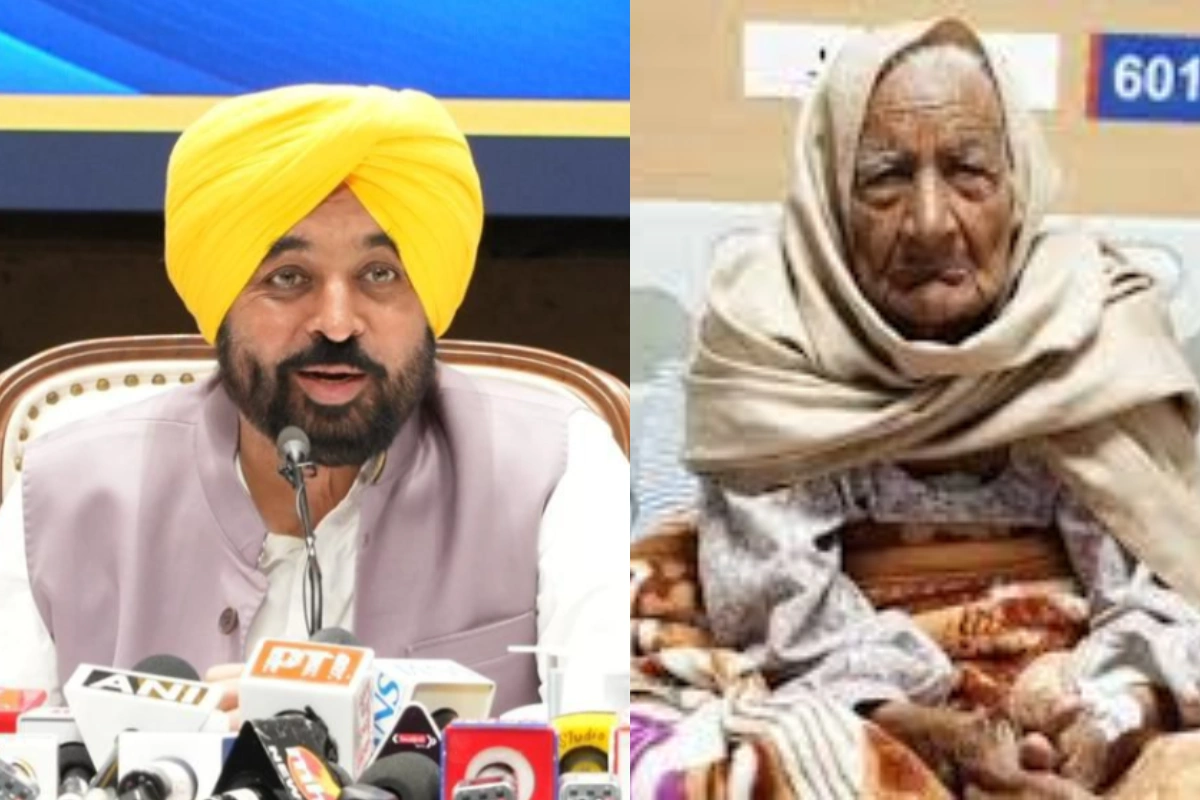
Bhagwant Mann: The ambitious “Mukh Mantri Sehat Yojna,” which offers every family in the state cashless health coverage up to ₹10 lakh annually, was introduced by the Bhagwant Mann-led government.
The program covers a wide range of services, such as hospitalisation, surgeries, ICU care, and diagnostics, and greatly increases the previous ₹5 lakh cap. It ensures more people have access to high-quality healthcare because it is offered in all affiliated public and private hospitals.
A 98-Year-Old Patient Gets a Lifeline
Mukhtiar Kaur, a 98-year-old woman from the Moga district, recently received free cancer treatment, providing a striking illustration of the program’s effectiveness.
After the hospital validated her Sehat Card, she received cashless care that included advanced chemotherapy and ongoing medical monitoring. In addition to guaranteeing prompt care, the treatment relieved her family of a significant financial burden.
Increasing Access Throughout Punjab
Bhagwant Mann: With more than 550 private hospitals already affiliated with all government healthcare facilities, the program is expanding quickly. To improve access even more, authorities hope to raise this figure to 1,000.
Using simple identification documents like Aadhaar or voter ID, residents can easily obtain their Sehat Cards through Seva Kendras, Common Service Centres, or online platforms.
Put an emphasis on inclusivity and dignity
The initiative, according to health officials, is intended to guarantee prompt and respectful treatment, particularly for vulnerable populations like senior citizens.
This program is universal in nature, benefiting all residents regardless of income level, in contrast to many previous schemes. It is anticipated that this strategy will close healthcare gaps and drastically lower out-of-pocket costs.
A Step Into Better Healthcare
The program is a significant step toward improving Punjab‘s public healthcare system because of its extensive coverage and inclusive methodology.
The Mann government sets a high standard for welfare-driven governance by combining financial protection with accessibility to guarantee that no resident is denied treatment because of cost.