
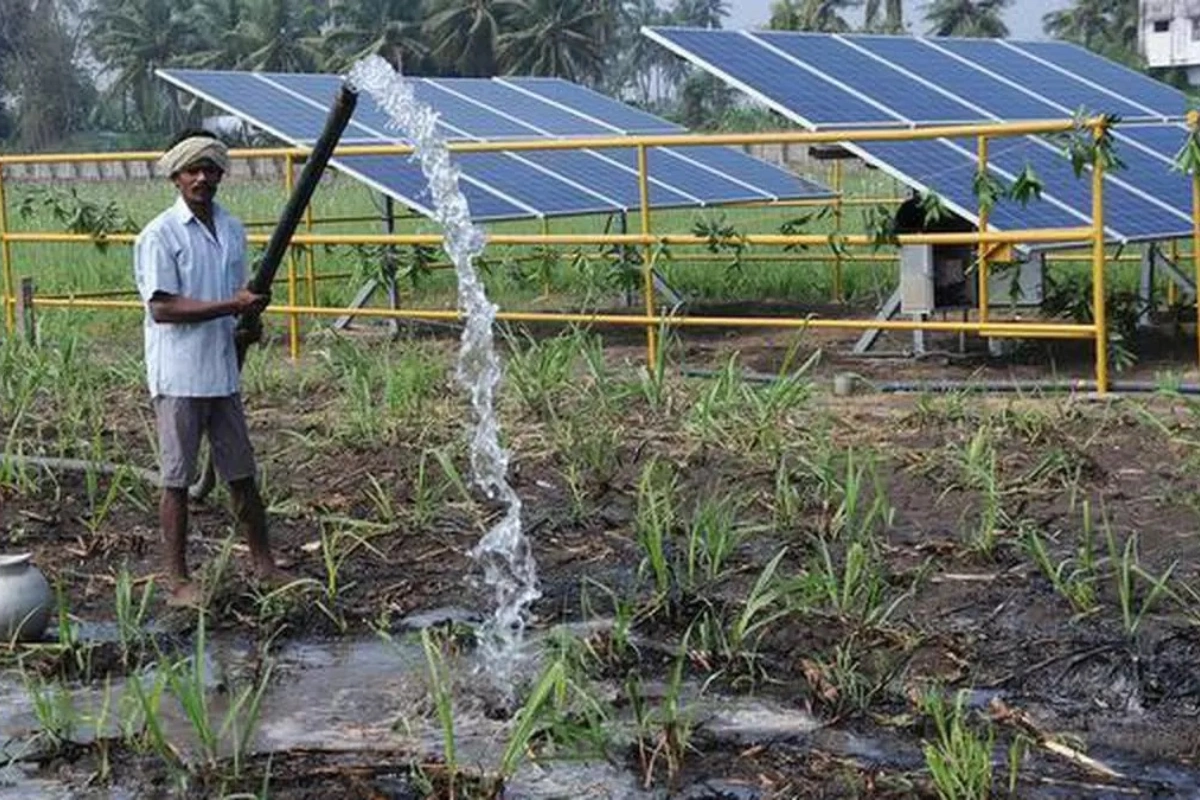
PM Kusum Yojana: Rajasthan Chief Minister Bhajan Lal Sharma has announced that 87801 farmers in the state’s Dausa and Karauli districts would receive uninterrupted supply of electricity in the daytime. The electricity supply would be made in two blocks every day.
After the announcement, farmers in the 24 districts of Rajasthan would be relieved permanently of the compulsion and challenges to irrigate during night time amid the harsh cold, threat of wild animals and rain.
PM Kusum Yojana-Announcement By Jaipur Vidyut Vitran Nigam
The Jaipur Vidyut Vitran Nigam has announced that the two districts have been included in the category where power schedules would be tailored completely to suit the convenience of Rajasthan’s farming community. This means that irrigation work would now be possible for the state’s farmers in 9 districts of Jaipur, 3 in Jodhpur and 12 in Ajmer.
How Will This Development Benefit The State’s Farmers?
Rajasthan’s farmers would now be equipped with solar pumps and grid-connected systems to access 24/7/365 electricity. This would translate to a surge in terms of crop yields by 20 to 30 percent.
It would be possible thanks to precise irrigation, timely sowing and healthier harvests due to reliable water access. This translates to doubled income and bumper crops for mustard, wheat and bajra growers in the districts of Dausa and Karauli districts.
For farmers, this would mean a long list of associated benefits. For instances, evening tubewells would now run without diesel costs, slashing expenses by as much as 40 to 60 percent. Moreover, children and women would not have to spend countless hours to fetch water, freeing them for education and small enterprises. Also, consistent power would also translate to refrigerated storage for milk and veggies, reducing spoilage and boosting nutrition.
In another development, the timeline for completion of certain projects has been extended by the Ministry of New and Renewable Energy (MNRE) under the PM Kusum Scheme till March 31, 2027 amid financial closure delays because of constrained lending by financial institutions and banks.