

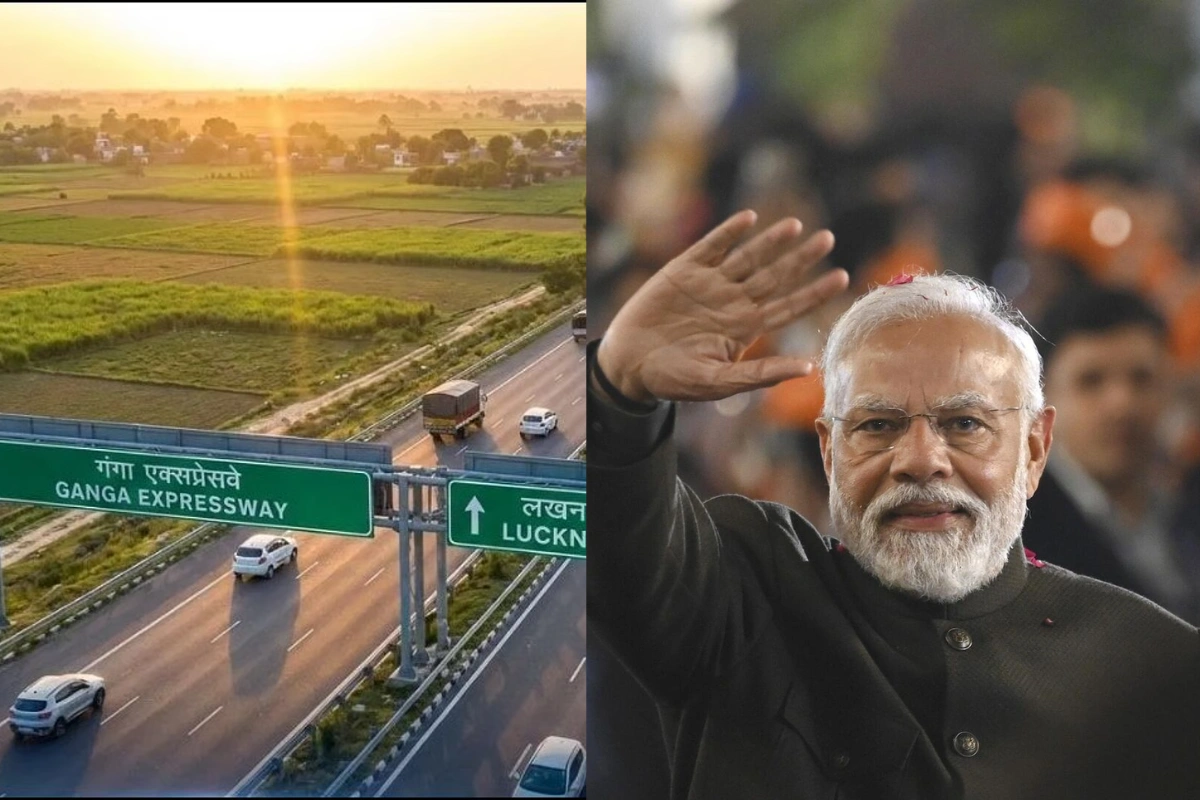
Ganga Expressway: Indian Prime Minister would be inaugurating the much-awaited Ganga Expressway on April 29, 2026. The ambitious expressway is likely to redefine road travel and regional connectivity across the state of Uttar Pradesh. It would help in promoting faster connectivity between western and eastern regions of the state while also stimulating a ripple effect of economic transformation in districts that have long remained on the periphery of development.
Stretching approximately 594 kilometres from Meerut to Prayagraj, the Ganga Expressway would connect Meerut, Hapur, Bulandshahr, Amroha, Badaun, Shahjahanpur, Hardoi, Unnao, Sambhal, Rae Bareli, Pratapgarh and Prayagraj.
DON'T MISS
Ganga Expressway-A New Travel Backbone For Uttar Pradesh
For decades, travelling between Meerut and Prayagraj has been a time-consuming challenge with the journey often taking up to 10–12 hours by conventional highways. The new expressway would cut the travel time nearly in half, bringing it down to around 6–7 hours. This would significantly add to the comfort, ease of travel and convenience for passengers and commercial vehicle drivers, signalling a structural shift in how people, goods and services move across the state.
Would Unnao And Rae Bareli Witness Rewarding Investment Opportunities?
A series of plans to develop industrial clusters along the expressway have already been recommended by the Uttar Pradesh Expressways Industrial Development Authority (UPEIDA). This would include textile hubs, small manufacturing zones, food processing units and pharma parks. These initiatives would help in generating employment and stimulating local economies that have historically lagged behind urban centres like Noida or Lucknow.
For instance, the Ganga Expressway could transform Unnao into a potential logistics hub that would lead to the emergence of warehousing zones, logistics parks and ancillary industries. Furthermore, the development of industrial clusters and food processing units could particularly benefit districts like Rae Bareli, where agriculture remains a primary economic activity. Better road access enables farmers to reach markets more efficiently, reducing wastage and improving price realisation.


