


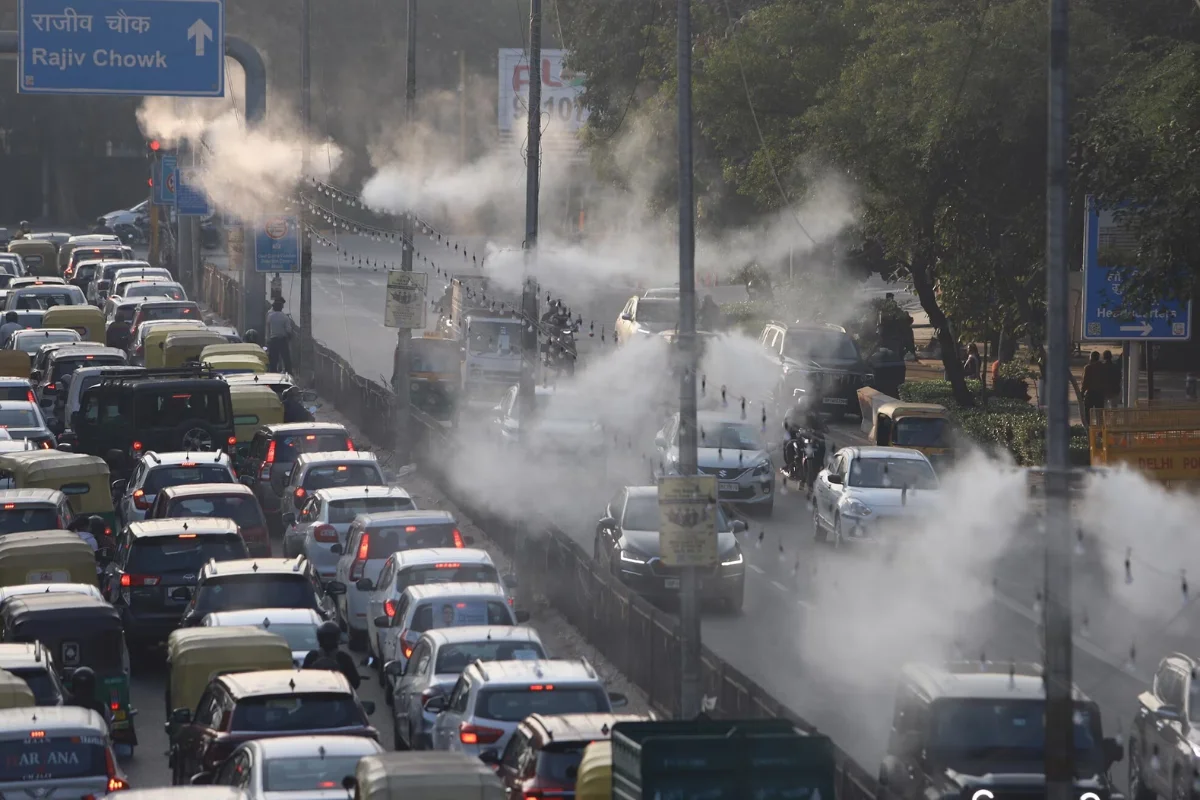
Air quality in Delhi worsens post-Dussehra 2026. On October 20, 2026, after the Dussehra celebrations and unseasonal weather conditions, Delhi’s pollution increased due to the infusion of effects of the celebrations. The following day, the city’s Air Quality Index (AQI) entered the ‘poor’ category for the first time in this season, again giving rise to concerns.
Why did Delhi pollution surge after Dussehra?
Delhi‘s AQI rose from 179 at 4 pm on October 20 to 245 at 4 pm on October 21, as reported by the CPCB. A 66-point jump is the highest this season and indicated a worsening air quality post-festivities. Ravana effigies and crackers on the day of Dussehra may have added to the pollution spike. But the available readings have not been able to determine the exact proportion of pollution caused by this source. Vehicle emissions, dust, and industrial emissionss add to the pollution levels of the capital.
How did weather conditions make Delhi pollution worse?
Factors that contribute to pollution being trapped near ground level: Weather was a factor here as weak winds and moist air meant that smoke and small particles weren’t carried away in the normal manner; in these conditions, the pollution remained close to ground level. Another potential threat was fine particulate matter, including PM2.5, minuscule particles that penetrate deep into the lung and are harmful to health. This group is at risk children, the elderly and those with pre-existing respiratory or heart diseases.
DON'T MISS
What Does Delhi’s Rising AQI Reveal?
Analysis: Delhi’s air quality index (AQI) rose from 179 to 245, taking it from the ‘moderate’ air quality level to the ‘poor’ level. The AQI scale considers an AQI of 201-300 as poor, which means a risk of respiratory discomfort to the population.On deterioration, the CAQM had invoked Stage I of the Graded Response Action Plan (GRAP) for Delhi-NCR from October 21 for tackling pollution levels and to curb emissions.
Could Stubble Burning Increase Delhi’s Pollution Further?
At the same time, stubble burning in the adjacent farmlands also remains a potential contributor to pollution levels as the post-monsoon season progresses. Estimations, as reported by HT, showed the contribution of stubble burning towards the particulate matter pollution in Delhi to be 3.9% on Wednesday, 7.4% on Thursday and 15.9% on Friday. These are only estimations, not actual figures of the contribution.
How Can Residents Protect Themselves From Poor Air Quality?
If pollution levels are going up in Delhi, here’s what you can do to minimise exposure:
- Monitor AQI reports for outdoor activities.
- If you have to go outdoors during high pollution times, put on a tight-fitting N95 mask.
- Do not engage in heavy outdoor exercise at times of bad air quality.\
- Maintain windows shut when outside air quality is high, and if you have an air purifier, use it.
- Special attention should be paid to safeguard children and senior citizens, as well as adults suffering from cardiovascular or respiratory issues.
What Lies Ahead for Delhi’s Air Quality?
Delhi’s post-Dussehra surge underscores the capacity of short-term coalescence of festive emissions with the meteorology to cause deterioration. As winter progresses and burning of stubble and agri-residue advances, it will be crucial to continue to monitor the pollutants’ levels and regulate the emissions. How much each of these sources contribute cannot be ascertained from the AQI alone, but the sudden spike should remind us how difficult Delhi’s battle against the worst kind of seasonal pollution can be.