

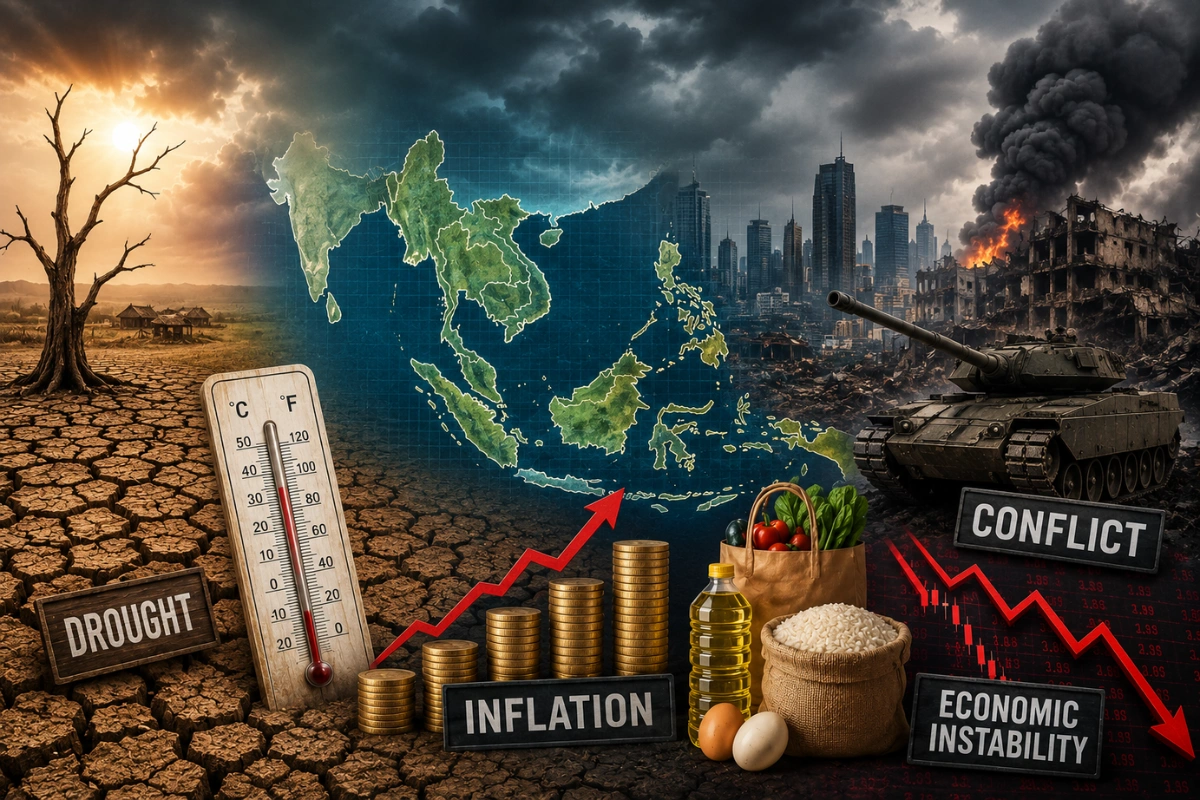
Southeast Asia has long been one of the world’s most rapidly expanding economic regions, fueled by manufacturing, tourism, exports and a young workforce. But now a number of big challenges are challenging its success. Drought, rising inflation, regional conflicts and economic uncertainty are creating pressures that could slow growth and impact millions of people across the region.
Why These Challenges Matter
In many parts of the world, drought is leading to lower crop yields and higher food prices. Farming-reliant countries may see reduced incomes, and consumers could be forced to pay more for basic goods like rice, vegetables, and cooking oil. And then there’s inflation, which makes it even harder. Fuel, transportation, and imported goods are becoming more expensive, putting a strain on household budgets. Businesses also have higher running costs, so it is hard to keep prices cheap. Meanwhile, ongoing geopolitical tensions and conflicts around the world are disrupting supply chains and trade routes. Southeast Asia is closely tied to international trade, so a slowdown in global demand can directly hit exports, manufacturing jobs and investment.
DON'T MISS
What It Could Mean for You
For ordinary people, these problems can translate into higher costs of living, slower wage growth and less employment in some sectors. More volatility in the markets for investors, lower consumer spending for small businesses. But the region has strengths as well. The governments are starting infrastructure projects, promoting investments in renewable energy, and diversifying trade partnerships to reduce economic risks. These efforts could serve as a buffer and help to support long-term resilience.
What Southeast Asia Must Do to Protect Future Growth
The long-term economic outlook for Southeast Asia is bright, but the path forward may be less certain than in years past. The future growth of the region will be contingent upon how well it can address climate risks, contain inflation, sustain stable trade relations, and bolster economic cooperation. It will be important for businesses and consumers to stay informed and adapt to the changing economic landscape during this challenging period for Southeast Asia.


