

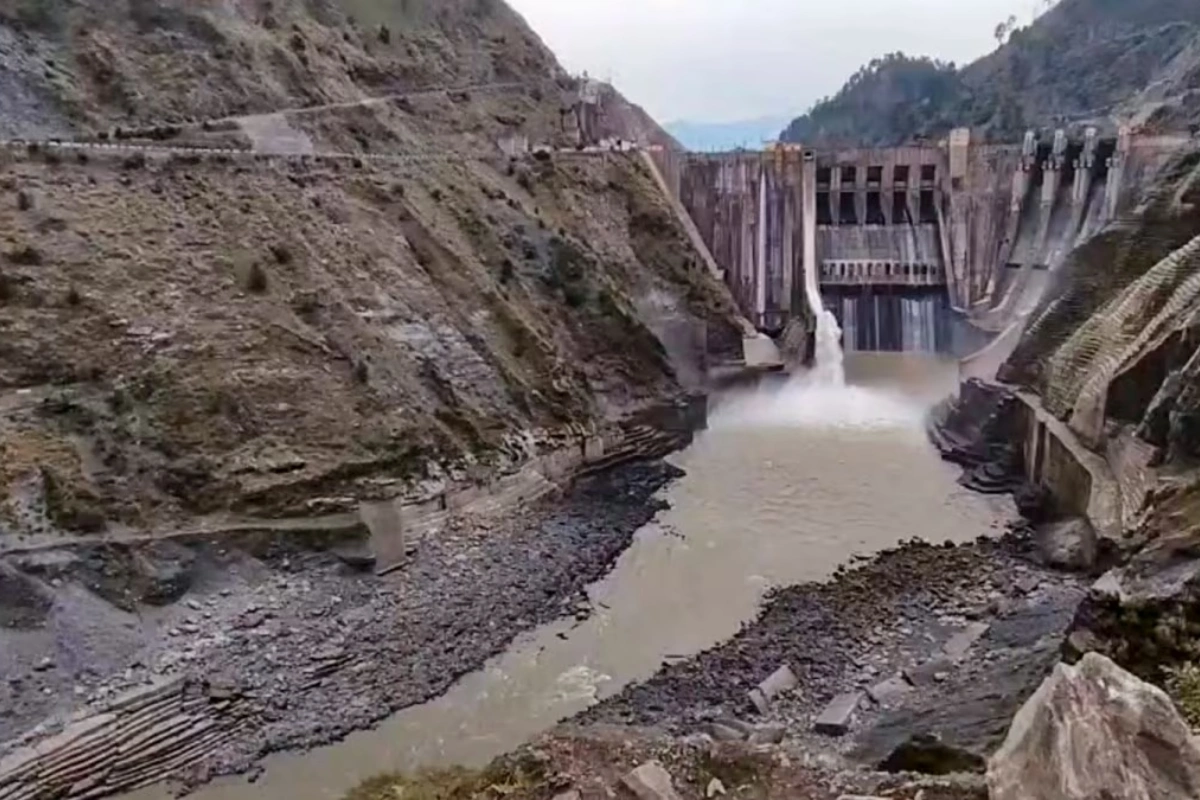
Indus Water Treaty: Jammu & Kashmir Jal Shakti Minister Javed Ahmed Rana has announced that India would be blocking the flow of excess water by March 31 from the Ravi River. Rana remarked that the completion of the Shahpur Kandi Barrage would effectively translate to stoppage of excess water flow to Pakistan. Rana remarked that this decision has been taken as the Indian side does not have inadequate storage facilities.
DON'T MISS
Indus Water Treaty: The Primary Reasons
The comments by J&K minister Javed Ahmed Rana are likely to help the drought-prone Samba and Kathua districts.
Presently, Ravi River’s surplus water flow remains unused via Madhopur into the terror state, a lower riparian or downstream country. The J&K Minister added that this wrongdoing has been allowed for many years because of a never-ending tussle between Punjab and Jammu & Kashmir and political neglect would prevent such “wastage.”
How Would It Help India?
The barrage would be used to redirect 1150 cusecs, irrigating 5000 hectares in Punjab and 32000 hectares in the state of Jammu & Kashmir. It would help barren Kandi belts into fertile farmland while also generating 206 MW of hydropower, with Jammu & Kashmir securing 20 percent to ease power shortages, boosting food security and rural economies.
Pakistan’s Agricultural Catastrophe Looms
Pakistan, a country where 80 percent of agriculture hinges on the Indus basin and farming drivers 25 percent gross domestic product (GDP), facing dire straits. Ravi River flows sustained Punjab province fields around Multan and Lahore, its cut-off spells crop failures in rice, wheat and cotton belts amid summer heat.
For India and Indian states, this decision is nothing short of a development victory. The farmers of Pakistan and Jammu & Kashmir would gain lifelines, adding more than 91,000 acres regionally and aligning with the water security push of Indian Prime Minister Narendra Modi.


