

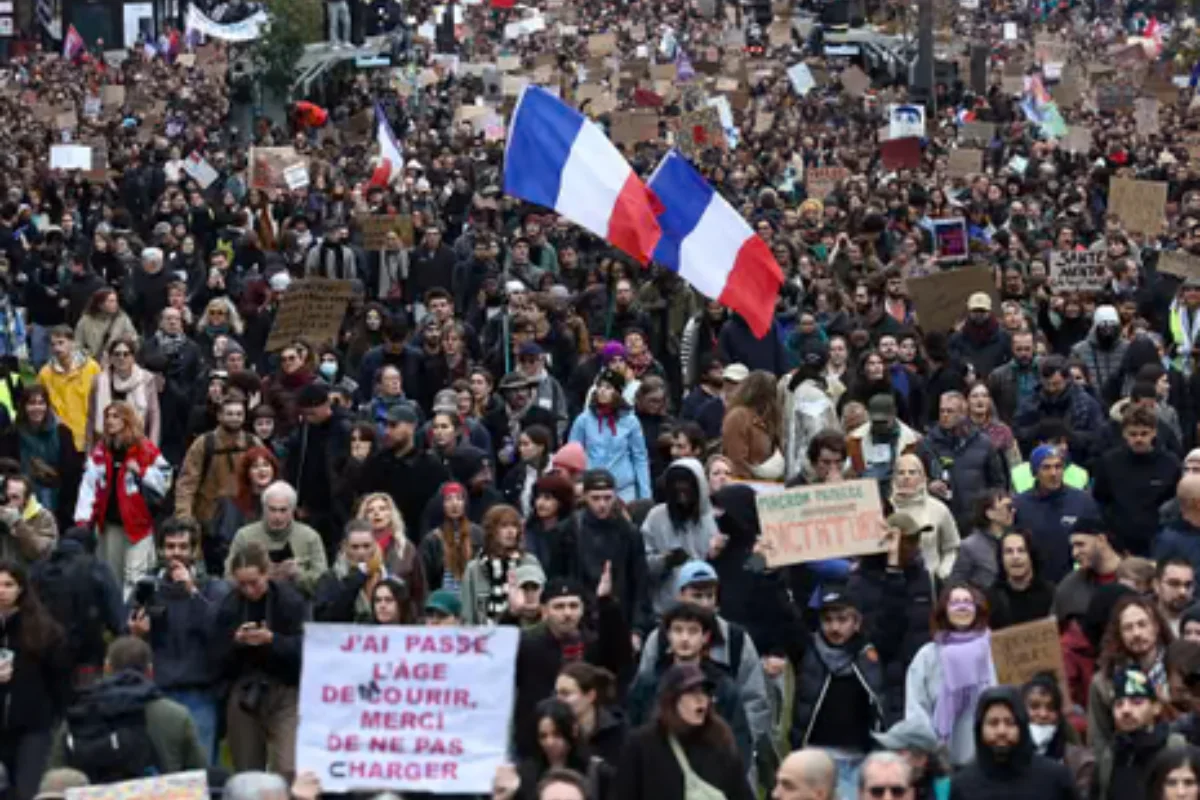
France has seen another surge of protests as tens of thousands of people take to the streets to decry high living costs, education funds, and economic disparity. Protesters in the Oct. 24 street marches were met with tear gas and water cannons as the demonstrations turned chaotic in Paris and various other cities. Tens of thousands of security forces have been put on standby as the Macron administration faces increasing demands to respond to the unrest.
More Than 1 Lakh Protesters Hit the Streets of Paris
The recent protests drew large numbers to the French capital, with about 110,000 marching in Paris, according to the authorities. The French Interior Ministry estimated the total number of those protesting across the country at 410,000, while the organizers of the demonstrations and trade unions claimed a figure of almost 800,000. The protests started peacefully, but there were clashes towards the end of the Paris march near Porte de Vincennes, during which some protesters threw objects at police, who responded with tear gas and water cannons. The turnout also signals rising public anger over economic pressures as well as the state of the country’s education system.
Tear Gas and Water Cannons Employed as Clashes Break Out
Police used crowd-control weapons in response to clashes at multiple sites. Tear gas was deployed in Paris, Lyon, Clermont-Ferrand, and Strasbourg, while water cannons were used in Nice and Nantes. Officials had been on high alert for potential violence following the weekend’s violent protests, which included looting, the destruction of property, and skirmishes with police.64 people were arrested, and 40 individuals were taken into police custody by the Paris prosecutor’s office in relation to the demonstration. Officials said these were for charges of possible weapon offenses or working with others to plan violence or cause property damage.
DON'T MISS
Why Are People Protesting Across France?
What originally were protests about staffing levels at a school near Paris have snowballed into a wider movement of pupils, employees, and trade unions.
Protesters are raising several concerns, including:
- Funding of education:
Learners require more teachers, greater provision of infrastructure, and more higher education places.
- Cost of living increase:
Growing household expenses and purchasing power being hit have contributed to public discontent.
- Wages and pensions:
Workers want higher wages and enhanced economic conditions.
The protesters have raised the issue of inequality of opportunity and the pressure on young people and the working people. The merging of education struggles with broader economic concerns has facilitated this expansion of the movement.
Macron Government Under Increasing Pressure
The protests pose a headache for the government of President Emmanuel Macron as the public becomes increasingly angry about economic and social matters. Macron met representatives of high school students prior to the latest protests. Student representatives said the meeting had heard pledges of reforms to university admissions but said they had not been satisfied and would not be until tangible proposals were put forward.On the same day, Interior Minister Laurent Nuñez said up to 70,000 police and gendarmes would be deployed across France, backed up by water cannon, armored vehicles, and helicopters.
What Will It Take to Calm the Protests?
If the government can satisfy the protesters’ demands and win back the confidence of the students and workers, the protest movement may be over. Potential actions could be: increasing resources and staffing in schools, reforming higher education; tackling cost-of-living pressures and negotiating with trade unions and student representatives.At the same time, authorities will need to strike a balance between ensuring public safety and safeguarding the right to peaceful assembly. It will continue to be important to identify those participating peacefully in protests from those who engage in violence.The government still have not addressed all the issues at the heart of the movement, and more protests have been scheduled for 31 October by organizers linked to the Yellow Vest movement.


