


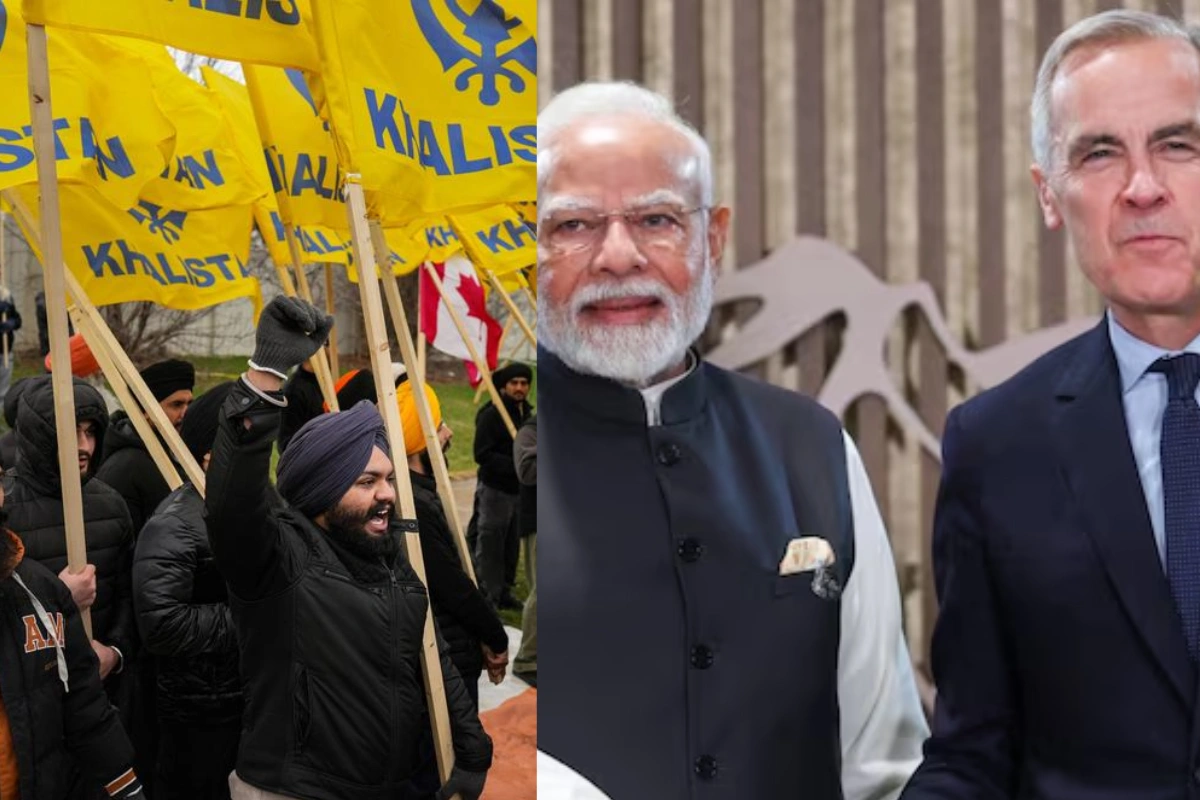
India Canada Relations: The Canadian Security Intelligence Service (CSIS) 2025 Public Report has suggested that the Khalistani extremists in the country were a serious “national security threat. It was also suggested that some movement’s individuals were using the institutions in the country to advance a violent extremist agenda.
Ottawa has been demonstrating signs of a diplomatic reset with India under the leadership of Prime Minister Mark Carney. Both countries in the recent months have resumed engagement cautiously while signalling interest in rebuilding security, trade and strategic cooperation.
India Canada Relations-Turn Of Events
The new CSIS report said some Khalistani individuals have been using institutions in Canada to raise funds for supporting violent activities, especially in India. The report gained significance as it comes after nearly 40 years after the bombing of Air India flight 182 by Khalistani extremists, which was the deadliest terror attack in the history of Canada. The bombing killed 329 people.
DON'T MISS
Justin Trudeau’s Blunders
India-Canada relations, which were once anchored in shared democratic values, diaspora linkages and economic potential, have entered one of their most turbulent phases in decades. This was after they reached a boiling point during Justin Trudeau’s tenure as Canada’s Prime Minister, when his government’s handling of pro-Khalistan elements and subsequent accusations against India triggered a sharp downturn in bilateral ties.
Justin Trudeau’s handling of India–Canada relations was widely criticized for allowing domestic political considerations to overshadow strategic diplomacy. A key flashpoint has been his perceived leniency toward pro-Khalistan groups operating within Canada.
For years, India has flagged concerns about extremist elements using Canadian soil for advocacy, fundraising and even incitement against Indian sovereignty. These warnings, however, were often met with cautious responses from Trudeau’s administration, which emphasized freedom of expression and avoided sweeping crackdowns.
The situation escalated dramatically when Trudeau publicly alleged potential involvement of Indian agents in the killing of a Khalistani separatist leader on Canadian soil. The statement, made without immediately presenting conclusive evidence in the public domain, marked an unprecedented moment in bilateral relations.
For India, tangible action against extremist networks remains a prerequisite for normalization. For Canada, maintaining its commitment to democratic freedoms while addressing legitimate security concerns will be the central challenge.