

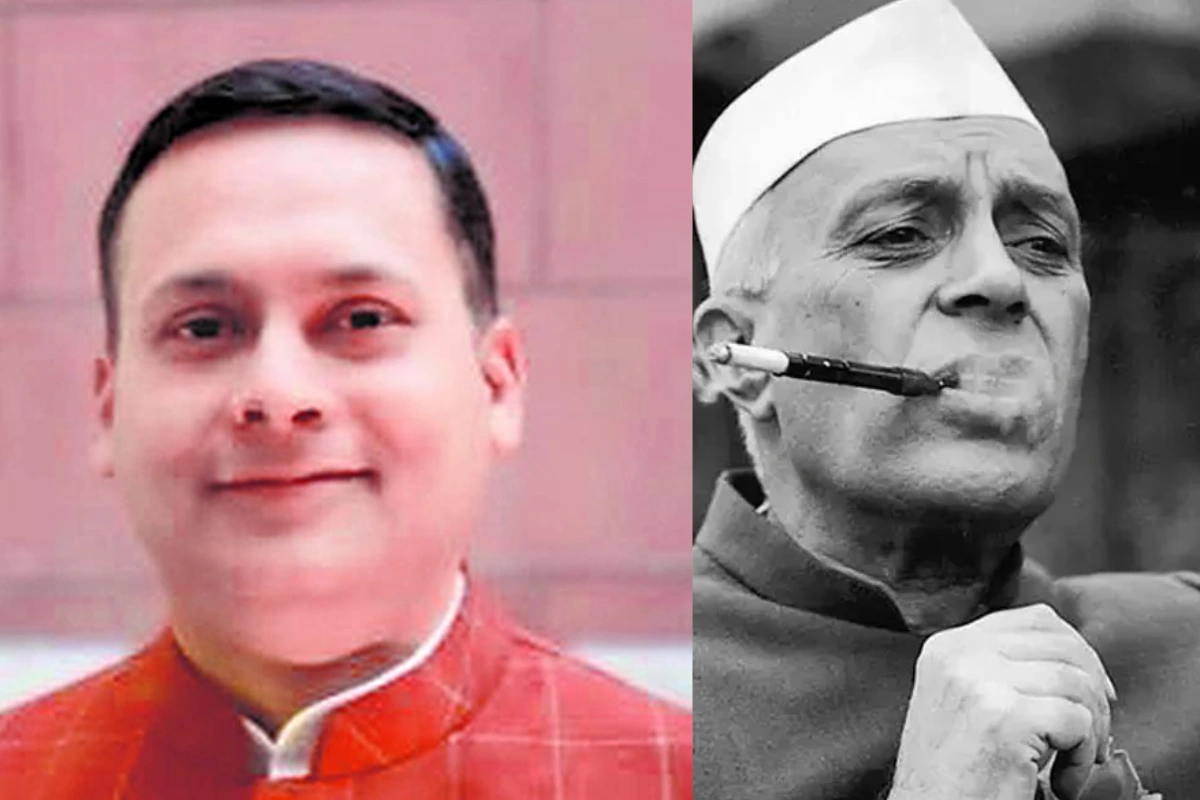
Amit Malviya: The national convener of the IT cell of the Bharatiya Janata Party has questioned if India’s first Prime Minister Jawahar Lal Nehru was also a “compromised Prime Minister.” Malviya blasted the Congress party’s selective memory and political hypocrisy and asked if appealing to the public to fulfill their responsibilities is a ‘failure,’ is Nehru also a “compromised Prime Minister.”
Statement By Rahul Gandhi
In a post on X, senior Congress leader Rahul Gandhi sharply criticized Prime Minister Narendra Modi’s appeal urging citizens to reduce fuel consumption, work from home when possible, avoid unnecessary foreign travel and postpone gold purchases in light of mounting global economic pressures.
Calling PM Modi a “compromised PM,” the Congress leader argued that the appeal reflected the Narendra Modi government’s inability to manage the Indian economy effectively.
Gandhi insisted that the Prime Minister should not lecture citizens on what to buy, where to go, where not to go and what not to buy,” asserting that accountability for economic distress lies squarely with the government.
Global Public Restraint Appeals
Appeals for public restraint during economic turbulence are not uncommon in democracies. Governments across the world routinely ask citizens to moderate consumption during wars, inflationary shocks, supply disruptions or financial crises.
Rahul Gandhi’s criticism was carefully calibrated to portray PM Modi’s message as disconnected from the everyday struggles of ordinary Indians. The Congress sought to reinforce a long-standing opposition narrative that the Modi government often relies on symbolism and public mobilisation instead of structural economic solutions.
Rebuttal By Amit Malviya
Amit Malviya’s rebuttal was not merely defensive but also strategic. Rather than only justifying Modi’s appeal, Malviya attempted to turn the argument back on Congress by invoking India’s first Prime Minister, Jawaharlal Nehru, a figure central to the Congress party’s ideological identity.
He reminded the public that Nehru himself had acknowledged the impact of global conflicts on India’s domestic economy, including inflationary pressures. According to Malviya, if Modi’s references to global crises are considered “excuses” today, then by the same logic, Nehru’s observations during his tenure would also have to be dismissed as failures or compromises.