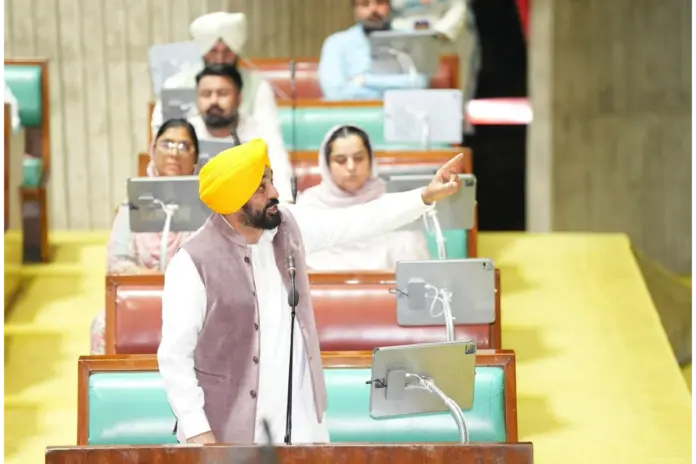
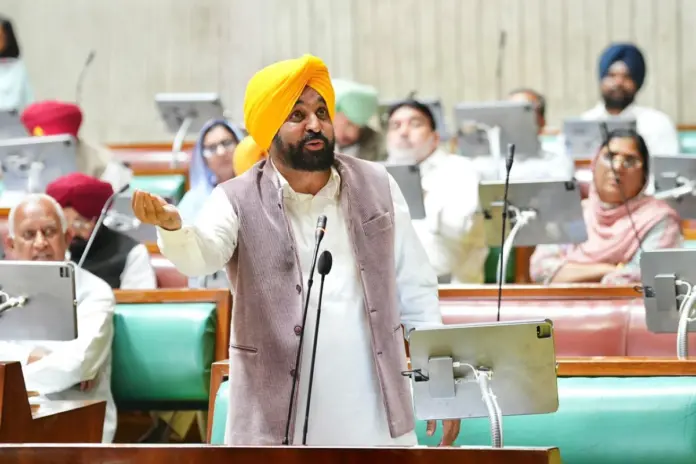
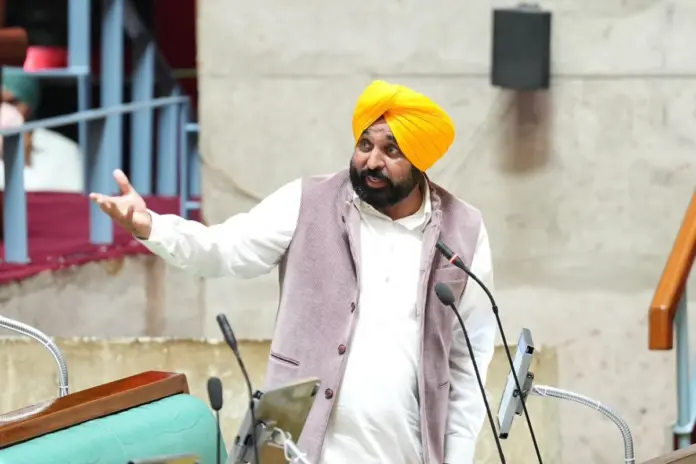
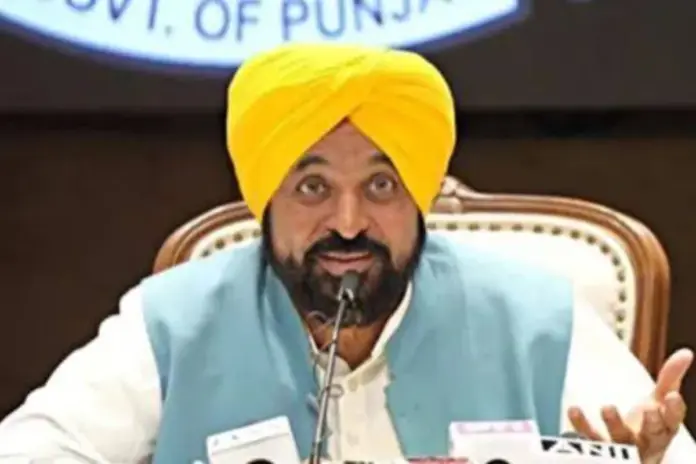
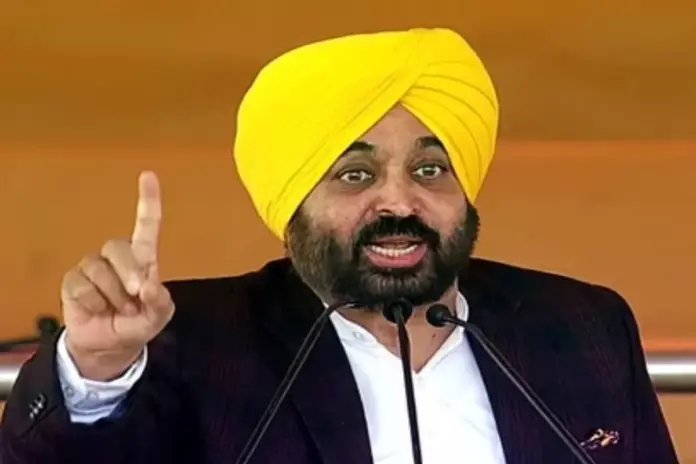
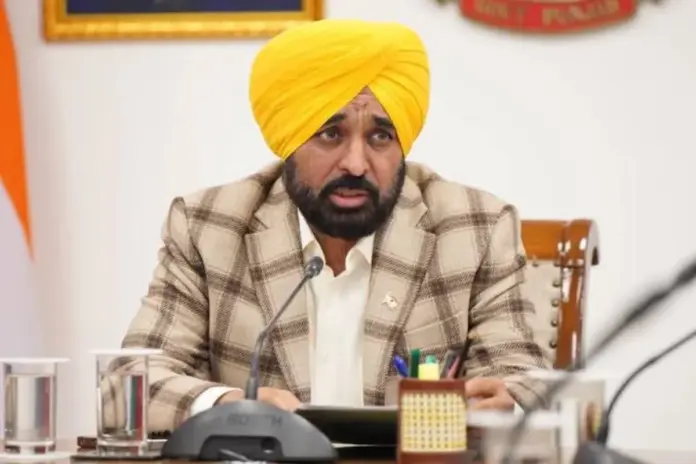
Chief Minister Bhagwant Singh Mann on Tuesday launched a sharp attack on the Congress and BJP, asserting that the AAP would seek a fresh mandate on the strength of its pro-people governance, including quality schools and hospitals, free electricity, health insurance and financial assistance for women. Taking aim at the Congress’s announcement to discontinue free schemes, he said the party’s stand would further alienate people, while accusing the BJP of attempting to deprive Punjab of its water, Panjab University and Chandigarh. Highlighting Punjab’s contribution to Indian hockey, he said nine of the 11 players in the Indian hockey team hailed from the state, underlining Punjab’s enduring contribution to the nation’s sporting legacy.
Speaking about the Mawan-Dheeyan Satkar Yojna, CM Bhagwant Singh Mann said the initiative was rooted in the principle of ensuring dignity, respect and financial support for women. “The objective is to empower women so that they can live with confidence and self-respect without having to depend on others for their basic needs. Women’s welfare, dignity and financial independence must remain at the centre of governance,” he said.
Lamenting the politicisation of a welfare initiative intended for women, he questioned how the Congress could justify opposing or undermining a measure designed to improve their lives. “Our government remains committed to policies that put women first and provide them with meaningful support,” he added.
Highlighting Punjab’s glorious sporting legacy, CM Bhagwant Singh Mann said Tuesday was an important day for the state as the Hero Asian Champions Trophy was set to begin in Jalandhar. “Punjab has always been at the forefront of Indian sports. Nine of the 11 players in the Indian hockey team hail from Punjab, reflecting the state’s immense contribution to the country’s sporting legacy,” he said.
The Chief Minister said Punjab’s hockey players were getting an opportunity to perform before their home crowd after a long time, making the tournament particularly significant for the state’s sports-loving people.
He added, “After successfully hosting the Asian Champions Trophy, Punjab will be eligible to host the 2030 Hockey World Cup. Our government is committed to restoring Punjab’s sporting glory by providing athletes with better opportunities, facilities and encouragement to excel at national and international levels.”
Taking a dig at the Congress, CM Bhagwant Singh Mann said the party’s conduct in the Vidhan Sabha exposed a contradiction between its public statements and actions. “While the Congress claims to oppose the Special Intensive Revision, its members walked away when they had the opportunity to participate in a meaningful discussion on the issue in the Vidhan Sabha. Their actions speak for themselves,” he said.
Taking aim at the BJP, CM Bhagwant Singh Mann said the party had repeatedly failed to stand up for Punjab’s interests. “The people of Punjab know who stood with the state in difficult times and who consistently let it down. Punjab’s interests, rights and aspirations must always come first,” he said.
Concluding his address, the Chief Minister said the government would approach the people on the strength of its achievements, commitment to public welfare and determination to protect the state’s interests. “Our government has delivered tangible progress in irrigation, agriculture, sports and social welfare. We will continue working with dedication and honesty to build a stronger and more prosperous Punjab. Our commitment to the rights and aspirations of every Punjabi remains unwavering,” CM Bhagwant Singh Mann said.