

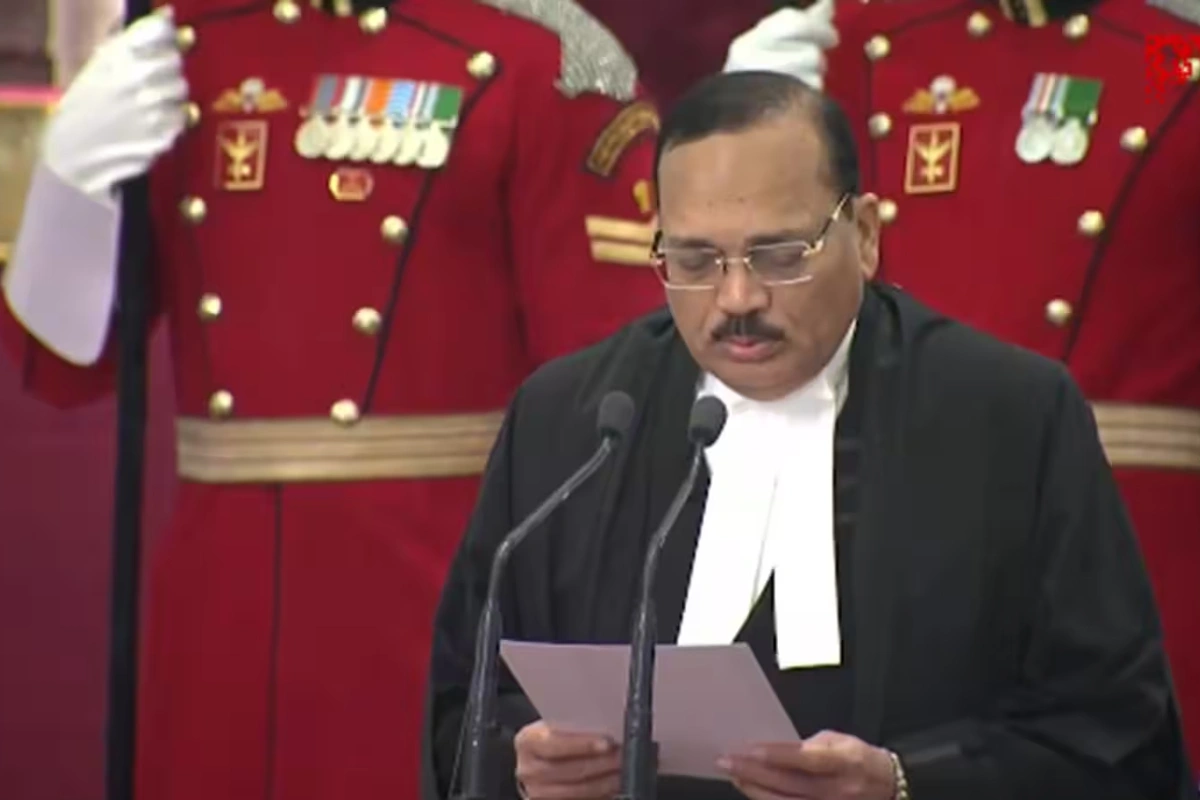
Chief Justice of India Surya Kant on Wednesday made a light-hearted remark to a petitioner seeking mandatory rotation of constituencies reserved for Scheduled Castes (SCs) and Scheduled Tribes (STs), suggesting that the issue should be taken up with Parliament rather than the judiciary.
DON'T MISS
Chief Justice Surya Kant Tells Petitioner Seeking SC/ST Quota Seat Rotation to Approach Parliament
During the hearing, CJI Surya Kant remarked, “You are dialling the wrong number. This is the age of protests and demonstrations. Perhaps you should follow suit.” The observation came as the Supreme Court considered a petition challenging the continued reservation of certain constituencies without a periodic rotation mechanism.
The petitioner’s counsel responded that he had no intention of staging a protest and was also suffering from a sore throat. The Chief Justice subsequently said the petitioner could raise his voice and urge Parliament to reconsider the issue, as the decision ultimately rested with the legislature.
Petitioner Seeks Rotation of Reserved Constituencies
The petition was filed by Jagdish Singh, a voter from the 191-Kadipur Assembly constituency in Uttar Pradesh’s Sultanpur district. He challenged the continued reservation of the constituency for SC candidates, arguing that it had remained reserved since the first general elections in 1952.
The petitioner contended that the absence of a rotation system had restricted electoral choices and benefited only a handful of families over several decades. He sought a mechanism similar to the rotation of reserved seats followed in panchayats and municipal bodies.
He also argued that the existing arrangement violated constitutional provisions, including Articles 14, 15 and 19, and referred to Articles 243D and 243T, which provide for reservation and rotation in local government institutions.


