


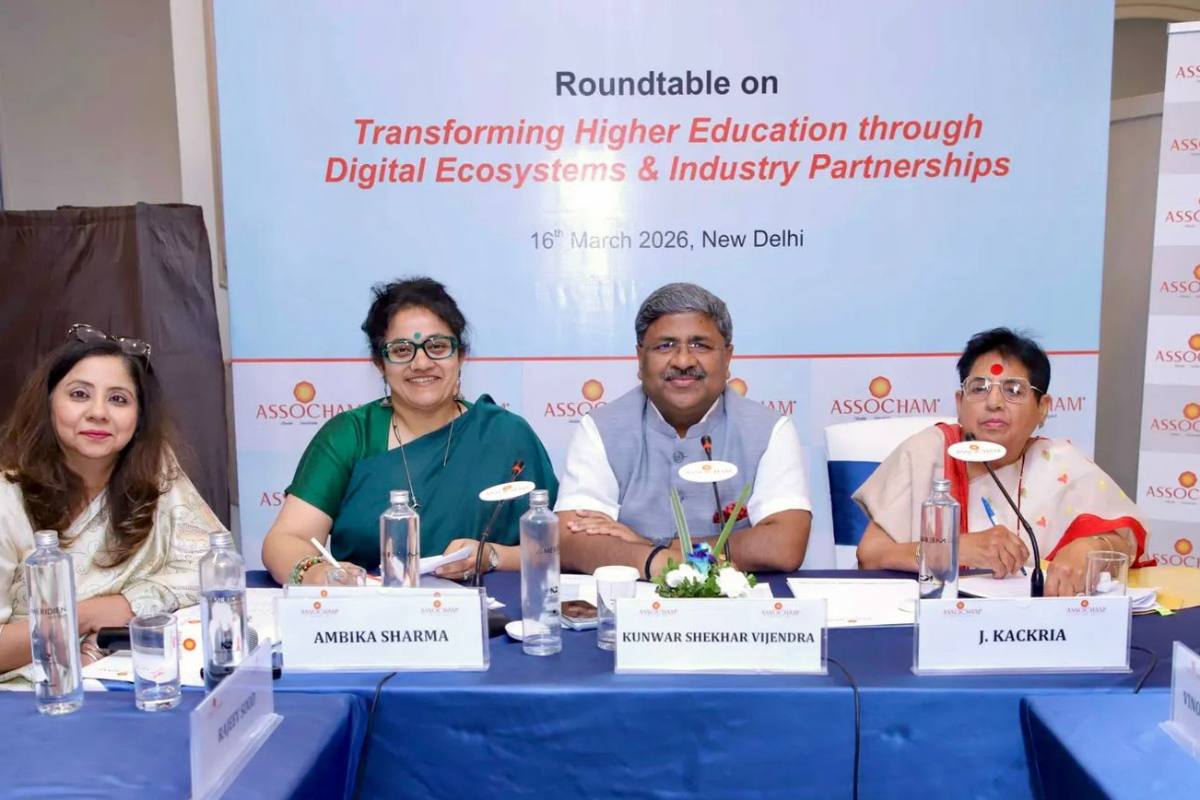
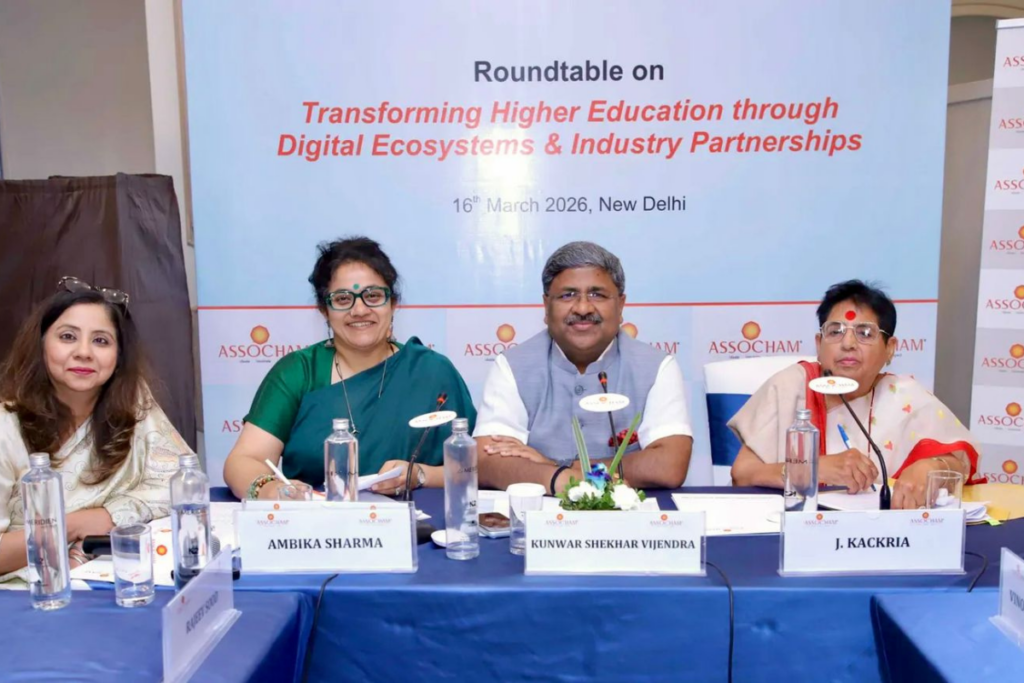
A national roundtable on “Transforming Higher Education through Digital Ecosystems & Industry Partnerships” was organised by ASSOCHAM National Education Council in collaboration with Shobhit University, bringing together academic leaders, industrial HR professionals, technology experts, and institutional practitioners for a substantive discussion on the evolving relationship between higher education and industry in a rapidly changing knowledge environment.
The roundtable was chaired by Kunwar Shekhar Vijendra, Chairman ASSOCHAM National Education Council and Chancellor, Shobhit University, who observed that while universities across India are steadily strengthening academic, research, and digital capacities, the next stage of educational progress will require deeper and more sustained engagement with industry.
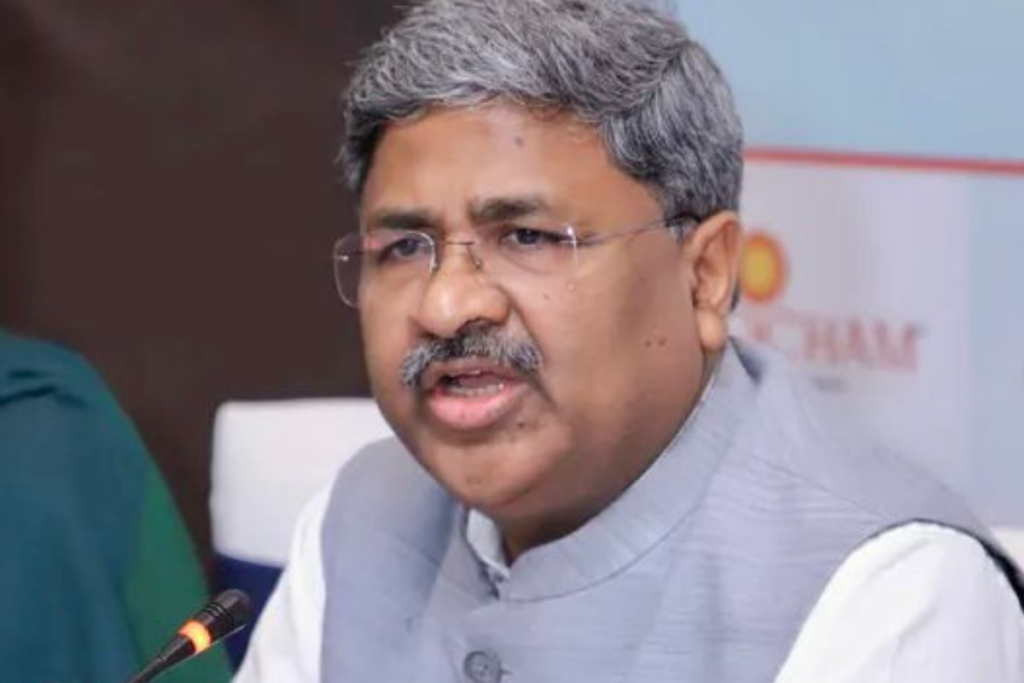
“The future of India will be shaped by how deeply education and industry learn to work together. If both continue to move separately, young talent may remain qualified, but not fully prepared for the realities ahead,” he said.
During the deliberations, industry representatives noted that one of the continuing concerns remains the gap between academic qualification and workplace preparedness. While graduates often possess foundational technical knowledge, many employers still encounter limitations in communication ability, practical problem-solving, adaptability to work culture, and interdisciplinary understanding.
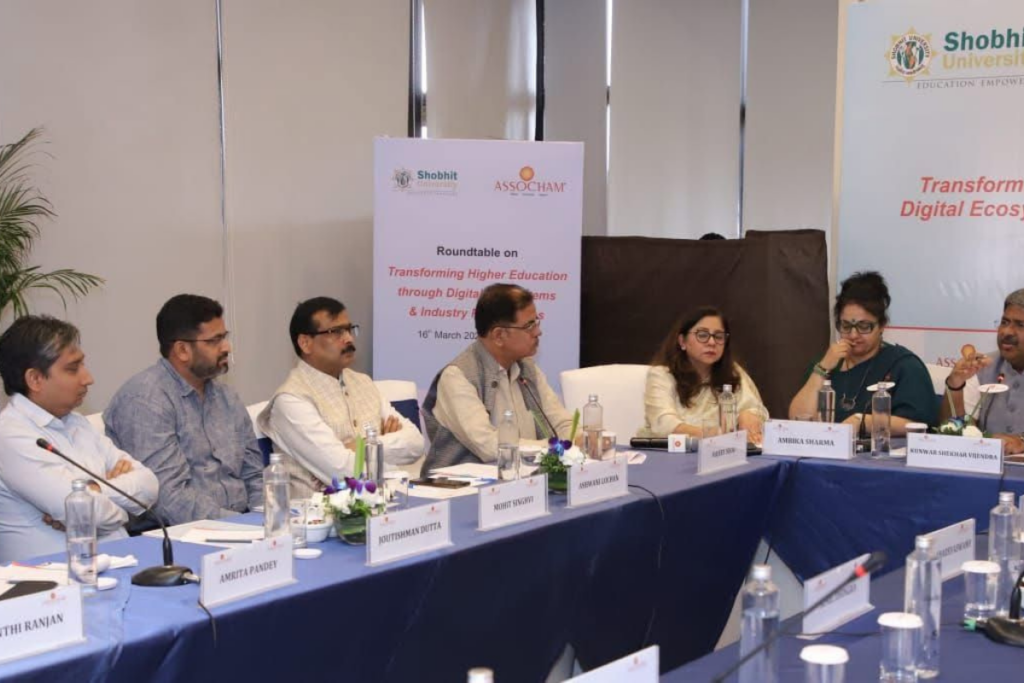
Several participants underlined that communication skills remain among the most frequently identified challenges during recruitment and early professional integration, particularly where young graduates are expected to work in collaborative and fast-changing professional environments.
The discussion also reflected that industry engagement with higher education must move beyond placements alone. Greater participation in curriculum design, structured internships, live project exposure, practitioner-led sessions, and regular faculty interaction with industry environments were identified as important areas requiring stronger institutional attention.
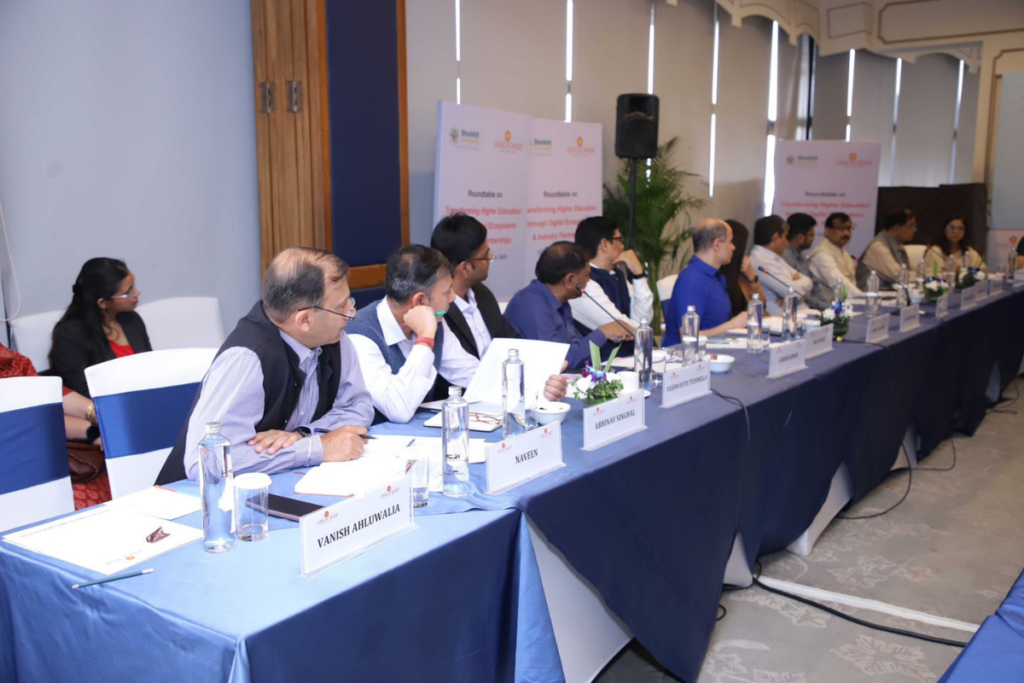
A significant point emerging from the roundtable was the need to strengthen joint research between universities and industry. Participants observed that academic research often develops independently of industrial problem statements, while industry itself has yet to fully utilise university-based research capability for applied innovation and long-term knowledge partnerships.
Suggestions included collaborative research platforms, applied innovation centres, industry supported doctoral engagement, and thematic centres of excellence where practical challenges and academic inquiry can converge more meaningfully.
The roundtable also examined the growing role of artificial intelligence, digital ecosystems, changing work structures, and the need for institutions to prepare learners not only for first employment, but for long-term adaptability in an evolving economy.
DON'T MISS
A shared reflection during the session was that technology has expanded educational possibility, but its true value lies in how effectively it is integrated with human judgment, ethical responsibility, and social understanding.
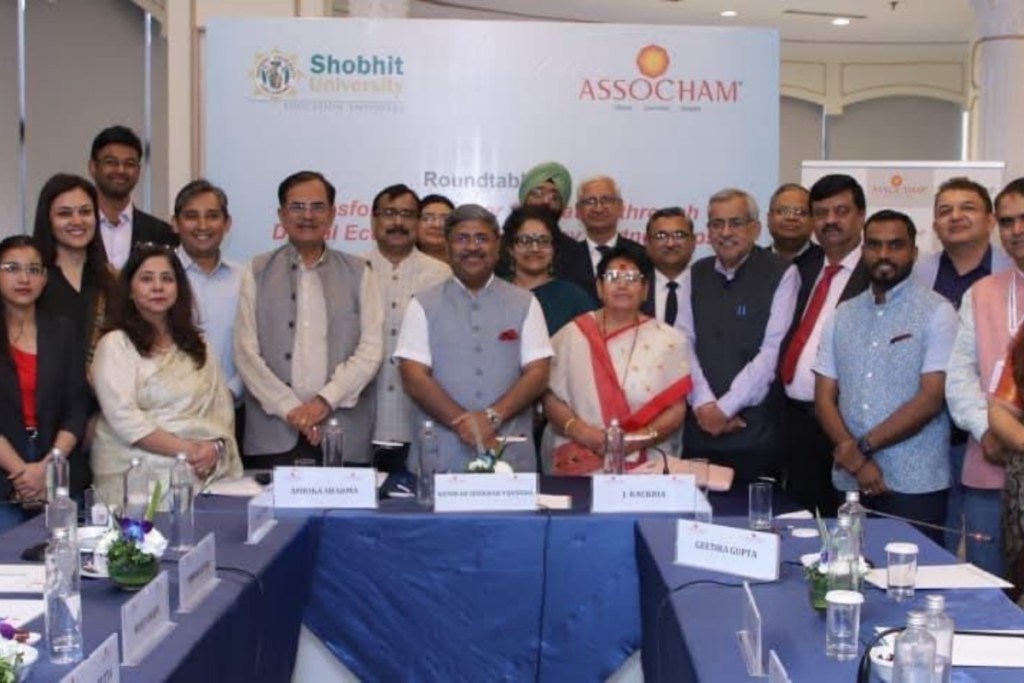
The programme was coordinated with active support from Dr. Ambika Sharma, Assistant Secretary General, ASSOCHAM, and Dr. Swati Sharma, Senior Director, ASSOCHAM.
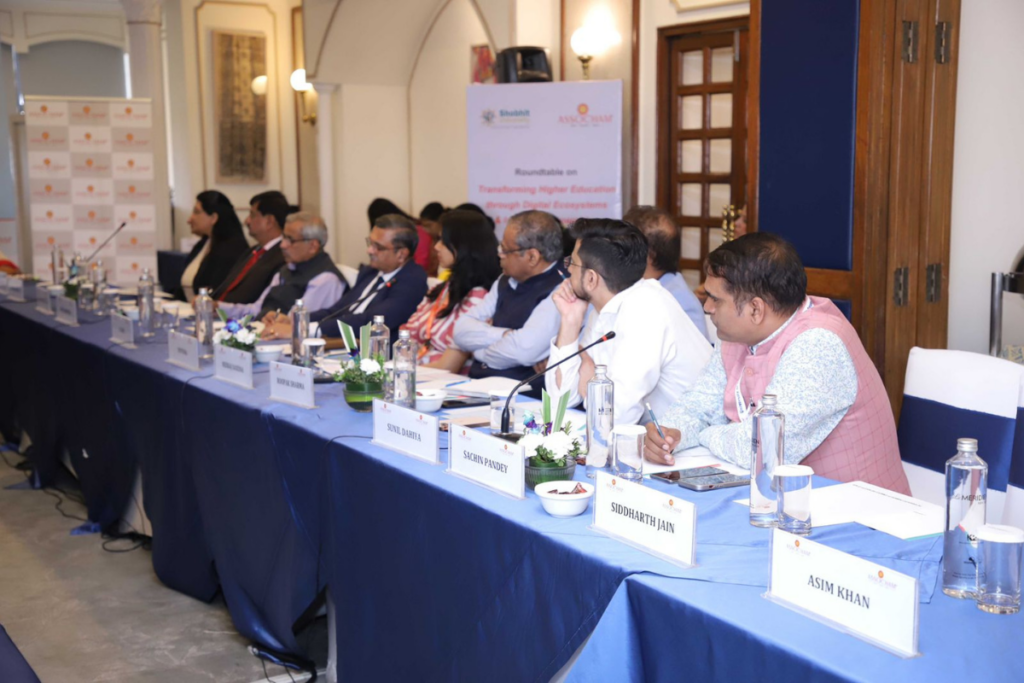
The deliberations concluded with broad agreement that if India is to strengthen itself as a knowledge-driven society, education and industry must move beyond occasional interaction and evolve into a more continuous, thoughtful, and future-oriented partnership for national development.
Contributed By Kunwar Shekhar Vijendra, Chairman ASSOCHAM National Education Council and Chancellor, Shobhit University