

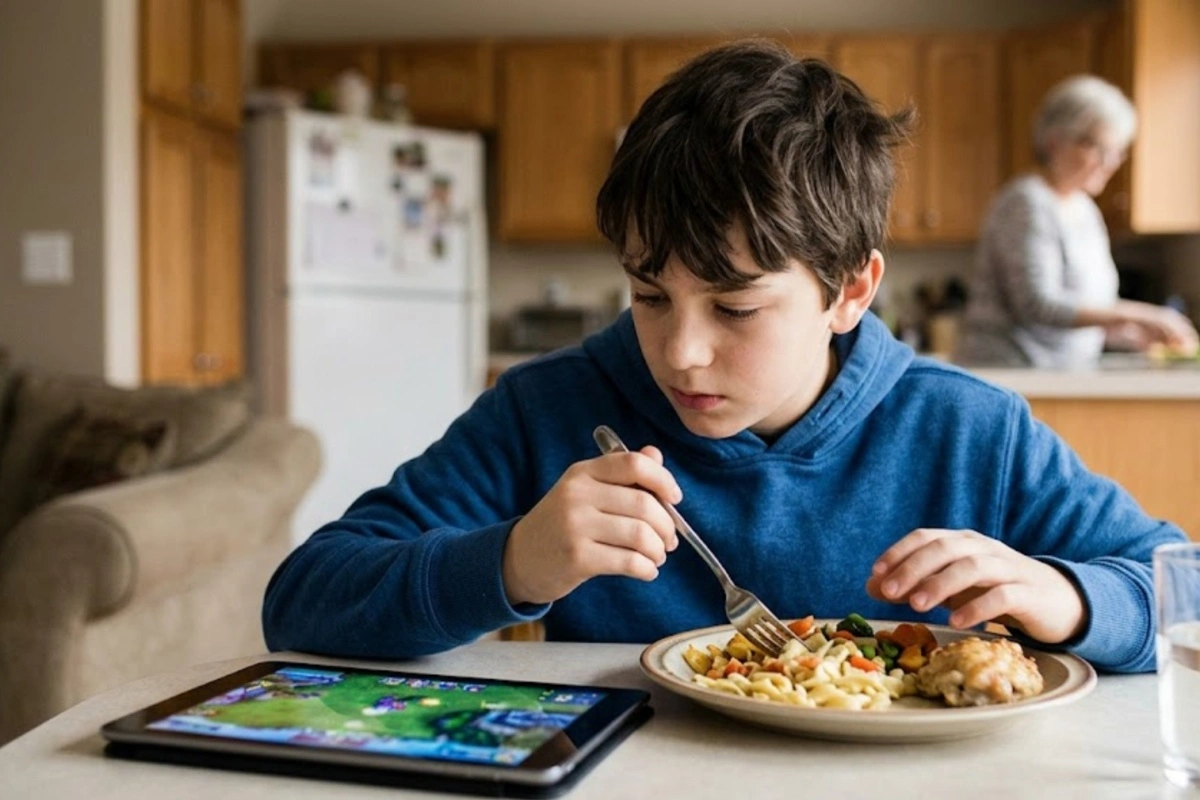
A Mumbai-based doctor has raised serious concerns about rising health issues in children linked to screen use during meals. In an Instagram video, he warned that children aged 10 to 13 are increasingly showing early signs of lifestyle disorders, including obesity, insulin resistance and fatty liver.
The doctor highlighted a growing habit among children – eating meals while watching screens. He said this behaviour is slowly changing how children understand hunger, fullness and food choices. According to him, this shift may be contributing to long-term metabolic issues like fatty liver at a very young age.
Fatty Liver Risk In Children Aged 10–13: What The Doctor Says
The doctor explained that screen use during meals is not just a distraction but a behavioural change. Children are now learning that eating must come with entertainment. This reduces mindful eating and may increase the risk of overeating.
He pointed out several key concerns:
- Children no longer recognise hunger and fullness properly
- Meals are consumed mindlessly, like “snacking during a movie”
- Food habits are shaped by external stimulation rather than natural appetite
He warned that this pattern can gradually lead to fatty liver, even in early adolescence.
How Screen Time May Be Linked To Fatty Liver
According to the doctor, screen exposure affects the body in multiple ways. One major concern is hormone disruption. Blue light from devices can interfere with melatonin and may also affect ghrelin (the hunger hormone) and leptin (the satiety hormone).
He explained that this can lead to:
- Increased hunger signals
- Sugar cravings
- A reduced feeling of fullness after meals
Over time, these changes may increase the risk of fatty liver and other metabolic issues in children.
He also warned about the dopamine loop. Scrolling on phones releases dopamine, and junk food does the same. Together, they create a habit loop where children begin to associate screens with unhealthy eating.
Why Eating With Screens Is Becoming A Bigger Concern
The doctor added that many parents unknowingly use phones as a distraction during meals. While it may make feeding easier, it can reshape how children build their relationship with food.
He stressed that early habits matter. If a child regularly eats while using screens, their brain begins to link food with digital stimulation. This can affect long-term health and increase the risk of fatty liver in growing children.
The doctor concluded with a strong message for parents. He said that a child’s eating habits are being shaped right now, not in the future. Small daily habits, such as screen use during meals, may have long-term consequences on health, including the risk of fatty liver.


