

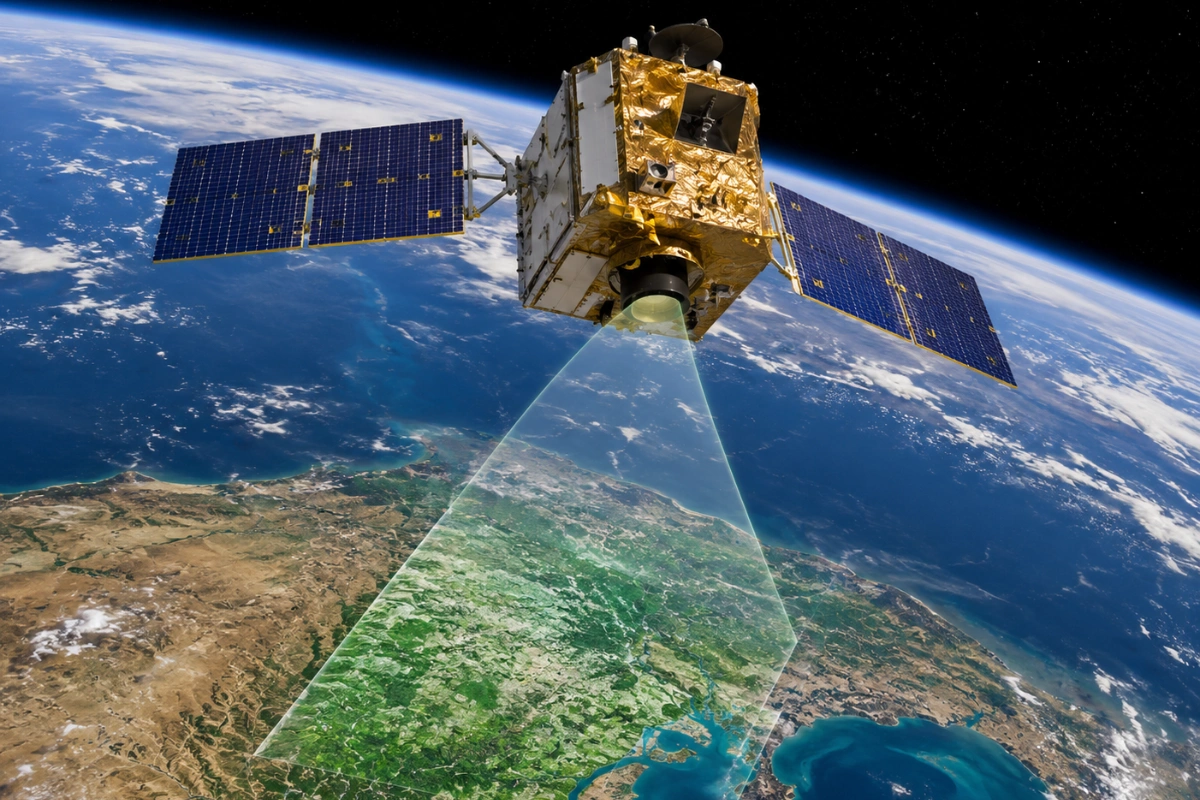
ISRO: The Indian Space Research Organisation successfully placed EOS-05 into its intended orbit aboard the GSLV-F17 rocket, marking India‘s first-ever imaging satellite stationed in geosynchronous orbit. ISRO Chief V Narayanan called the achievement a landmark moment, confirming that the “advanced Earth observation satellite” had been precisely injected into its required orbit. The launch was the 19th mission of India’s Geosynchronous Satellite Launch Vehicle programme and the 107th launch from Sriharikota.
DON'T MISS
Why Geosynchronous Orbit Changes the Game
Operating at an altitude of roughly 36,000 kilometres, EOS-05 can remain associated with the same broad region of Earth, unlike low-Earth-orbit satellites that must wait days to revisit a location. This near-continuous vantage point makes the satellite especially valuable for tracking fast-developing events such as cyclones, floods, forest fires and severe weather, alongside broader applications in agriculture and environmental monitoring. The Department of Space has also described EOS-05 as serving a strategic user, though further details remain undisclosed.
Redemption After a 2021 Setback
EOS-05, previously known as GISAT-1A, is effectively the operational successor to GISAT-1 (EOS-03), which was lost in August 2021 after an anomaly in the GSLV rocket’s cryogenic upper stage during launch. That failure had denied India its first attempt at a continuous-monitoring satellite from high orbit. With EOS-05 now successfully deployed and its solar panels confirmed active, ISRO will next carry out orbit-raising manoeuvres to move the roughly 2,367-kg spacecraft into its final geostationary configuration.
What Comes Next
ISRO: As orbit-raising continues, EOS-05 is expected to become fully operational in the coming weeks, giving India a persistent eye over its territory, borders and surrounding oceans — a capability long sought since the 2021 setback.


