

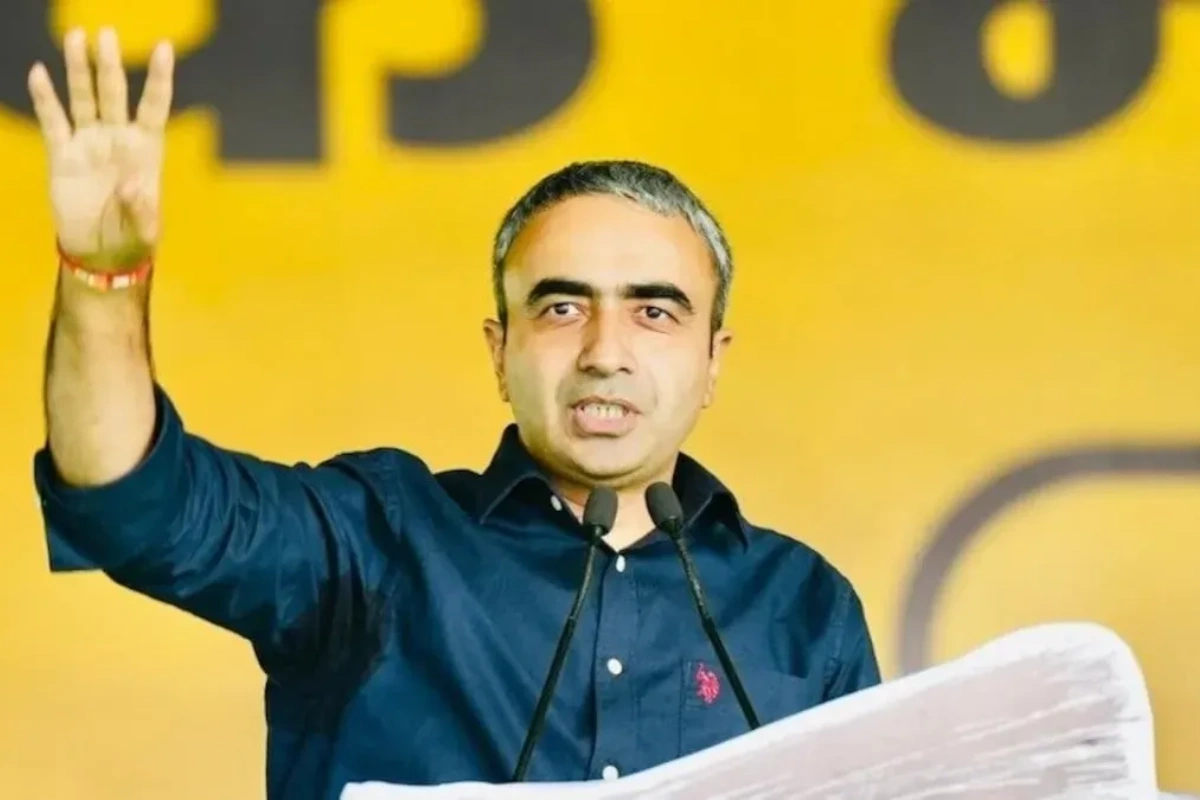
Anurag Dhanda has drawn a clear line between BJP-ruled states and AAP governments, taking recent developments in Uttar Pradesh and Punjab to highlight his party’s stand. Dhanda says, BJP governments are accused of silencing workers’ voices but AAP is trying to posture itself as a transparent, welfare and economic justice party.
UP: Allegations of Crackdown on Workers
Instead of dialogue, workers in Uttar Pradesh are facing police action,” Dhanda said, targeting the BJP-ruled states. He echoed broader claims of opposition that demonstrations and labours movements have been faced with arrests and legal pressures, rather than negotiations. These allegations are part of a larger narrative being propagated by AAP and other opposition voices portraying BJP rule as being insensitive to labour issues.
Punjab wage hike 15% as counter-model
On the other hand, Dhanda cited the decision of the Punjab government to increase minimum wages by 15 per cent on Labour Day 2026. Chief Minister Bhagwant Mann called the decision the first major wage revision in over a decade and a long overdue decision. The hike will be applicable to the workers in both government and private sectors and will benefit a wide section of the workforce.
AAP’s “Pro-Worker” Myth
AAP leaders are using this wage hike to project themselves as a pro-labour party. The Punjab move is being touted as part of a bigger “people-first” governance model along with policies like free electricity, better public education and welfare schemes. “Such steps are indicative of AAP’s commitment to improve the daily lives especially of low-income groups and unorganised workers,” Dhanda said.
Political Messaging Before Future Battles
Anurag Dhanda: The contrasting examples of Uttar Pradesh and Punjab are being used as a political message. AAP is trying to project itself as a strong alternative to the BJP, by showing alleged action in one state and wage hikes in another. Such narratives are likely to be important in shaping public perceptions around governance, labour rights and economic priorities as political competition heats up.


