

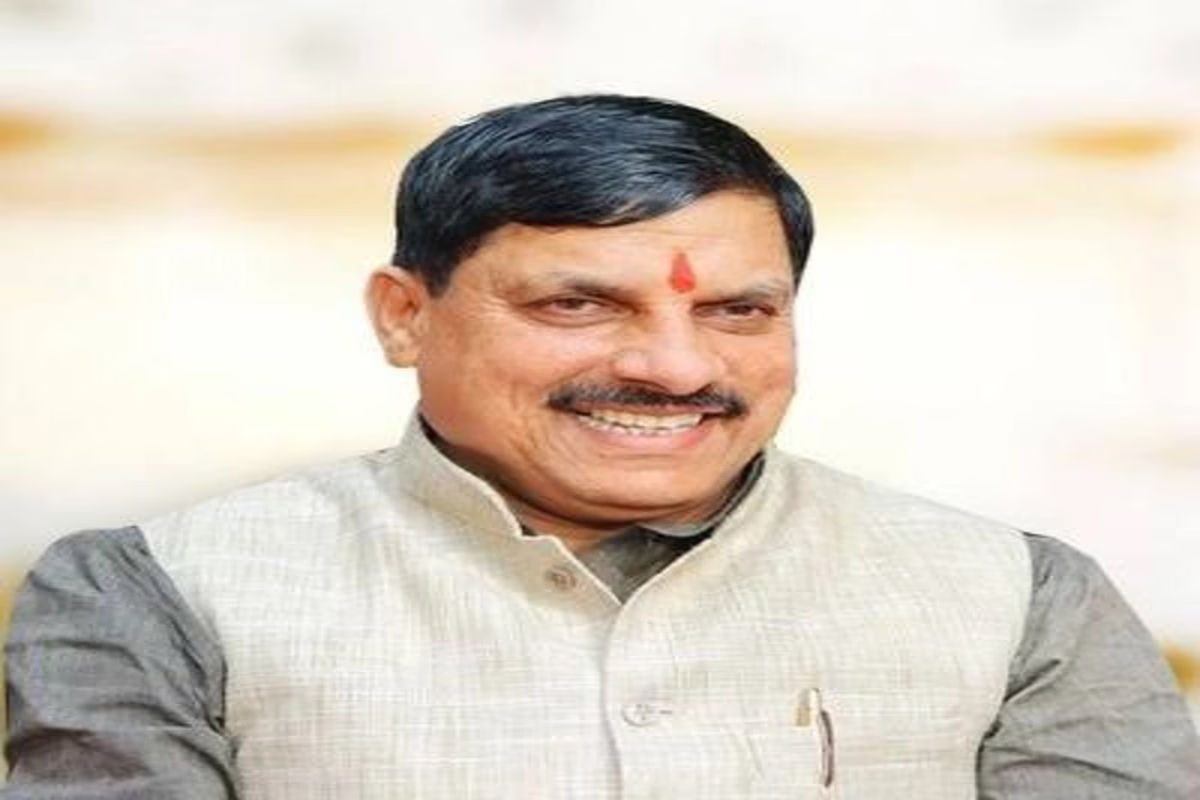
Madhya Pradesh Chief Minister Mohan Yadav has welcomed the Centre’s decision to reduce excise duty on petrol and diesel, stating that the move will provide significant relief to millions of citizens across the country.
Fuel Duty Cut to Bring Relief, Says MP CM Mohan Yadav
In a statement shared on social media, Yadav noted that the reduction of ₹10 per litre in central excise duty on petrol and diesel is expected to ease the financial burden on households and improve affordability of fuel.
DON'T MISS
Export Levies to Ensure Domestic Supply
He further highlighted that the government has imposed export duties of ₹21.5 per litre on diesel and ₹29.5 per litre on Aviation Turbine Fuel (ATF). According to him, this step will help ensure adequate domestic availability of fuel and stabilise supply within the country.
The Chief Minister credited the decision to the leadership of Prime Minister Narendra Modi, describing it as a balanced approach that addresses both consumer relief and supply-side management.
Officials believe that such fiscal measures can have a broader economic impact, including easing inflationary pressures and supporting sectors dependent on fuel consumption. The move is also expected to benefit transportation and logistics, which directly influence the cost of essential goods.
Economists suggest that a reduction in fuel prices can have a cascading effect across multiple sectors, including agriculture, manufacturing, and services, where fuel remains a key input cost. Lower transportation costs may also help in stabilising prices of essential commodities, offering indirect relief to consumers.
The imposition of export duties, on the other hand, is aimed at preventing excessive outflow of fuel products at a time of fluctuating global demand. By ensuring that a larger share of production remains within the country, the government seeks to maintain price stability and avoid supply disruptions.
Policy analysts also point out that such dual measures—cutting excise duty while regulating exports—reflect a calibrated approach to balancing domestic needs with international market dynamics. This becomes particularly important in the context of volatile crude oil prices and geopolitical uncertainties.
The development underscores the government’s continued focus on managing fuel economics in a way that supports both consumer welfare and energy security, while maintaining stability in the broader economy.


