

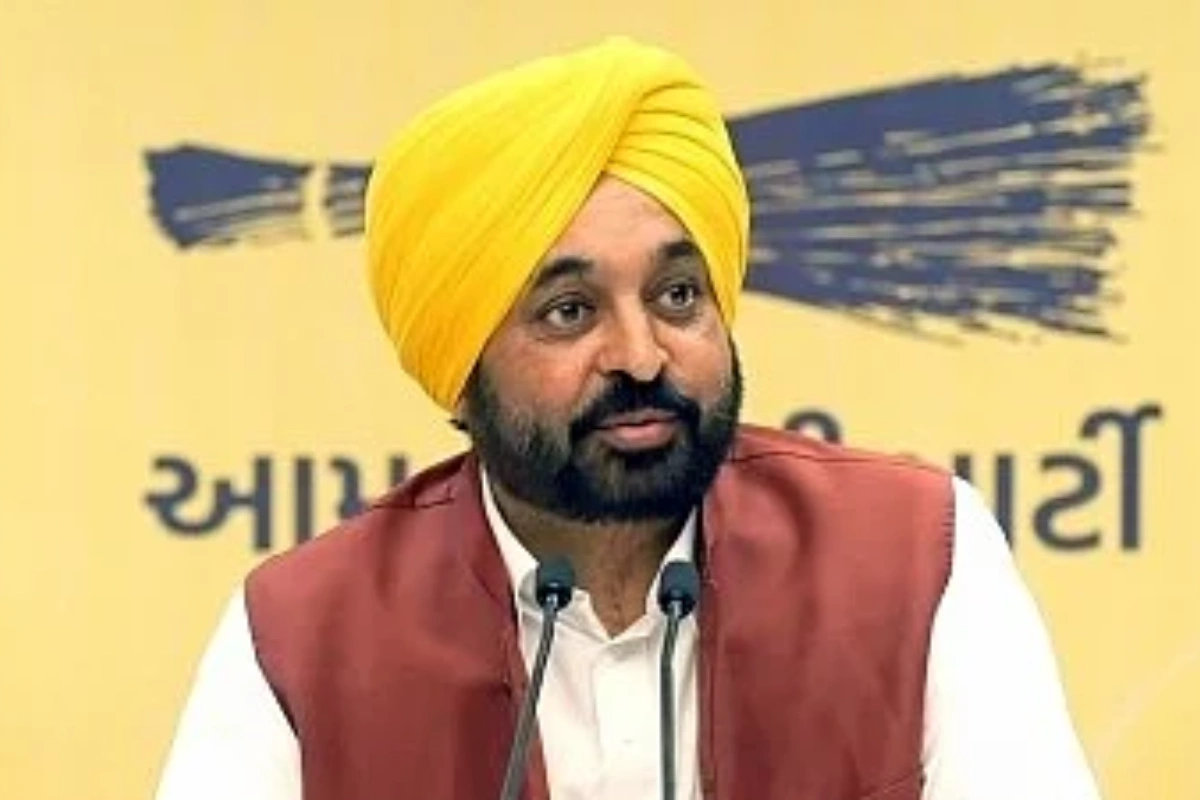
Punjab Chief Minister Bhagwant Mann has once again taken aim at the BJP-led central government, questioning why ordinary citizens are being forced to use E20 (20% ethanol-blended) petrol even when their vehicles were never designed for it. His remarks came as Punjab‘s Finance Minister Harpal Singh Cheema moved a resolution in the state assembly opposing the Centre’s mandatory fuel-blending policy.
What Exactly Is the Dispute?
E20 petrol mixes 20% ethanol with regular fuel and is part of the Centre’s push to cut oil imports and reduce emissions. But a citizen awareness group, Local Circle, studied its effect on 45,000 vehicles and found that it impacted mileage and damaged engines, a finding Mann repeatedly cites to back his opposition.
Mann’s Sharp Allegations
Speaking in the Assembly, Mann didn’t hold back. He questioned the government’s real motive, suggesting the push wasn’t only about the environment but possibly tied to business interests, and alleged it was being done under pressure from the US as part of a $100 billion Indo-US trade deal requiring India to purchase 5 billion litres of ethanol.
Assembly Passes Resolution
The Punjab Vidhan Sabha responded by passing a resolution demanding the Union Government suspend the compulsory nationwide rollout of E20 for vehicles not originally certified for the blend, until compatibility, consumer protection and scientific concerns are properly addressed. Lawmakers also insisted that consumers should have the choice between ethanol-free and E20 petrol.
The Centre Pushes Back
The government hasn’t accepted these claims quietly. Union Minister Nitin Gadkari has dismissed such criticism, calling the campaign against E20’s efficiency “completely false”, while the Petroleum Ministry has said the actual mileage drop is marginal around 1-2% for E20-calibrated vehicles and 3-6% for others.
The Political Battle Ahead
With Congress and other opposition parties also planning to raise the E20 issue in Parliament, the fuel-blending policy is fast becoming a fresh flashpoint between states and the Centre one that could shape the political conversation ahead of upcoming sessions.


