


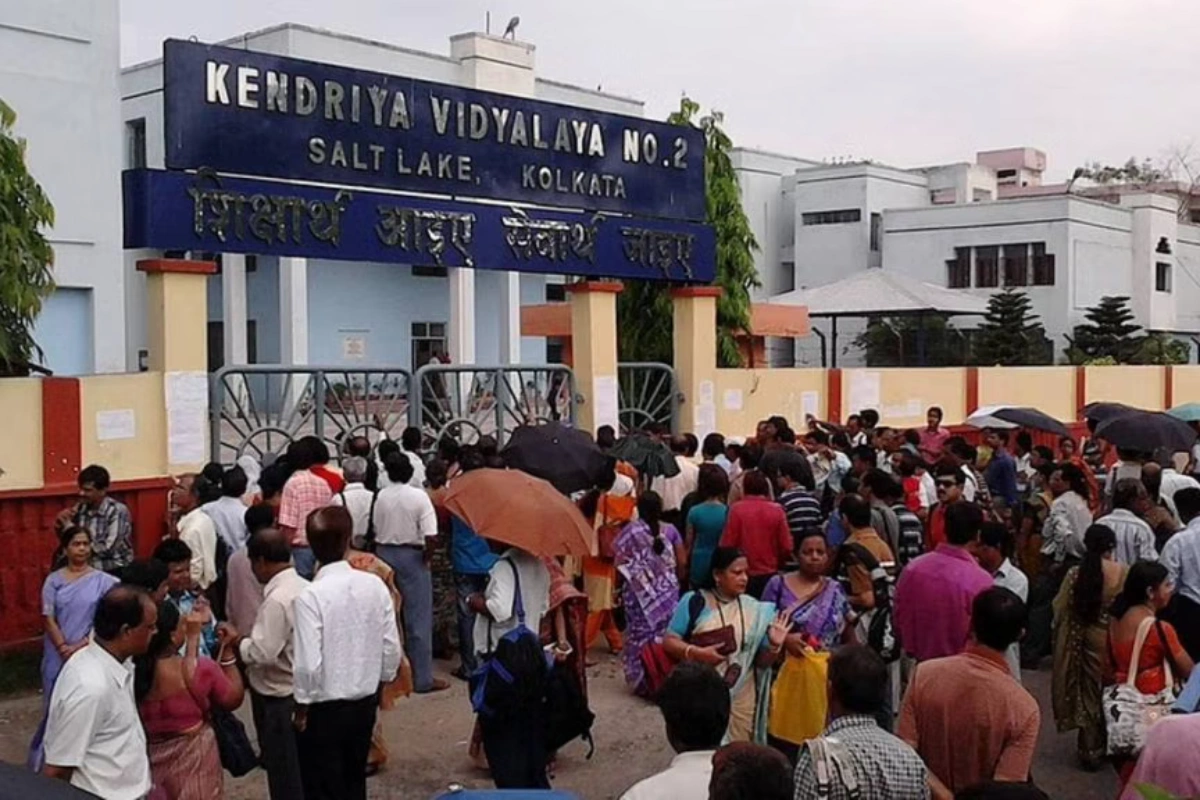
Kendriya Vidyalaya: The Union Government has sanctioned 4 new Kendriya Vidyalayas across the states of Uttarakhand, Uttar Pradesh, Jammu & Kashmir and Bihar from this academic session.
Recently, the government cleared institutions in Kendriya Vidyalaya Gool in Ramban district of Jammu & Kashmir, Kendriya Vidyalaya No. 3 Darbhanga (AIIMS) in Bihar, Kendriya Vidyalaya Madan Negi in Tehri Garhwal and Kendriya Vidyalaya Shamli in Uttar Pradesh.
Kendriya Vidyalaya Updates
It was confirmed by KVS that the required land has been transferred by the sponsoring authorities. It was also commented that suitable temporary accommodation has been provided so that the educational institutions could be made operational without any further delay.
DON'T MISS
The institutions would start initially with single sections from foundational levels, ranging from Balvatika (where applicable) and Classes I to V. It was remarked that the KVS institutions would expand in a phased manner based on further approvals and feasibility.
As per the KVS guidelines, the admission process for the newly-established KVs should be completed within a period of 30 days once the pending formalities related to land transfer and possession of temporary facilities get completed.
Benefits Of Kendriya Vidyalaya For Families
Originally established to cater to children of transferable central government employees, these schools have evolved into aspirational institutions for middle- and lower-middle-class families seeking stability and quality in public education.
Teacher absenteeism, inadequate training, bureaucratic inertia and crumbling infrastructure continue to plague many state-run institutions in the states of Uttarakhand, Uttar Pradesh, Jammu & Kashmir and Bihar. Their standardized curriculum, regular teacher transfers, and comparatively robust monitoring mechanisms have helped maintain a level of consistency rarely seen elsewhere in the public system.
The opening of new KVs in regions like Jammu & Kashmir and parts of Bihar and Uttar Pradesh could therefore help bridge gaps in underserved areas, offering students access to a more reliable schooling environment.