

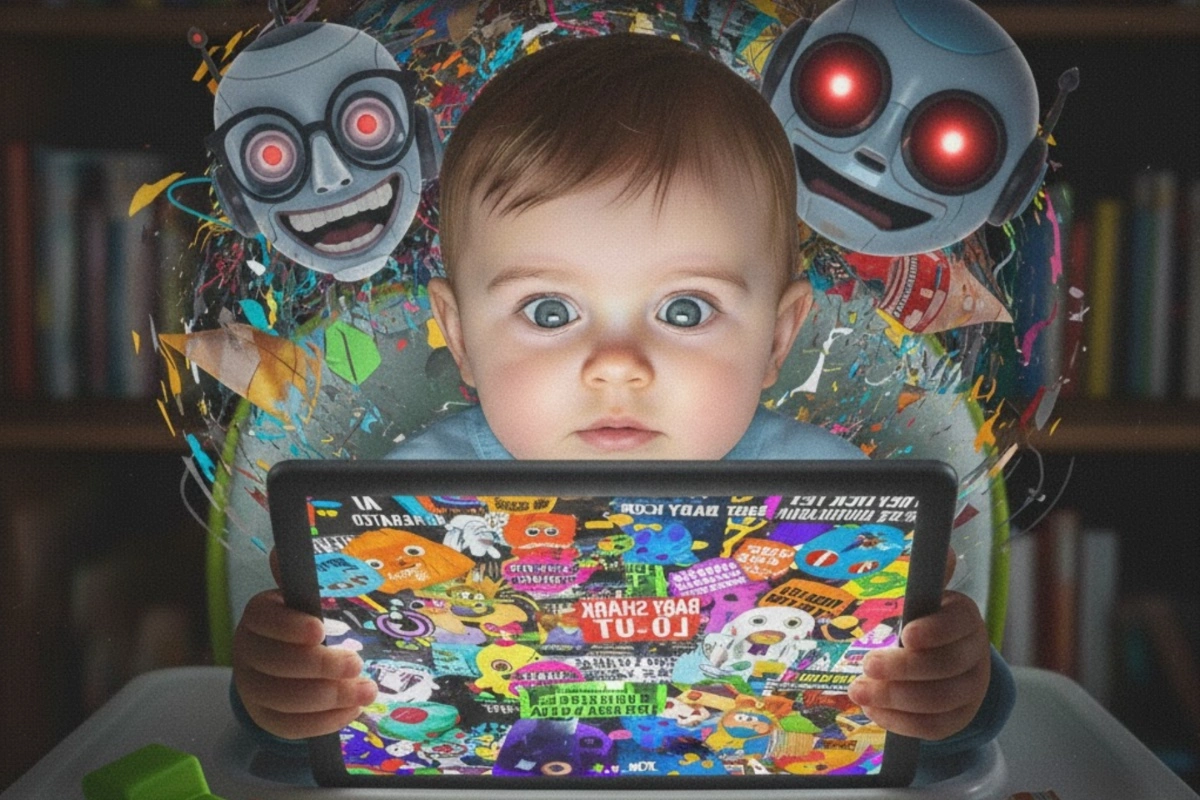
What your toddler watches can shape how their brain grows (for better or worse). New data shows that many babies and toddlers are watching videos on YouTube that may offer little real value. Experts warn that a wave of cheaply made videos generated by Artificial Intelligence tools is appearing on feeds meant for children.
As reported by the Indian Express, a survey by Pew Research Center found that about 62% of parents with children under two say their baby watches YouTube. That is a big jump from five years ago, when fewer than half of parents reported the same.
This trend has caught the attention of child‑development experts and journalists. Bloomberg reports that many videos are what critics call “AI slop.” This means low-quality, mass-produced content made with very little effort. Often, these videos use stock images, shaky animations, or AI‑generated voices.
DON'T MISS
What’s Wrong With This Content Generated By Artificial Intelligence
1. Most videos for very young children rely on automation, not carefully planned educational design.
2. Some show random images or use distorted AI voices. They are not real learning tools.
3. Developers and psychologists warn that these videos can mislead growing minds.
One developmental psychologist told Bloomberg, “AI gives creators an unbelievable mechanism to generate a high quantity of low-quality videos that are purporting to be educational or good for kids.”
Why Babies Are Watching These Trashy Artificial Intelligence-Generated Videos
Convenience plays a big role. Many parents give a phone or tablet to babies to keep them occupied while they do chores. Even though YouTube Kids is made for ages 2–12, many children under two are still watching videos on it.
Early childhood is a crucial time for learning basic language and cognitive skills. Watching poorly made content can affect healthy brain development. Videos without a clear structure or meaningful interaction may offer no real education and could even confuse young children.
Toddlers cannot always tell what is real and what is AI. That means creators can push low-effort content because little kids usually do not notice.
What Parents Can Do
1. Pre-screen and choose trusted channels rather than using autoplay.
2. Use parental controls whenever possible.
3. Prefer human-made videos that are age-appropriate and thoughtfully produced.
4. Limit screen time, especially for children under two. Experts recommend minimal exposure to screens at this age.
YouTube and online videos can be powerful learning tools. They can teach language, music, and early concepts. But content generated by Artificial Intelligence for babies brings risks. What seems like harmless fun may provide little learning and could affect a toddler’s development.
Parents and caregivers should ask themselves: Are we choosing convenience over quality when it comes to what our children watch?


