

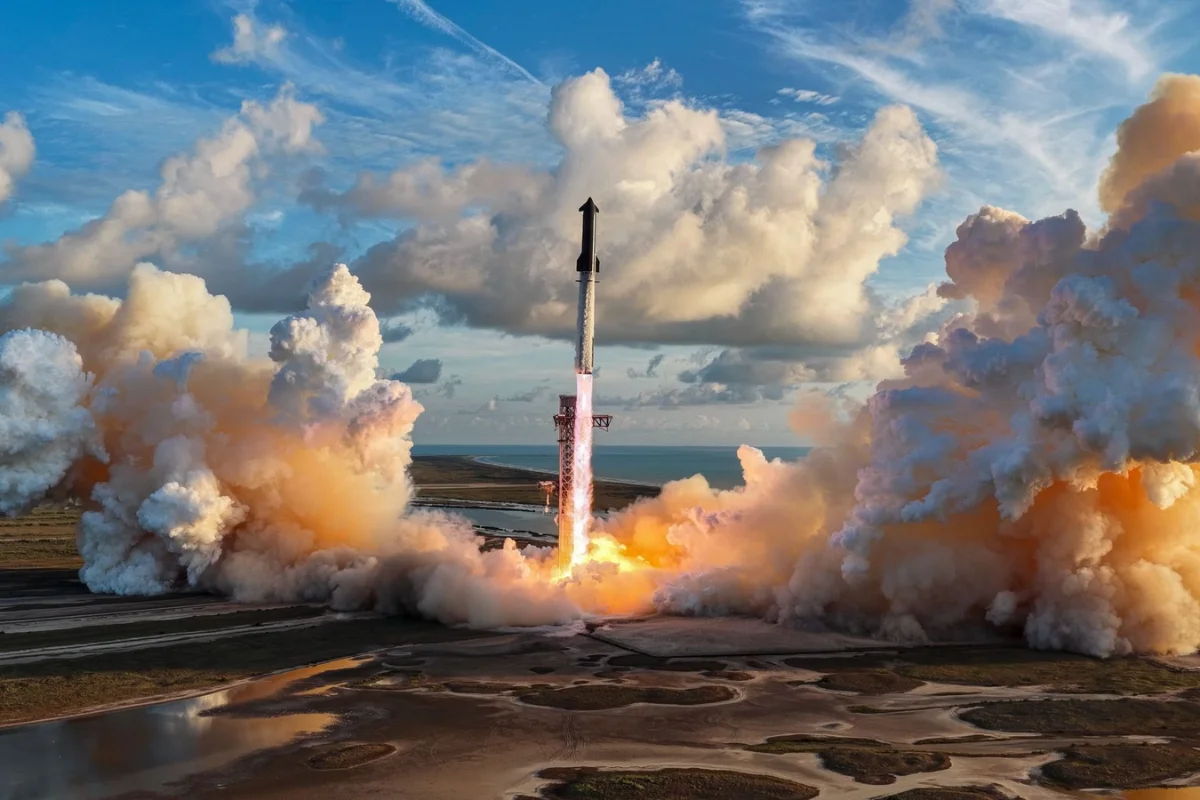
The worldwide space sector has seen a lot of thrilling growths as space company SpaceX, headed by Elon Musk is on a mission to revolutionize and improve affordability and to create reusable spacecraft.
How Did SpaceX Achieve the Historic Starship Catch?
Elon Musk‘s space venture has built a hi-tech catching system called Mechazilla. The system employs two giant mechanical arms affixed to the launch tower, which will grab the coming Super Heavy booster once it detaches from the Starship.As the early stages of the first test flight ended and the second stage disappeared from view, the booster drifted back to the launch site and approached the launch tower rather than a standard landing pad.The robotic arms grabbed the booster in mid-air, bringing it to a halt a significant step toward robots taking over rocket recovery operations. The recovery method will allow rockets to be ready for their next trip to space.
What Makes Elon Musk’s Starship Different From Other Rockets?
Starship is a full-reusable transportation system, of which the Super Heavy booster and the Starship spacecraft are the two main stages.The booster for Super Heavy delivers the thrust needed to elevate the vehicle from the Earth. Upon separation, the spacecraft takes off on its journey while the booster begins its return to base.Current launch vehicles jettison their primary parts after use, whereas SpaceX intends to retrieve and reuse both first and second stages.
DON'T MISS
Why is Rocket Reusability Important for Future Space Travel?
One of the biggest challenges in space exploration today is rocket reusability. So far, it’s a costly endeavor to launch all the expensive parts of a rocket once and then see them fall apart afterwards.That means if a rocket is powered down, it can’t fly again. That’s one reason for the high cost of launch. SpaceX is trying to change that by creating a rocket that can fly after its large parts are recovered and checked out.
Potential benefits may include:
- Reusing parts of rockets might lead to cheaper launches.
- Recovered boosters might be ready to go sooner.
- Increased launches: Reusability may enable more launches.
- Huge reusable rockets might have the ability to ferry satellites, instruments, and even cargo to space.
How Could Starship Support Future Moon and Mars Missions?
The Starship spacecraft is designed for future space missions, with the ultimate aim of carrying both passengers and cargo to space. Starship is to be part of the Artemis programme as a future human lander for the Moon. In addition, the spacecraft may carry astronauts, supplies and equipment for future Mars missions.
What Does This Mean For The Global Space Industry?
SpaceX has revealed that the booster-catching technology they use is a significant step forward for the commercial space industry. It is just a new way of recovering a rocket and may affect the design of upcoming launch systems. Various other space companies and organisations are working on reusable launch capabilities. Competition on these projects might stimulate more research, engineering upgrades, and investment in space transportation.


