

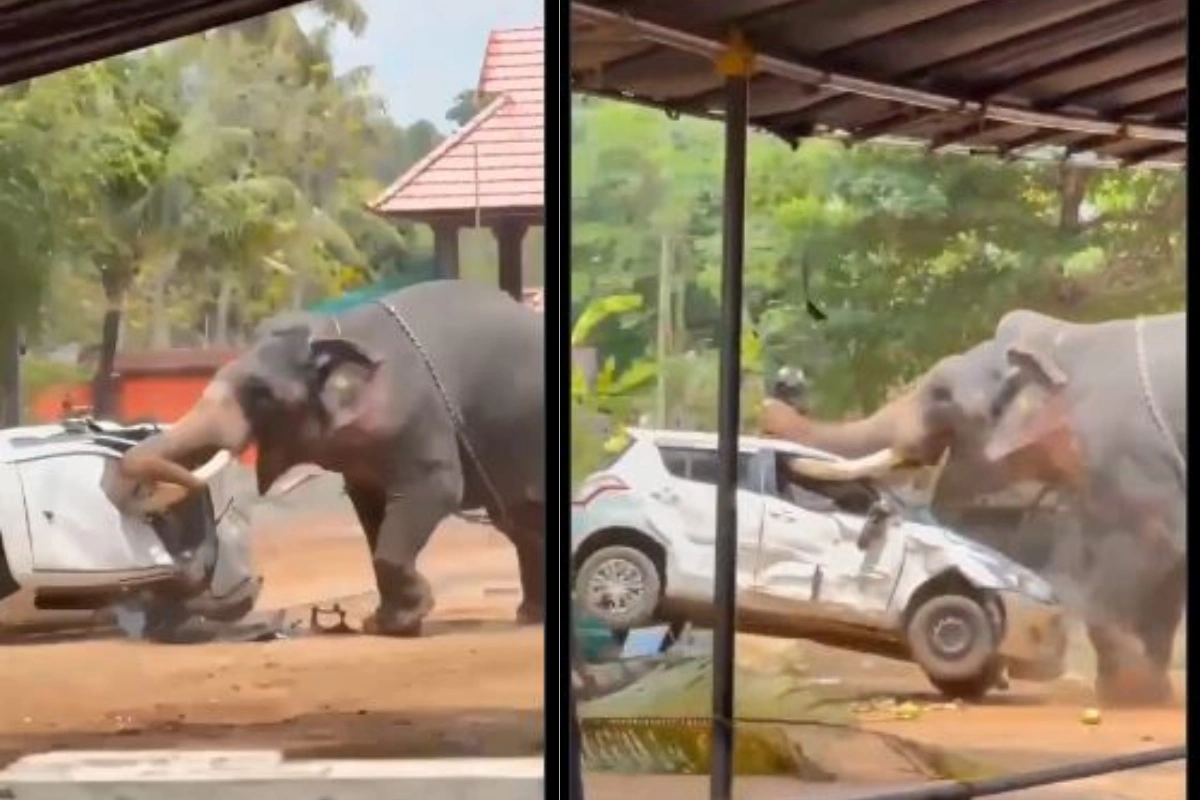
Keralam Viral Video: A disturbing viral video emerging from Kerala has once again highlighted the relationship between humans and wildlife into focus. In the now viral video, a wild elephant could be seen charging aggressively at a car to attack in a sudden burst of rage, leaving viewers across social media stunned.
Keralam Viral Video-Turn Of Events
The video is reported to be of Kidangoor Mahavishnu Temple in Angamaly, Kerala, on May 1. The elephant Mayyanad Parthasarathy went into musth and suddenly turned violent to kill Vishnu, a lorry driver from Kollam, while injuring mahout Pradeep seriously injured. The elephant damaged and overturned several other vehicles while also destroying several walls of the temple.
DON'T MISS
Within moments, the animal becomes visibly agitated, trumpeting loudly before charging at the vehicle. The driver, seemingly trapped on the constrained path, attempts to reverse, but the elephant closes the distance quickly and strikes the car with its tusks and trunk. The force of the impact is enough to jolt the vehicle violently, underscoring the raw power of the animal in distress.
Social Media Comments
A user commented, “This video is shocking, but not surprising anymore. We keep pushing into forest areas and then act shocked when wildlife reacts. Elephants don’t understand roads and vehicles the way humans do. It’s a serious reminder that we are the ones entering their space.” Another user wrote, “The driver must have been terrified during that moment. Imagine being stuck in a car while a giant elephant charges at you. Even a small mistake in such situations can turn dangerous. We really need better warning systems in forest routes.” Another user said, “People are blaming the elephant, but that misses the point. These animals are reacting to stress and habitat loss. Encroachment is a long-term issue that nobody wants to address properly. Until that change, such incidents will keep happening.” A user said, “This is not just a wild animal attack” story It reflects decades of environmental pressure and deforestation. We need long-term thinking, not just reactions.”


