

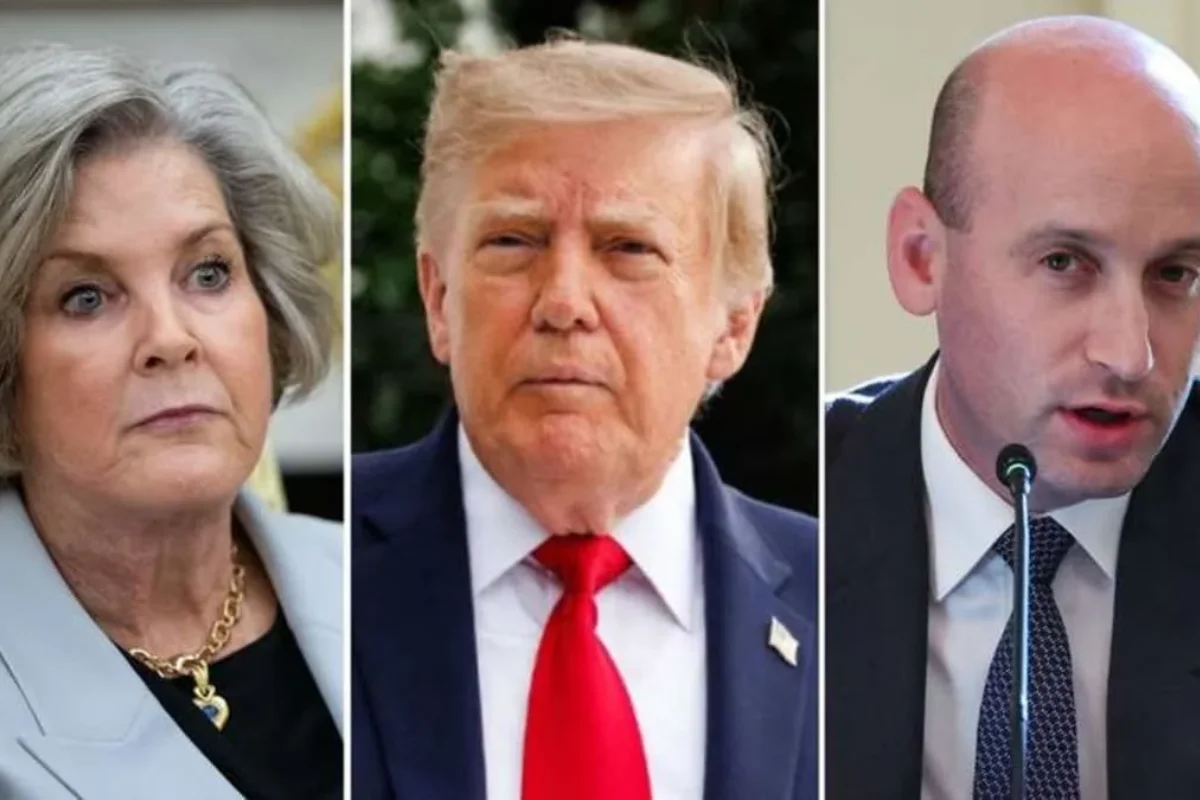
US President Donald Trump has undergone a major shake-up of his White House team after the Republican Party suffered heavy losses in the 2026 US Midterm Elections. Susie Wiles, who has been White House Chief of Staff, will be resigning and taking a new role with President Trump’s long-time advisor Stephen Miller replacing her. The new leadership comes after Democrats took control of both houses of the US Congress in the midterm elections of 3 November. The result has posed new political obstacles for Trump, whose administration will now have to work with a Congress controlled by the opposition.
Why is Susie Wiles leaving the White House?
If not the first, Susie Wiles was at least among the first women to hold the position of White House Chief of Staff. She contributed substantially to Trump’s 2024 campaign and went on to be an instrumental figure in his presidency.As a White House staff member, Wiles was in charge of scheduling the President’s day to day diary, orchestrating top members of the President’s staff, and the internal function of the White House.He complimented her and claimed that she did a fantastic job. He additionally mentioned Wiles would step out of his political group, but not his politics group.The decision to leave has been made by Wiles, who submitted her resignation on Thursday, November 5, according to reports. Vance Wiles’ resignation comes as Trump is coming under pressure from the GOP in the wake of the midterm disappointment.
Who is Stephen Miller, Trump’s new chief of staff?
Stephen Miller is a longtime Trump ally who has worked for the president since his 2016 campaign.Prior to his latest confirmation, Miller was the Deputy Chief of Staff for Policy and was integral in the development of the administration’s domestic agenda.His best-known stands include his firm stance on immigration, border security and deportation policies. Miller has been a major behind-the-scenes architect of Trump’s immigration plans.As the White House Chief of Staff, he will hold one of the most influential jobs in the US administration. He will now have to the policies the President wishes to pursue and run the White House office.
DON'T MISS
How Did The US Midterm Elections Change Trump’s Political Situation?
On 3 November 2026, US midterm elections, a huge blow for the Republican Party. The Democrats gained the majority of seats in the House of Representatives and the Senate – putting them in the driving seat of lawmaking. Such outcomes could obstruct Trump from successfully pushing new legislation forward without concessions with Democratic members of Congress. A Congress controlled by Democrats can also hold investigations, hold hearings and question administration decisions. The campaign focused on topics including the economy, immigration enforcement, and the US-Iran conflict, which were prominent issues.So, now, these results have made a tough situation for Trump as he enters the next chapter of his presidency.
Will Stephen Miller Have A New Approach To Trump’s White House?
Miller’s bid is drawing criticism and attention because of his very close ties to current Trump policies and positions. What he believes about immigration and border security has driven the administration’s policies. Having him raised up may signal Trump plans to keep doing what he has been doing now that he has lost the election. Nevertheless, the new Chief of Staff also faces challenges of interfacing with lawmakers, sculpting his relationships with government agencies, and answering questions from Democrats. Once the opposition had gained control of Congress, debate and political wrangling could become routine for the government.
What Happens Next for Trump’s Administration?
The Wiles-Susie replacement with Stephen Miller in the White House: Trump is a powerful shake-up. Wiles is part of the President’s political machine, while Miller will be in charge of guiding the machinery of the administration from within. The move also comes at an important time for Trump, who faces a newly emboldened Democratic Congress while still trying to advance his agenda. It remains to be seen if Stephen Miller’s role will alter the way the White House operates or if it will simply bolster the president’s general tendency. The next few months will reveal how the White House handles the political fallout from


