

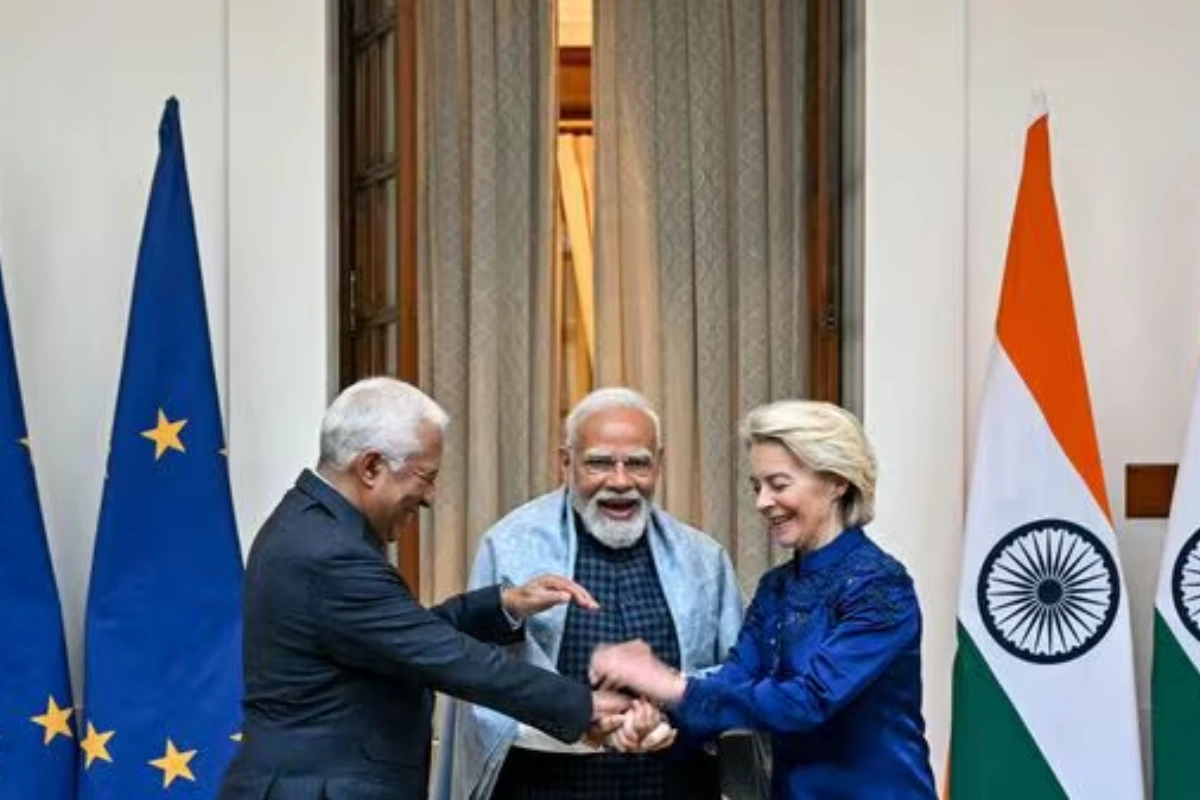
India EU FTA Deal: Ending two decades of negotiations, the European Union (EU) and India have signed a historic “mother of all deals” that has send shivers to Washington, Beijing and Islamabad.
The FTA deal comes at a time when global trade flows have been heavily impacted by fragile supply chains, high tariffs by the United States and geopolitical tensions, including the possible Iran-Israel-USA and Russia-Ukraine war.
India EU FTA Deal-The Triggers
In recent times, the Donald Trump administration has been against the European Union for blocking his obsession for Greenland.
On the other hand, Trump has been imposing illegitimate tariffs on India as Narendra Modi never acknowledged Trump’s obsession for the Nobel Peace Prize Award. Now, Trump would be under extreme pressure to do something better and bigger but he is losing a majority of his allies across the globe.
What The FTA Deal Covers?
The FTA deal between 27-nation EU and India would cover more than 2 billion people. It would cover approximately 25 percent of the global gross domestic product and a combined market of about $27 trillion.
The historic FTA deal was signed by Indian Prime Minister Narendra Modi, European Council President Antonio Costa and European Commission President Ursula von der Leyen. Modi remarked this agreement would bring endless opportunities for the people of Europe as well as India.
In a post on X, Ursula von der Leyen remarked both India and EU are making history with the FTA deal.
In 2023, the European Union withdrew its generalized scheme of preferences (GSP) advantages for India, which exposed the country’s exporters to higher tariffs. The new deal would give India a distinctive edge in different sectors, including steel, pharmaceuticals, electrical equipment, petroleum products, machinery and textiles.
What All Will Become Cheaper For Indians?
The FTA would bring big smiles on the faces of automobile enthusiasts and wine connoisseurs. European Cars such as Audi, BMW and Mercedes would now see prices of their cars slashed by several lakhs.
The FTA deal would reduce the import duty on wines to 20 percent from a staggering 150 percent. This would make premium gins, vodkas and cognac cheaper in India.
The deal would also mean mobile phones would become cheaper in India due to end of tariffs on mobile phones, high-tech electronic items and aircraft spare parts. Homebuyers would benefit from zero tariffs on steel, iron and chemical products, reducing the prices of raw materials in the industrial and construction sectors. Indian exporters would also be the beneficiaries of the massive European market for leather, jewellery and garments.


