

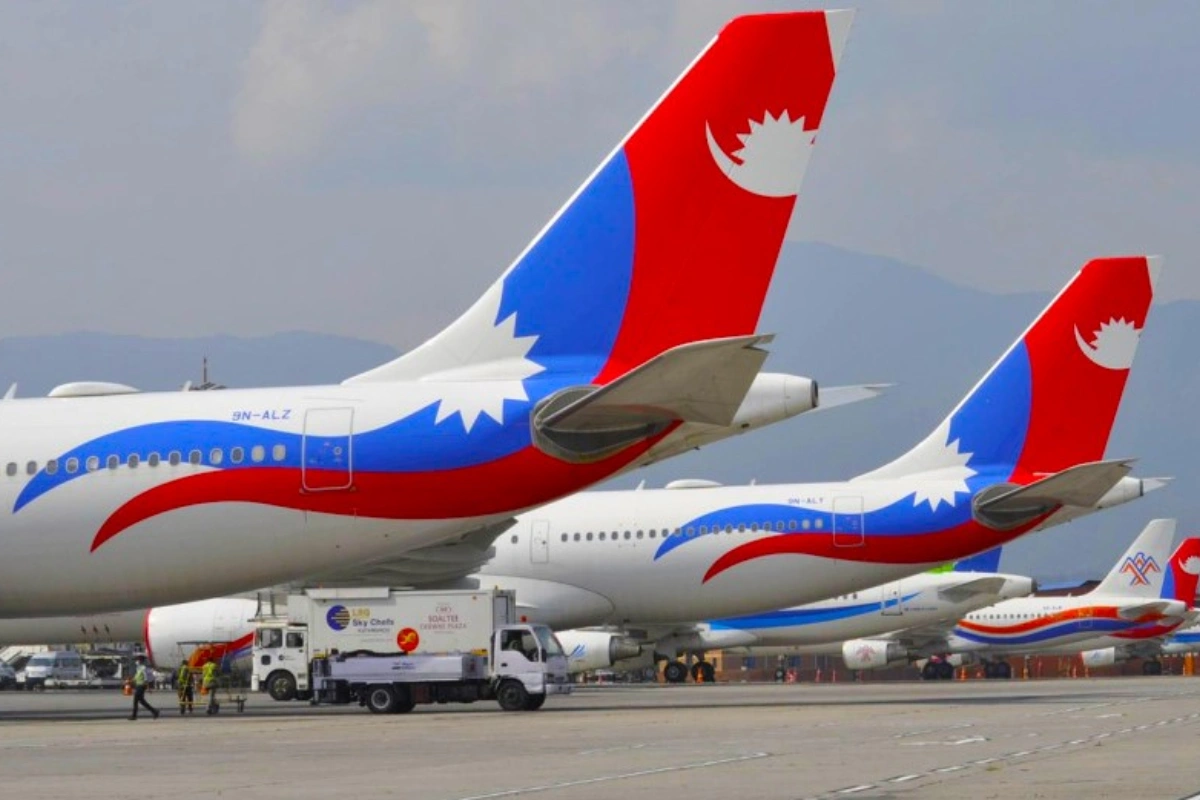
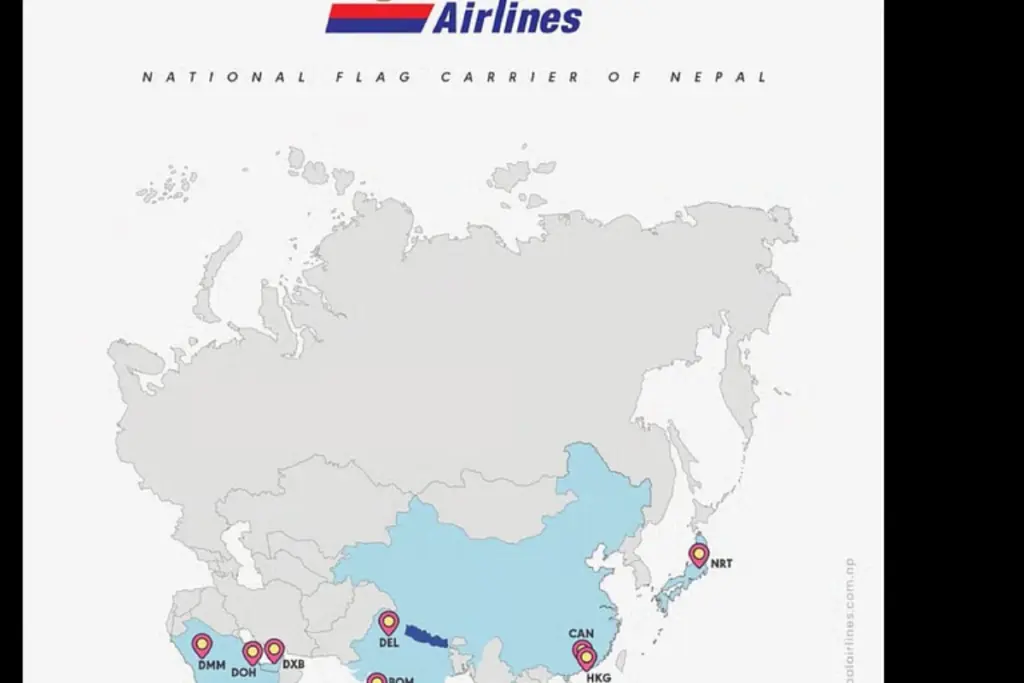
Nepal Airlines: A sincere apology has been issued by Nepal Airlines after it wrongly demonstrated the Indian state of Jammu & Kashmir as a part of Pakistan. The airlines posted on X that it apologizes for “cartographic inaccuracies” that don’t reflect the nation or airlines’ official position.
Nepal Airlines-Turn Of Events
On Wednesday, the social media handle of Nepal Airlines shared a route map showing the entire state and Union Territory of Jammu and Kashmir and Ladakh as part of Pakistan. The image quickly went viral on X and Facebook. Social media users blasted the negligence and termed it as anti-India agenda.
Immediately, the hashtag #BoycottNepalAirlines started trending and social media users urged that a diplomatic protest with Nepal should be filed by the External Affairs (MEA) and the Aviation Ministry.
Nepal Repeats Mistake
On 15 May 2020, Nepal’s President Bidhya Devi Bhandari had remarked that the Himalayan nation would soon issue a revised map incorporating all of its “territories” including Lipulekh, Kalapani and Limpiyadhura that are presently disputed between India and Nepal.
DON'T MISS
In 2025, India released a map demonstrating Kalapani within its borders, a move that was protested by Kathmandu. The two nations share a 1,800 km (1,118-mile) open border. It is being claimed by Nepal that it owns all territories east of the Kali (Mahakali) river, including Limpiyadhura, Kalapani and Lipu Lekh as per the Sugauli Treaty of 1816.
India’s Longstanding Support To Nepal
India has long been one of Nepal’s closest partners, stepping in during times of crisis and contributing significantly to its development. From the devastating 2015 Nepal earthquake to recurring floods and infrastructure challenges, India has consistently provided humanitarian aid, financial assistance and logistical support.


Indian rescue teams were among the first to reach Nepal after the 2015 earthquake, conducting large-scale evacuation and relief operations. Reconstruction efforts that followed saw substantial Indian involvement, including in housing, education and cultural heritage restoration. Furthermore, millions of Nepali citizens live and work in India, benefiting from an open-border arrangement that is rare in international relations.