


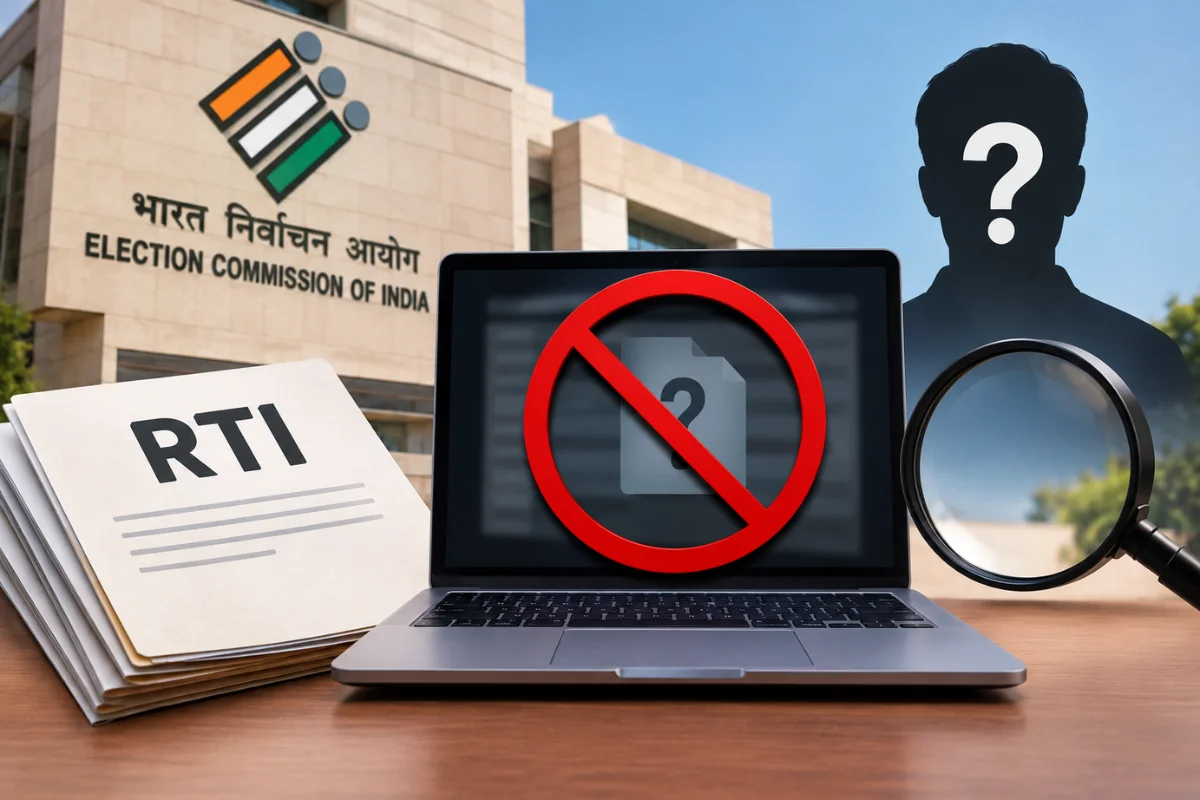
The Election Commission of India (ECI) drew criticism for declining to share the software details to locate errors/anomalies in the electoral roll for the Special Intensive Revision (SIR). It cited protection of commercial confidence, trade secrets, and intellectual property rights in the e-roll software when it responded to a RTI application filed by CPI(M) leader Brinda Karat.
Why Has the Election Commission Refused to Share Software Details?
On 16 October, 2026, the ECI refused to share information about the name and version of the software to identify inconsistencies and anomalies in voter data. This was in response to an RTI application filed by social activist M.A. Mujeeb Ayyub from Telangana. The applicant inquired into the use of software/artificial intelligence in SIR and whether voters’ records were being flagged by automation in order to check, correct, or delete. He asked what measures existed to prevent false flags and how flags marked as potentially inaccurate were reviewed. The ECI referred to section 8(1)(d) of the RTI Act that exempts “information which relates to commercial confidence, trade secrets or intellectual property and if it is disclosure would harm the competitive position of a third party.”
What Is SIR and Why Does the Software Matter?
Special Intensive Revision an exercise of special revised in elections to review the entries of electoral rolls and to detect errors, discrepancies, and other issues to be verified.Software may also help election officials organize massive amounts of data and spot records in need of additional review. But there are concerns when the system’s criteria for flagging records are not transparent and voters and independents cannot easily understand how the system works.This is especially important in the case of a flagged record, where other checks might be carried out, or where the individual has been identified as someone whose name has been included on the register. Knowing these rules can assist in assessing whether errors are being addressed properly.
DON'T MISS
What Did the ECI Say About AI and Automated Checks?
The RTI applicant also asked if artificial intelligence (AI), machine learning or predictive analytics was used to detect anomalies in the voter data. According to the ECI, the questions were seeking clarifications that do not qualify as “information” under section 2 (f) of the RTI Act, and hence, the response did not indicate if these tools were used.The commission further asserted that there was not any fresh software that was bought or created for this particular SIR exercise. It reiterated that EROs had the statutory powers to delete names or include names on the electoral rolls based on facts and official records..
Why Is Transparency Becoming a Bigger Concern?
The decision follows increased scrutiny of the SIR process itself and how voter records are checked, flagged, and verified. Civil society organizations have requested access to the indicators used to identify mismatches, data-related contracts, and records that detail how voter exclusions are conducted. According to critics, making the rules and protections public would enable independent monitors to determine if the system unfairly discriminates against voters. The ECI has pointed to exceptions in law and the authority given to election officials to take the final call. What remains to be decided is whether enough information can be released to allow accountability, while safeguarding commercial confidentiality, security considerations and personal safety.
Can the RTI Decision Be Challenged?
If an RTI applicant does not agree with an answer provided, they can file the relevant appeal available under the RTI Act. Former Chief Election Commissioner O.P. Rawat told a RTI applicant to go to the appropriate authority to contest the response and ask for the information.An appeal might also allow for greater examination of the exemptions the commission used and whether specific documents can be revealed (possibly with sensitive information redacted).
What it Means for Voters?
It is about more than what software program is used. It is about how electoral technology is utilized, how potential mistakes are cross-checked, and what choices voters have when their records are flagged. ECI says the ultimate determination of who can and can’t be included or excluded from the electoral roll is ultimately taken by the legally empowered officers. In the broader transparency debate, the question is whether the criteria, safeguards and processes for such decisions should be more open.