

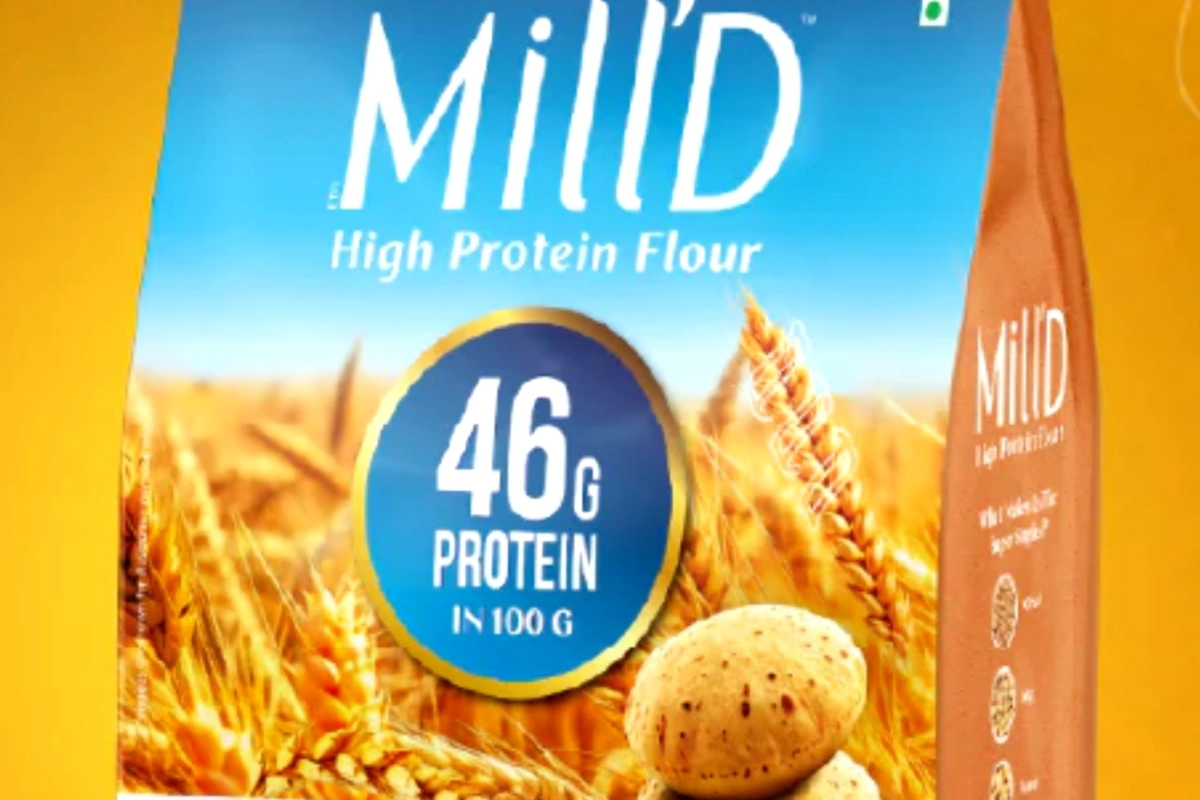

In today’s fitness-focused world, high protein atta has quickly become a popular choice among health-conscious buyers. From gym-goers to people trying to lose weight, many are switching from regular flour to protein-rich alternatives. But how accurate are these big claims?
A recent test has raised serious questions. One brand claimed that just two rotis made from 100 grams of its flour can deliver 46 grams of protein—all for just Rs 20. It sounds impressive, but is it really true? To find out, this product was put through detailed lab testing.
Tested Mill’d High Protein Atta
The product tested was Mill’d high protein atta, which claims a high protein content through a mix of ingredients. The composition includes:
- 60% whole wheat and wheat protein fraction
- 30% soy fraction
- 10% peanut fraction
The wheat protein fraction is made by processing wheat to reduce carbs and fats while increasing protein levels. However, since wheat is the main ingredient, this high protein atta is not suitable for people with gluten intolerance.
Before checking the protein levels, the product was tested for safety. The results showed:
- Heavy metals like lead, arsenic and mercury were below detectable limits
- Cadmium was present but within safe limits
- Aflatoxins were mostly undetected, with one type within safe range
- A pesticide (chlorpyrifos) was found in a small amount
- Microbial elements like yeast and mould were present, but no clear limits apply
Overall, the product passed basic safety checks.
DON'T MISS

High Protein Atta Lab Test Results Explained
The real focus was on protein content. Due to confusion, the product was tested three times using different batches and labs.
Here’s what the results showed:
- First test (Eurofins lab):
The company claimed 46.16g protein, but the lab found only 38.87g (around 39%). This showed a clear gap. - Second test (TUV lab):
The protein matched the company’s claim. However, this batch had no batch number, which raised concerns. - Third test (SGS lab):
The protein level again matched the claim.
These mixed results created confusion. While two tests supported the claim, one showed a noticeable difference. This points to possible inconsistency or batch variation in the product.
This high protein atta can be a better option than regular wheat flour if you want to slightly increase your protein intake. However, it is not a complete or high-quality protein source.
Experts suggest:
- Do not depend only on this atta for protein needs
- Add better protein sources like eggs, dairy, or whey
- Use it as a supplement, not a replacement
In simple terms, while the idea of getting 46g of protein from rotis sounds attractive, the actual results may vary. It is always better to check such claims carefully before making them part of your daily diet.