

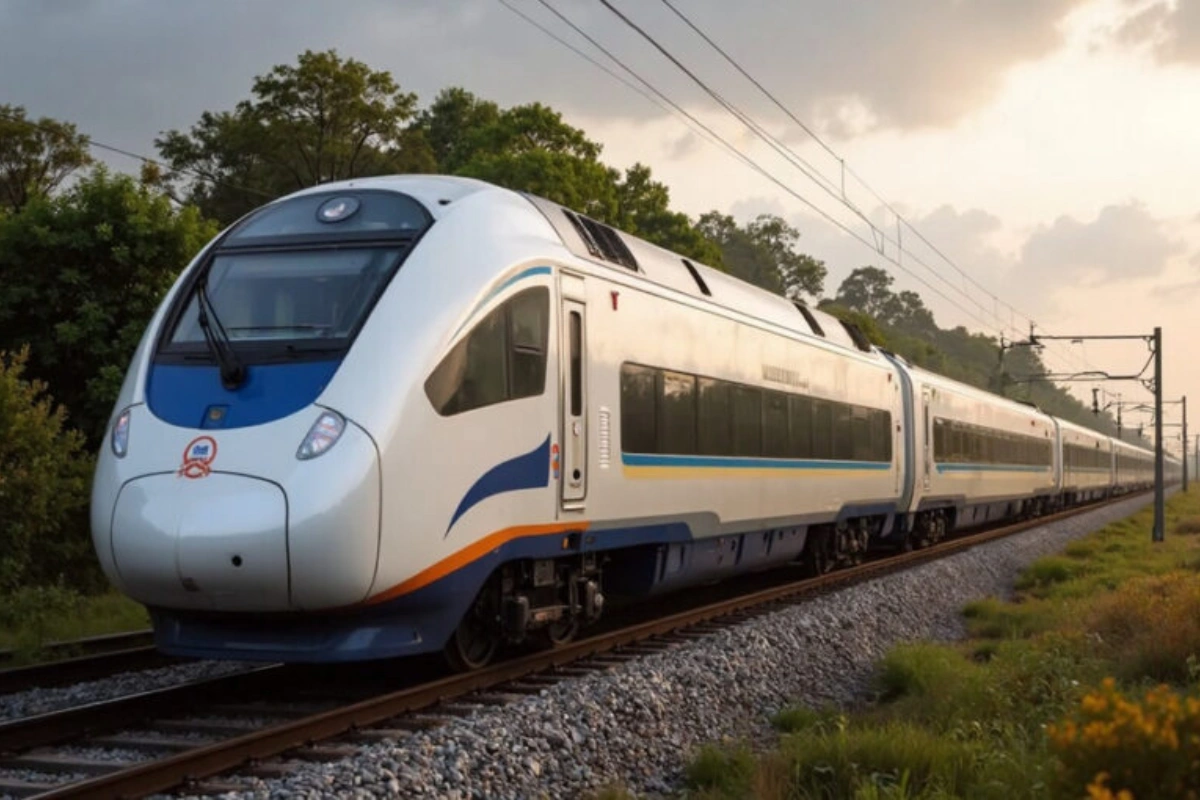
Vande Bharat: Indian Railways is all set to lay down high-speed tracks from Moradabad to Bareilly and Shahjahanpur. The new tracks would be equipped with the latest technology on which Vande Bharat trains run at speeds of approximately 160 kilometres per hour.
Under the proposed plan, a new line would be laid between Moradabad and Bareilly as part of the first phase. The phase’s construction would cost approximately Rs. 34 crore for about 150 kilometres long track.
DON'T MISS
Vande Bharat-What’s Special?
Presently, 3 Vande Bharat trains operate via the Moradabad Junction, running on the Meerut-Lucknow, Saharanpur to Varanasi-Ayodhya and Dehradun-Lucknow routes.
Will It Boost Local Economies Sky-High?
Historically, India’s tier-2 and tier-3 cities have struggled with limited connectivity that usually translates into slower economic momentum. While conventional railways and highways have served these regions well, they have somehow been unable to match the speed and efficiency as required by modern-day businesses.
The introduction of Vande Bharat train services between Moradabad, Bareilly and Shahjahanpur could help in significantly reducing travel time. This means that business owners would now be able to attend meetings across different cities in a single day while students and employees could attend their respective educational and workplace roles with ease. It would also help in improving talent mobility, making logistics more reliable and predictable while also promoting regional connectivity.
A Boost For Startup Ecosystems
Startup ecosystems thrive on the pillars of talent, capital and markets. Improved rail connectivity would directly influence all three. Efficient connectivity would encourage venture capitalists and angel investors to explore opportunities in emerging cities without logistical friction. This, in turn, would help in democratizing funding access, giving startups outside major metros a fair chance to scale.
In addition to these advantages, improved rail connectivity could significantly influence sectors such as real estate, tourism, catering, small business and supply chains across the three cities and even adjoining areas. For instance, industries reliant on timely delivery such as handicrafts, agriculture and small-scale manufacturing could significantly cut costs and improve competitiveness.


