

Heart Health: Your heart works silently, day and night, keeping your body alive. But most of us have no clue how strong or weak it is until a problem shows up. Heart diseases rarely appear overnight. They develop gradually over the years. The worrying part is that many symptoms are subtle and often go unnoticed.
In a video on his YouTube channel Healthy Hamesha, Delhi-based doctor Saleem Zaidi shared five practical tests to help people check the health of their heart. These simple checks can give early clues about whether your heart is strong, resilient and functioning properly.
5 Tests To Check Your Heart Health
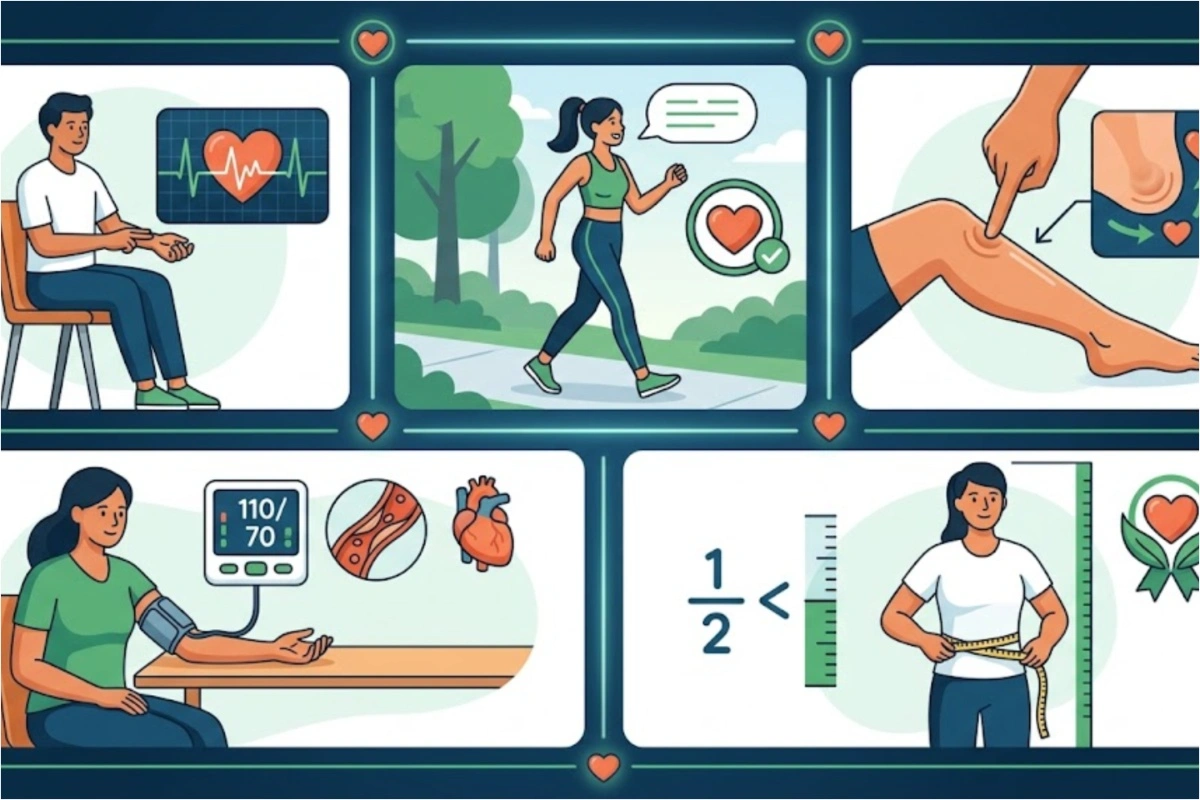
1. Steady Pulse: First Sign Of A Strong Heart
- Sit upright and relax.
- Place two fingers of your right hand on your left wrist. Move slightly until you feel your pulse.
- A steady, rhythmic heartbeat is a sign of electrical stability, showing that your heart’s internal system is working well.
- Occasional skipped beats may happen due to stress, caffeine, or sleep deprivation.
- If irregular beats occur frequently, especially after 50, consult a doctor and consider an ECG.
2. Brisk Walk Test: Checking How Your Heart Handles Stress
- Walk briskly for 1 minute.
- After walking, ask yourself: Can I speak a full sentence comfortably? Do I feel chest tightness or breathlessness?
- A strong heart manages mild stress easily. Normal conversation and no heaviness are positive signs.
- Difficulty breathing or chest pressure may indicate that your heart isn’t pumping efficiently.
3. Leg Press Test: Measuring Pumping Power
- Press your finger firmly on your shin bone for 5 seconds, then release.
- If a dent remains, it could signal reduced pumping power.
- Healthy hearts maintain smooth blood circulation, preventing swelling. Persistent leg swelling should not be ignored.
4. Blood Pressure Check: Assessing Vascular Health
- Measure blood pressure twice with a 5-minute gap and calculate the average.
- A reading of 110-120/70-80 mmHg indicates healthy arteries.
- Repeated readings above 140/90 mmHg may suggest stiff arteries and higher risk of hypertension.
5. Waist-to-Height Ratio: Understanding Metabolic Health
- Measure your waist and divide it by your height.
- A ratio below 0.5 is a sign of good metabolic health.
- A higher ratio indicates excess visceral fat, which can increase heart disease risk, inflammation, and insulin resistance.
Even if all five tests show positive results, long-term heart health depends on lifestyle choices. Maintaining healthy cholesterol and sugar levels, avoiding smoking, managing stress, and getting regular check-ups are essential. For people over 40, lipid profiles and sugar tests can give an accurate view of heart health.
DON'T MISS
By staying aware and following simple tests like these, you can monitor your heart and take proactive steps to keep it strong, resilient, and healthy for years to come.