

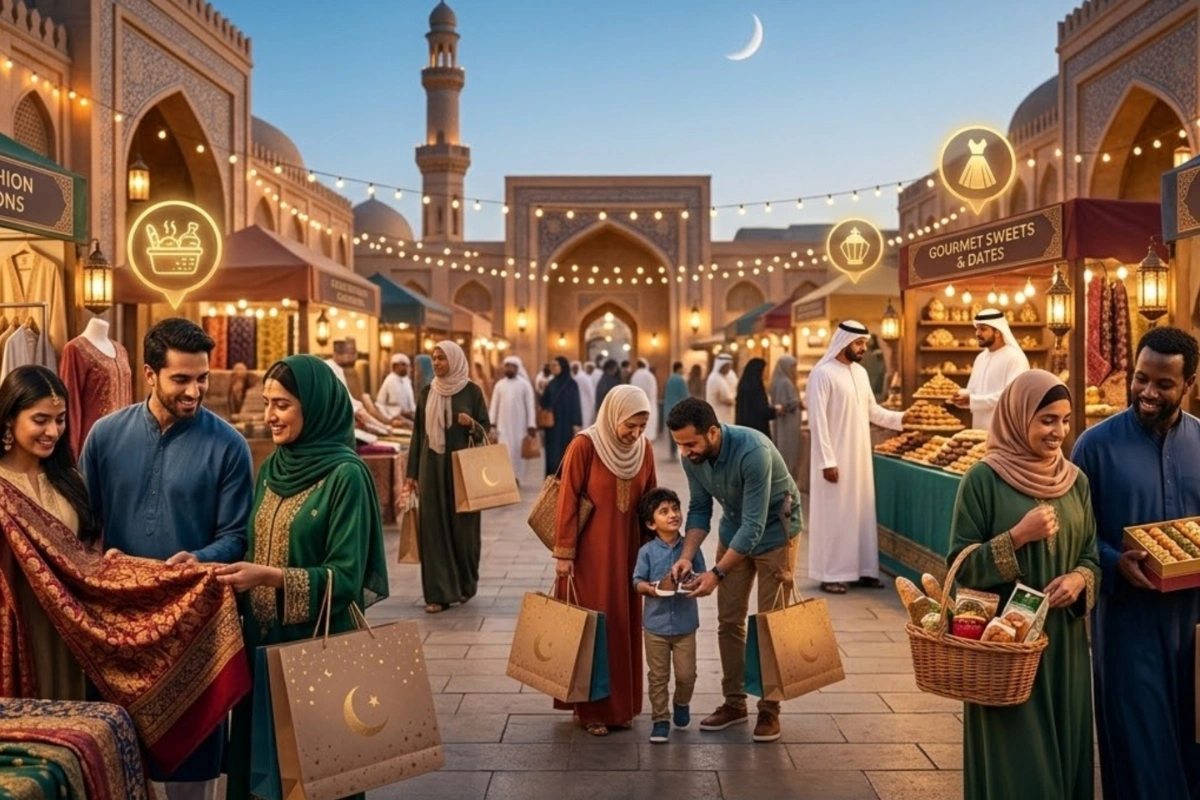
Eid Ul Fitr 2026 is not only a spiritual festival but also one of the biggest shopping seasons across the world. With nearly 2 billion Muslims globally, spending on clothes, food, gifts and travel rises sharply every year. Experts say that spending usually peaks in the last two weeks of Ramadan, when families prepare for celebrations, buy new outfits, and plan special meals.
The festival creates a huge economic impact, especially in Asia, the Middle East, Africa and Europe. From traditional meals to modern fashion trends, Eid has become a major seasonal market for businesses worldwide.
Spending on Fashion, Food, And Gifts May Increase During Eid Ul Fitr 2026
A consumer survey from 2024 showed that 92% of Muslims buy new clothes for Eid, while most households also spend extra on food and gifts.
Food remains the largest expense during the festive season. Reports suggest that nearly 47% of Ramadan spending goes to food and drinks, followed by clothing, charity, and gifts. Families often prepare large meals and sweets for guests, causing grocery bills to rise sharply. Research indicates that food spending during Ramadan can increase by 50%–100% compared to regular months due to festive gatherings and special ingredients.
DON'T MISS
Fashion is another major spending category. Clothing stores release special Eid collections each year, and surveys show that apparel sales surge before the festival. Religious and ceremonial items, along with clothes and accessories, are among the fastest-growing shopping segments during this period.
Gift-giving also plays a major role. In one Asian survey, 41% of Muslims reported planning to spend more on gifts during Ramadan and Eid compared to previous years.
Online Shopping And Global Trends
Online shopping continues to grow rapidly during the Eid season. In the Middle East and North Africa, e-commerce sales increased by more than 36% in one year, with countries like Saudi Arabia and the UAE leading the trend.
Retailers report that spending spikes just before Eid. For example, in Turkey, card payments during the Eid period were expected to reach billions, mostly on groceries, clothing, and dining. In large Muslim-majority countries, consumer spending during Ramadan and Eid is estimated to reach tens of billions of dollars, highlighting the festival’s economic significance.
However, experts note that inflation and rising prices may affect spending. Some families have reduced travel or shopping budgets, though traditional celebrations like prayers and meals continue.
Why Eid Spending Remains High
Despite economic ups and downs, Eid Ul Fitr 2026 is expected to remain one of the busiest shopping periods of the year. Buying new clothes, preparing festive food, giving charity, and exchanging gifts are long-standing traditions considered essential to the celebration.
For businesses, Eid is more than a holiday. It is one of the largest seasonal markets in the world, driven by culture, faith, and the joy of celebration.