


“A year after this project commenced in Kolar, the groundwater levels have come up to 600 ft. Farmers get water from borewells for 24 hours at a stretch. Water levels in open wells have also gone up. Also, reports of waterlogging have significantly reduced,” says Nagaraj Gangolli, state project director, The Art of Living.
Kolar is the fruit and vegetable bowl of Karnataka. Ironically, even as the region meets much of the urban requirement for the same, the district has been dealing with a water crisis of a peculiar kind. It faces the double whammy of stagnant water in the fields during monsoons and depleting groundwater levels simultaneously. While in most other parts of Karnataka, bore wells dug up to
1000 to 1300 feet get access to the groundwater, in Kolar, “We had drilled bore wells from 1800 to 2100 feet. Not a single drop of water,” says Nagabhushan, Harati Gram Panchayat member.
But hope isn’t lost. Now, stakeholders are coming together to find a unique, sustainable solution to recharge the groundwater levels here through the Kolar Water Conservation Project and spreading more awareness of natural farming techniques, which is linked to sustainably solving the water crisis.
“Our survival depends on water. It is the basis of our life force. We need to protect and nurture the source of water” says the global humanitarian, spiritual master, and the founder of The Art of Living, Gurudev Sri Sri Ravi Shankar. Gurudev has inspired a movement in water conservation that includes rejuvenation of over 75 rivers and tributaries, building recharge structures, and strategic plantation activities that help increase groundwater levels globally.
Inspired by Gurudev, The Art of Living, in collaboration with Ashirvad by Aliaxis, Gram Panchayat members, and officials of local government bodies, have been working to revive the groundwater levels here in Kolar since the last two years.
“An expert team conducted a GIS (Geographic Information System) study to formulate a strategic action plan. To train the ground team for effective project execution, a capacity-building program was held with Gram Panchayat members. The aim was to sensitize villagers and get their approval for program implementation. Volunteers also conducted door-to-door awareness campaigns,” says Nagaraj Gangolli, state project director, The Art of Living.
Kolar district has been dependent on tanks, lakes, and canals since ancient times due to the lack of any rivers flowing by. Recently, there have been reports of degraded water quality due to industrial runoff and poor sewage systems. This has worsened its water crisis. “Recharge structures built under canals are helping the water levels to go up. I hope, in the future too, they will undertake such service projects,” says Muniswamy, Shapuru Gram Panchayat.
Kolar has struggled to meet its basic need for water for civic use as well as for agricultural purposes. “We aimed to find a solution that resolves both the problems faced by the district,” says Gangolli.
DON'T MISS
The project adopted 17 villages of Arabikothanur and Harati Gram
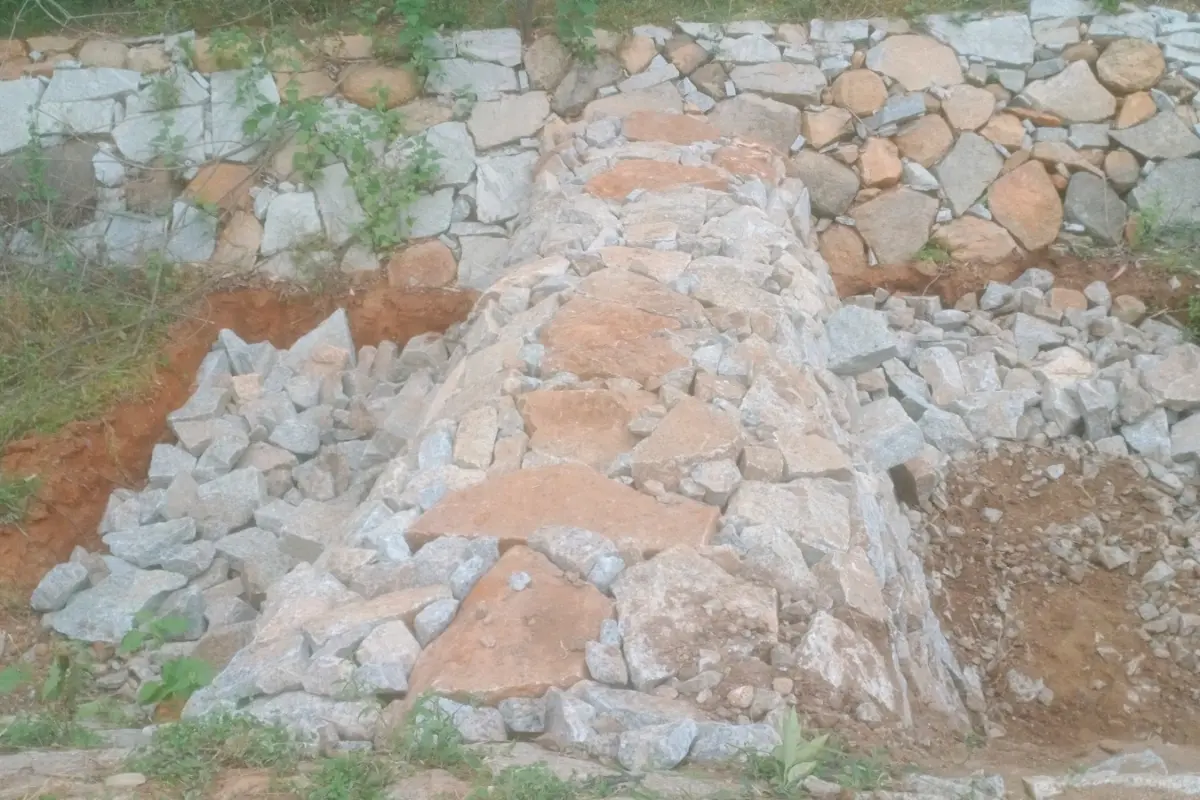
Panchayats in Kolar district. The aim was to build 270 recharge structures to harvest rainwater and facilitate its underground percolation. The project took initiatives to build boulder checks, recharge wells, and injection wells in the region.
“After a year of this project in Kolar, the groundwater levels have reached 400 ft. Farmers get water from borewells for 24 hours at a stretch. Water levels in open wells have also gone up. Also, reports of waterlogging have significantly reduced,” says Gangolli.
Recharge structures have been built in pairs – one boulder check paired up with one recharge well! The boulder check would capture and retain rainwater, and also reduce the water runoff velocity. The recharge well would allow water to gradually seep into the ground to replenish the aquifers.
“Today, we are getting water from 320 to 400 feet,” says Nagabhushan, a three-time Gram Panchayat Adhyaksha, “We should remember Gurudev till our last breath.”
He adds, “What is more important is that the water does not need any filter. The water is fluoride free. Fluoride is only found when the water goes below 600 Ft. Now the best thing is that we don’t need to clean our bore well every now and then. Truly, we can do nothing without pure air and water.”
What many don’t know is that the water crisis is also linked to farming practices in use. Efforts are being made to train farmers on how to enhance the soil permeability to solve the issue of waterlogging. Despite normal rainfall, the region faces water shortages due to increased soil impermeability and a lack of robust infrastructure to harvest rainwater.
“Chemical farming practices, using chemical pesticides, worsen the soil’s permeability. Artificial fertilizers and pesticides kill insects, earthworms, and microbes that dig up the soil to make it more porous. Earlier, earthworms were found abundantly. Chemicals used in farming have wiped out 93% of its population. In one acre of farmland, earthworms would dig the soil up to 30 feet deep. Now, natural factors hardly play any role in soil permeability,” says Gangolli.
A grave issue that many regions in the state have been facing is a shortage of water, despite healthy rainfall and this can be attributed to lack of conservation models such as the one being put in place in Kolar that address the matter holistically. Recharge structures capture rainwater, purify the water and work with farmers, training them in natural farming, ensures the soil is made more permeable in places under cultivation.
Interestingly, The Art of Living has also undertaken such projects in other parts of Karnataka like Tumkur, Yadagiri, and rural Bengaluru (Kanakapura Road), which are replicating the success story of the Kolar Water Conservation Project.