

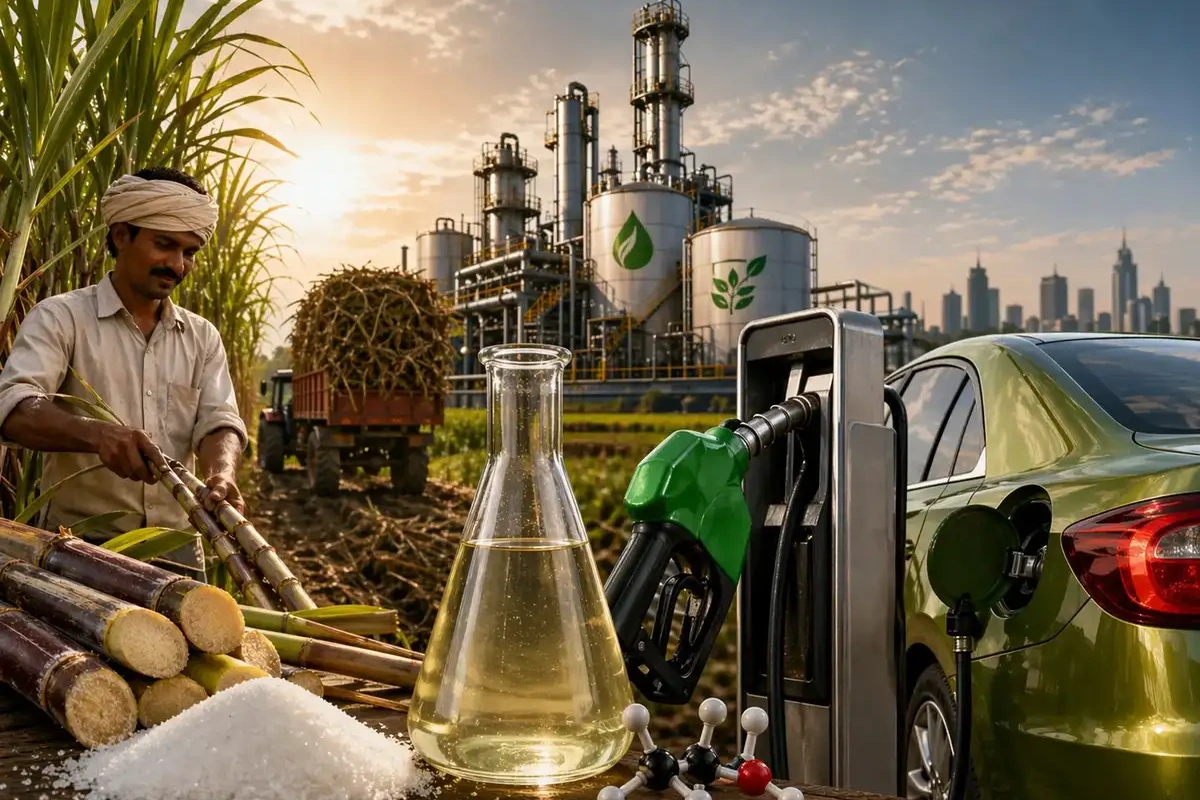
Ethanol Blended Fuel: The energy scenario in India is unfolding at a critical moment today. Global oil markets remain volatile and geopolitical tensions continue to disrupt supply chains. This has pushed countries like India to actively seek alternatives to reduce dependence on imported fossil fuels. Among the most prominent strategies is ethanol blending in which ethanol is mixed with petrol to create a cleaner-burning fuel.
Key Benefits of Ethanol Blended Fuel
- Reduces dependence on crude oil imports
- Lowers vehicular emissions
- Provides additional income to farmers
- Utilizes agricultural surplus and waste
- Enhances rural economic activity
- Supports energy diversification
- Can improve fuel combustion efficiency
Side Effects Of Ethanol Blended Fuel
- Intensifies water consumption due to cultivation of water-heavy crops
- Risks aggravating groundwater depletion in already stressed regions
- May lead to food versus fuel conflict by diverting crops
- Encourages monoculture farming, reducing soil health
- Increases pressure on agricultural land and ecosystems
Ethanol Blended Fuel Challenges
Ethanol production in India relies heavily on water-intensive crops such as sugarcane and rice, raising serious concerns about long-term sustainability. As climate stress intensifies and water scarcity looms large across several states, one question becomes unavoidable: is ethanol blending a pragmatic bridge toward energy security, or could it trigger an ecological imbalance that outweighs its benefits?
DON'T MISS
The Hidden Costs: Environmental and Other Concerns
Ethanol production is intrinsically linked to agriculture, and in India, the primary feedstocks such as sugarcane, rice, and increasingly maize are among the most water-intensive crops.
Sugarcane alone accounts for a disproportionate share of irrigation water in states like Maharashtra and Uttar Pradesh, regions already grappling with groundwater depletion. The situation becomes even more alarming when considering rice-based ethanol. Producing one litre of ethanol from rice can require approximately 10,790 litres of water, factoring in irrigation and processing needs.
The expansion of ethanol production could incentivize farmers to shift toward these water-intensive crops, further exacerbating the problem. This creates a policy paradox: a strategy designed to reduce oil dependence may inadvertently deepen another crisis, a far bigger crisis: the crisis of water scarcity.
Why India Is Betting Big on Ethanol Blending?
India’s push toward ethanol-blended fuel is rooted in a combination of economic necessity and environmental ambition. The country imports nearly 85 percent of its crude oil requirements, making it highly vulnerable to global price shocks. By increasing ethanol blending in petrol-targeting levels as high as 20 percent, India aims to significantly cut its import bill and enhance energy security.
Another driving factor is the need to support the agricultural sector, particularly sugarcane farmers. Ethanol production offers an alternative revenue stream by utilizing surplus sugar and agricultural residues. This not only stabilizes farm incomes but also helps address the cyclical problem of excess sugar production in the country.
Ultimately, the success of ethanol blending in India will depend on its ability to evolve. But if pursued without regard for resource constraints, it risks becoming a textbook case of solving one problem while creating another.