Home Blog Page 79

Bhagwant Mann Cabinet Minister Harpal Singh Cheema Backs Groundwater Conservation Measures

Bhagwant- Mann
Google

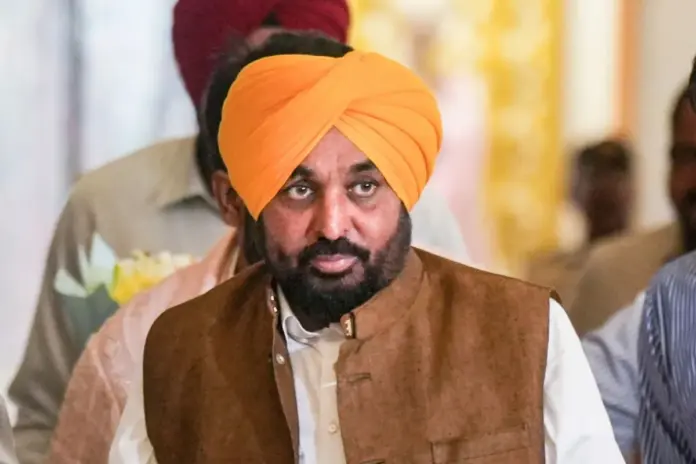
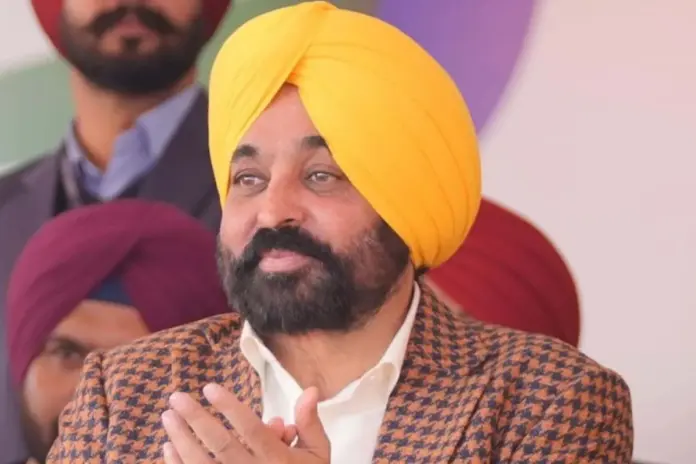
Bhagwant Mann Cabinet Minister Harpal Singh Cheema has voiced strong support for the state government’s groundwater conservation initiatives, highlighting a series of measures aimed at improving water management and ensuring sustainable irrigation across Punjab.

Bhagwant Mann Cabinet Minister Harpal Singh Cheema Backs Groundwater Conservation Measures

Speaking on the issue, Cheema said the Punjab government is strengthening the state’s irrigation network by lining canals and distributaries and expanding pipeline infrastructure to ensure canal water reaches every agricultural field. The initiative is intended to reduce dependence on groundwater and promote efficient use of surface water for farming.

The minister noted that these efforts have already shown encouraging results

The minister noted that these efforts have already shown encouraging results, claiming that groundwater levels have risen by up to five metres in several parts of Punjab. He added that the government is continuing to implement long-term strategies to address water depletion and improve the state’s water resources.

Cheema also announced that work on the Malwa Canal project is progressing and will be completed at the earliest. The canal is expected to enhance irrigation facilities and improve water availability for farmers across the region.

In addition, he said approval has been granted for 510 large groundwater recharge wells, a key step in boosting groundwater replenishment and strengthening Punjab’s water conservation infrastructure.

The Bhagwant Mann-led government has maintained that expanding canal irrigation, accelerating recharge projects, and modernising water infrastructure remain central to its strategy for protecting groundwater resources while supporting farmers and sustainable agricultural development.

CM Yogi Adityanath to Honour Weavers, Launch ₹706 Crore Development Projects in Uttar Pradesh

CM- Yogi -Adityanath
Google

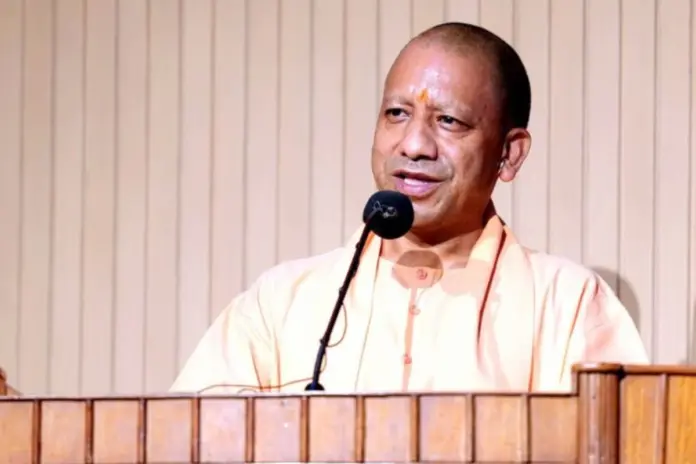
Uttar Pradesh CM Yogi Adityanath will participate in a series of events on the occasion of National Handloom Day, celebrating the state’s rich handloom heritage and recognising the outstanding contributions of its skilled weavers.

CM Yogi Adityanath to Honour Weavers

During a ceremony in Lucknow, the Chief Minister will present the prestigious Sant Kabir State-Level Handloom Award to exceptional weavers in recognition of their craftsmanship and contribution to the handloom sector. He will also distribute financial assistance cheques to beneficiaries under the Chief Minister Handloom and Powerloom Industry Development Scheme and the Jhalkari Bai Kori Handloom and Powerloom Development Scheme, aimed at strengthening the textile industry and supporting artisans.

Launch ₹706 Crore Development Projects in Uttar Pradesh

Later in the day, CM Yogi Adityanath will visit Ambedkar Nagar, where he will inaugurate and lay the foundation stone for 194 development projects worth more than ₹706 crore. The projects are expected to enhance infrastructure and promote comprehensive development across the district.

The Chief Minister will also distribute approval letters, certificates, and financial assistance cheques to beneficiaries of various government welfare schemes, reinforcing the state’s focus on inclusive growth and public welfare.

Highlighting the government’s vision, Yogi Adityanath said the double-engine government remains committed to empowering skilled artisans by providing modern resources, better market access, and greater recognition.

Punjab Residents Praise Bhagwant Mann Government’s Free Pilgrimage Scheme

Bhagwant- Mann
Google

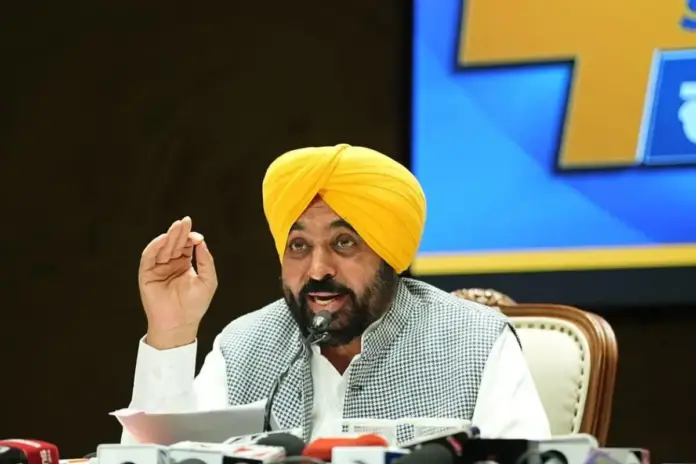
The Aam Aadmi Party (AAP) Punjab has highlighted the growing appreciation for the Bhagwant Mann-led government’s Mukh Mantri Teerath Yatra Scheme, with many residents describing the current administration as a government that truly belongs to the people.

Punjab Residents Praise Bhagwant Mann Government’s Free Pilgrimage Scheme

According to AAP Punjab, citizens from across the state have expressed satisfaction with the government’s welfare initiatives, particularly the free pilgrimage scheme, which enables eligible residents to visit prominent religious destinations without financial burden. The initiative has received positive feedback from beneficiaries who say it has made spiritual travel more accessible for families and senior citizens.

Punjab government recently expanded the scheme

The Punjab government recently expanded the scheme to include additional pilgrimage destinations, aiming to benefit a larger number of devotees and strengthen access to religious tourism across India. The expansion reflects the government’s continued focus on public welfare and inclusive development.

AAP Punjab stated that the encouraging response from residents demonstrates public confidence in the Bhagwant Mann government’s people-centric policies. The party added that the widespread appreciation for the Teerath Yatra Scheme reflects its commitment to delivering initiatives that directly improve the lives of ordinary citizens.

FCRA Bill Sparks Political Debate, Opposition Questions Impact on Minority Groups and Civil Society Organisations, Check

FCRA- Bill
Google

The FCRA Bill has sparked new political debates, wherein opposition parties have pointed out problems related to the bill and its implications for minority organisations, NGOs, and CBOs.This new debate has highlighted the issue of foreign contribution regulations in India as well as the scrutiny of organizations that have received foreign contribution in India. The opposition leaders have raised doubts over whether the suggested amendments will create undue pressure on such groups and organizations.

FCRA Bill: A New Political Flashpoint

The Foreign Contribution Regulation Act, known as FCRA, regulates the foreign contributions to the eligible organizations in India. This time, the debate has focused on the implications of the amendments to the act and their impacts on the organizations receiving foreign contributions. Opposition parties have expressed concerns regarding the targeting of the minority organizations through the bill.

Opposition Raises Concerns

The Opposition has questioned whether the proposed provisions could disproportionately affect minority groups and civil society organizations. According to the concerns raised during the debate, stricter regulations could make it more difficult for some organizations to access or manage foreign contributions. The issue has therefore become part of a wider discussion about the balance between regulating overseas funding and allowing legitimate civil society activities to continue.

Why Does the FCRA Matter to Civil Society?

Foreign contributions can be an important source of funding for organizations working in areas such as education, healthcare, social development, and community welfare. The FCRA provides the legal framework under which eligible organizations can receive such contributions. Any changes to the regulatory framework can therefore have an impact on how these organizations operate, maintain compliance and plan their activities. For civil society groups, 

Clarity in the rules is particularly important because compliance requirements can affect their ability to receive and use funds.

Minority Organizations in Focus

The Opposition’s concerns have particularly focused on minority organisations. The debate has raised questions about whether changes to the FCRA framework could affect organisations working with minority communities differently from other civil society groups. These concerns have made the proposed legislation a politically sensitive issue, with Opposition parties calling attention to what they see as possible implications for minority communities and organisations.

Government’s Focus on Regulation

The debate also reflects the government’s broader approach towards regulating foreign contributions. FCRA rules are designed to ensure that foreign funds received by organisations are used for permitted purposes and comply with India’s legal requirements. From a regulatory perspective, stronger oversight can be presented as a way to improve transparency and prevent the misuse of foreign contributions.

What the Debate Means for Civil Society Organisations

For NGOs and other civil society organisations, changes to foreign funding rules can have practical consequences. Organisations may need to pay close attention to compliance requirements, documentation, and the permitted use of foreign contributions. Any additional restrictions could also require organisations to review their funding models and operational processes. This makes the ongoing debate important not only from a political perspective but also for organisations working on social and community-focused initiatives.

Amit Shah Under Opposition Scrutiny, Student Protest Crackdown Triggers Fresh Uproar Inside Rajya Sabha, RS Chairman Directs Kiran Rijiju

Amit- Shah
Google

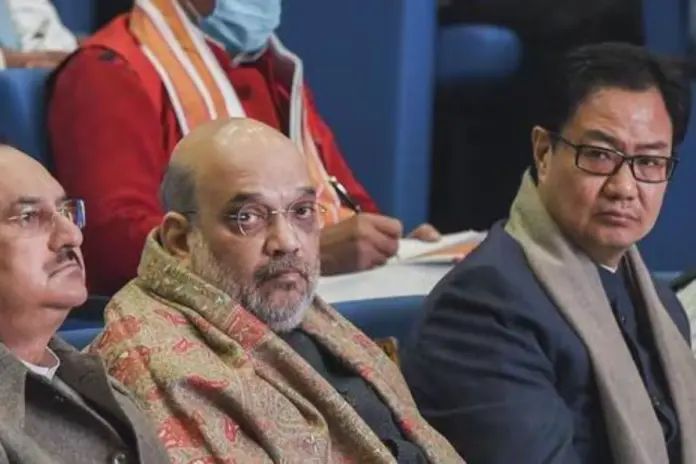
The issue of the alleged crackdown on student protesters triggered a fresh uproar in the Rajya Sabha, with Opposition members raising concerns during proceedings. The developments brought Union Home Minister Amit Shah into the wider political discussion as Opposition members sought the government’s response. The disruption also involved Rajya Sabha Chairman Jagdeep Dhankhar directing Parliamentary Affairs Minister Kiren Rijiju to convey the sentiments raised by Opposition members to Amit Shah. 

Opposition Raises Concerns in Rajya Sabha

The Opposition used the Rajya Sabha proceedings to raise concerns over the action taken against students involved in protests. Members questioned the government’s approach and sought greater attention to the concerns surrounding the situation. The issue led to disruptions in the House as Opposition members attempted to highlight their position. The developments added another point of contention between the government and Opposition during parliamentary proceedings.

Amit Shah in the Spotlight

As the Union Home Minister, Amit Shah found himself in the midst of issues raised by the Opposition members. The instruction to Kiren Rijiju by the Rajya Sabha Chairman to inform Amit Shah about the sentiments of the Opposition also made clear the significance of the issue in the political scenario.The issue did not stay confined to the agitation but rather entered into the political arena of Parliament, where the debate on the issue and questions were raised regarding its handling.

Why Does the Issue Matter?

Student protests and the government’s response to them can attract significant public attention because they involve questions around the right to protest, institutional responses and the treatment of students.For the Opposition, raising the matter in Parliament provides an opportunity to demand answers from the government. For the government, such debates create pressure to explain its position and address concerns raised by lawmakers.

Priyanka Chopra Steps Into Bluefly With Russell Crowe, Celebrity Collaborations Continue to Shape Global Entertainment Careers

Priyanka- Chopra
Google

Global entertainment is becoming increasingly connected, and celebrity collaborations are playing a major role in shaping how stars build their careers. Priyanka Chopra Jonas is a strong example of this shift.The actor has now added another international project to her growing portfolio with Bluefly, a sci-fi action thriller that brings her together with Oscar winner Russell Crowe. 

Priyanka Chopra and Russell Crowe Come Together for Bluefly

Bluefly is set to be a sci-fi action thriller featuring Priyanka Chopra and Russell Crowe. The film is directed by Nimród Antal, known for projects including Predators, while the screenplay is credited to David Frigerio, William Eubank and Carlyle Eubank. The film follows a high-stakes mission in the Congo involving a UN translator and a special operations team. The mission takes an unexpected turn when the team discovers an aircraft that appears to be something that should not exist.

Another Step in Priyanka Chopra’s Global Career

Priyanka Chopra’s international career has developed beyond acting alone. Over the years, she has worked across films, television, entertainment, and global brand partnerships. Her upcoming projects also show how she is continuing to build a varied international portfolio. Earlier this year, Chopra was announced as the lead of Reset a survival thriller opposite Orlando Bloom. The film is directed by Emmy winner Matt Smukler and was scheduled to move into production in August. At the same time, Chopra is returning to Indian cinema with SS Rajamouli’s Varanasi. 

Why Celebrity Collaborations Matter?

Collaborations between established stars can create opportunities that go beyond a single film.When actors from different markets come together, their existing audiences can also become interested in the project. This can help films attract attention across regions and create a broader international conversation. For celebrities, such projects can also strengthen their 

professional positioning. Working alongside recognized international actors can introduce them to new filmmakers, audiences, and production networks.

Global Careers Are Becoming More Diverse

The traditional idea of an actor building a career primarily within one film industry is changing. Today, major performers can work across Hollywood, Bollywood, streaming platforms, international productions, and global brand campaigns. Social media has also made it easier for celebrities to communicate directly with audiences across countries. Priyanka Chopra’s career reflects this broader change. Her work has moved between Indian cinema, Hollywood productions, television, and international commercial partnerships. 

What Does Bluefly Add to Priyanka Chopra’s Portfolio?

For Chopra, Bluefly represents another opportunity to work within the international action and thriller space. Her recent Hollywood projects have included action-oriented roles, while Reset adds a survival-thriller project to her upcoming slate. Bluefly gives her another opportunity to work with an established Hollywood actor and an international filmmaking team.


Tarun Tejpal Verdict Sparks Fresh Questions on Judicial Delays and Reform, is Justice Delayed?

Tarun- Tejpal
Google

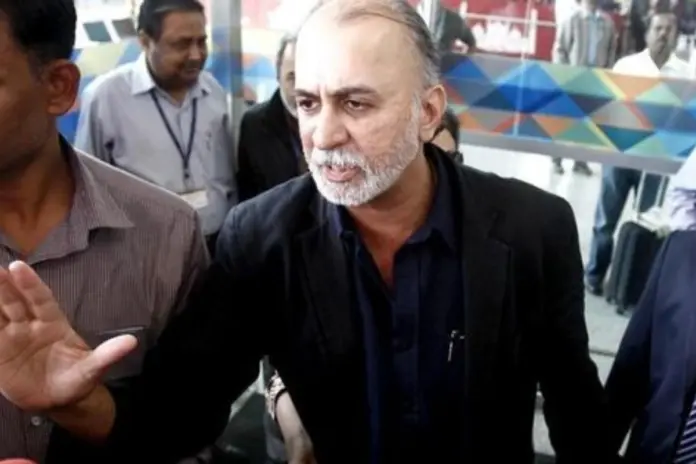
Tarun Tejpal:Thirteen years after a Tehelka journalist accused founder-editor Tarun Tejpal of sexually assaulting her at a Goa hotel, the Bombay High Court has convicted him, overturning a 2021 acquittal. The ruling, from a bench of Justices Neela Gokhale and Amit Jamsandekar, closes one stage of a case that outlasted a decade in the courts, and it has reignited a familiar question: why does justice in India take this long, even in closely watched cases? 

A 13-Year Timeline

The 2013 allegations led to Tejpal’s resignation and arrest, but the trial itself did not conclude until 2021, when a Goa sessions court acquitted him over gaps in the prosecution’s case. The state’s appeal took another five years to resolve, with the High Court ultimately finding the trial court had leaned on outdated assumptions about survivor behaviour.

Structural Delays, Not an Isolated Case

Legal observers note the case reflects wider patterns: chronic adjournments, scheduling backlogs, and appeals that routinely stretch a decade or more across India’s courts, which collectively carry tens of millions of pending cases.

Impact on Victim Protection Standards

Legal advocates highlight that prolonged trials inflict a severe emotional toll on survivors, underscoring the urgent need for witness protection frameworks, privacy safeguards, and gender-sensitised judicial procedures during extended legal battles.

Reform Demands Renewed

The verdict has revived calls for fast-track handling of sexual assault cases, firmer appeal timelines, and stronger court resourcing, even as legal experts flag the judgment’s reasoning on survivor credibility as separately significant.

Tejpal has said he will contest the conviction before the Supreme Court, meaning the case, and the debate over how long it took to get here, is not yet finished.

The Bofors case Odyssey Ends! Supreme Court Seals the Chapter on India’s Most Famous Defence Row

Bofors- Case
Google

Why The Court Closed The File: During the hearing, Agarwal sought four weeks to amend his petition and remove the names of Srichand and Gopichand Hinduja, both of whom have since passed away. 

The bench pushed back sharply, pointing out that the Delhi High Court had already quashed proceedings in 2005 and that the Central Bureau of Investigation’s (CBI) own appeal against that verdict was dismissed by the Supreme Court in 2018 over inordinate delay. Justice Pardiwala reportedly asked what was even left to argue once the High Court’s order stood unchallenged and the CBI’s appeal had already failed. 

A Deal That Reshaped Indian Politics

The Bofors scandal began after India signed a Rs 1,437 crore deal with Sweden’s AB Bofors in March 1986 for more than 400 units of 155mm howitzer guns to modernise the Indian Army. A year later, Swedish Radio alleged that commissions had been paid to Indian politicians. 

The fallout contributed directly to Rajiv Gandhi’s Congress losing the 1989 general election. Over the following decades, the case wound through the CBI, multiple Indian courts, Swiss banking authorities, and failed extradition attempts against Italian businessman Ottavio Quattrocchi.

Lasting Impact On Defence Procurement

The controversy led to far stricter procurement standard operating procedures and a dedicated Defence Procurement Manual, but it also slowed new artillery inductions for nearly three decades, with the Army waiting until systems like the M777 Ultra-Light Howitzer and K9 Vajra arrived to replace ageing guns.

Ironically, the same Bofors howitzers at the centre of the controversy played a decisive role in India’s 1999 Kargil War. With the Supreme Court’s latest order, one of India’s longest-running political and legal sagas now stands closed for good, its guns remembered as much for their battlefield legacy as for the scandal that bore their name.

Meta Is Suppressing Voices Against Paper Leaks & E20-Blended Fuel Under Pressure From Modi Govt: Arvind Kejriwal

Arvind Kejriwal

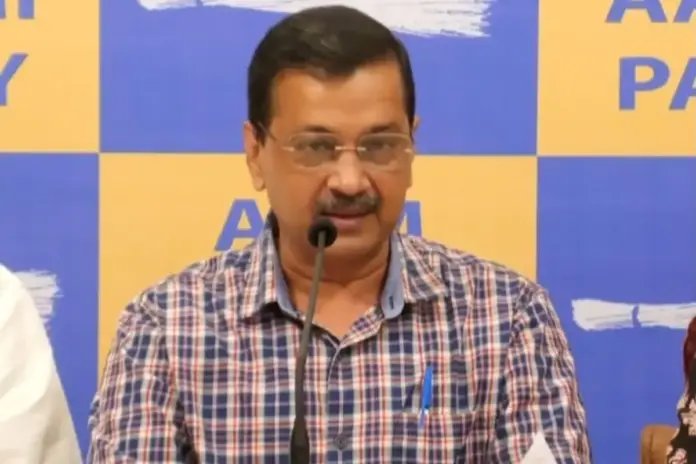
Aam Aadmi Party (AAP) National Convenor Arvind Kejriwal shared that Meta has restricted his Instagram account in India, and is also not providing any explanation even after continuous enquiries. Emphasising that the action reflects pressure from the Modi Government, he said Meta is suppressing voices raising issues such as the examination leaks and forceful imposition of E20-Blended Petrol, and that many others critical of the government have faced similar restrictions.

The AAP Chief and former Delhi CM appealed to people whose accounts have also been restricted to contact him through direct messages or comments so that the issue can be collectively raised and pressure can be mounted on Meta and Instagram to stop such practices.

AAP National Convenor Arvind Kejriwal shared a video on ‘X’ and said, “Instagram has sent me a notice saying that my account has been suppressed and restricted in India. I tried calling them to find out why this was done, but no one gave me any explanation. I asked how this could be fixed, but no one had an answer. I also sent emails, but I did not receive any response.”

He continued, “If they can do this to me, I can only imagine what they must be doing to ordinary people. As soon as I raised this issue, I started receiving numerous messages and phone calls from people saying that their accounts had also been suppressed. It has come to light that the Central Government is pressuring Meta and Instagram to suppress the accounts of anyone who speaks against PM Modi, raises questions about E20-blended fuel, or speaks about the examination leaks.”

Appealing to the public, Arvind Kejriwal said, “I request everyone that if your account is also being suppressed in this manner, or if you believe it is, please send me a direct message or write about it in the comments. I will raise everyone’s issue together. All of us will collectively compel Meta and Instagram to stop engaging in such misconduct and to stop bending the knee before PM Modi.”

Tagging Meta and Meta India in a post on X, the AAP Chief wrote, “Why have you restricted my account? Verbal enquiries at your India office revealed that my account has been restricted in India and is unavailable in India. Why? No one from your office is giving any reasons. No one is suggesting how restrictions can be removed. All emails written have elicited no response other than routine acknowledgement. That’s pretty bad service.”

He asserted, “Don’t bow down to our Prime Minister so much. Else he will allow you to platform only his own account in India.”

FROM NO BOUNDARY WALLS IN 8K SCHOOLS & 4 LAKH KIDS ON FLOOR IN 2022 TO NO.1 IN SCHOOL EDUCATION ACROSS INDIA TODAY: HARJOT SINGH BAINS

Harjot Singh Bains

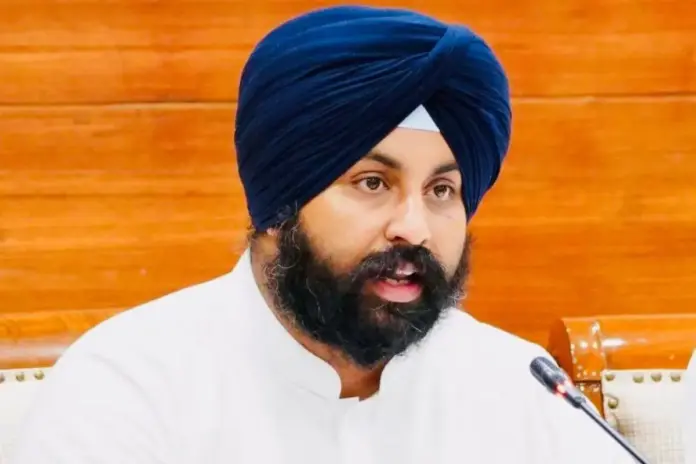
Claiming a historic turnaround, Punjab Education Minister S. Harjot Singh Bains on Thursday said the state has overtaken Kerala to rank No. 1 in the NITI Aayog School Education Quality Index 2026. While 8,000 schools had no boundary walls and 4 lakh children sat on the floor in 2022, today Punjab has 882 NEET qualifiers from government schools and has become the first state in the country to introduce Artificial Intelligence as a core subject from Classes I to XII. This is the revolution AAP led government promised.

Participating in a discussion on an education-related resolution moved by MLA Prof. Jaswant Singh Gajjanmajra, the School Education Minister S. Harjot Singh Bains recalled the dire state of affairs when he assumed office in July 2022.

Revealing the findings of an initial infrastructure survey, S. Bains said over 8,000 schools lacked boundary walls, 3,200 had no functional toilets and nearly 4 lakh children were sitting on the floor. Textbooks would reach schools only in October-November, wasting precious months of the academic session.

“Today, for the first time, textbooks reach district headquarters by February 15 and are fully distributed by March 31,” he said, while challenging anyone to verify this from any government teacher.

Emphasising his hands-on governance model, S. Bains stated that he has personally visited over 2,000 government schools across every district of Punjab including border schools, zero-line villages, and remote areas.

He informed the House that the government’s flagship ‘Mission Samarth’ has emerged as one of India’s largest foundational learning programmes. Under its level-based teaching model, students are grouped by learning ability rather than grade to ensure every child masters reading, writing and mathematics.

“When I visited schools in September-October 2022, I found Class 8 students who could not write simple sentences. Some could not do basic addition and subtraction. We identified these students and taught them from Class 3 syllabus level. Today, they are learning and improving,” S. Harjot Bains said, while adding that the programme now covers nearly 12 lakh students and engages over 70,000 teachers annually.

Highlighting a surge in government school students performance, S. Harjot Bains told the House that NEET-UG qualifiers from Punjab’s government schools had jumped from just 80 in 2021 to 882 in 2026. The results, he said, are the direct outcome of the ‘Punjab Academic Coaching for Excellence’ (PACE) initiative.

“For those who see only darkness, here is the light,” Bains said. In Majitha, six students from government schools cracked NEET. In Dinanagar, 17 did. These are not private coaching numbers. These are our sarkari schools, he added.

He singled out Harnoorpreet Kaur, a girl from a humble background who secured All India Rank 3140 in her category. This is the power of government schools today.

Taking on the Opposition, he shot back, “Target me personally if you want. Why are you targeting government schools? A false narrative created by a few negative minds has already driven people away from government schools.”

Confronting criticism over declining enrolment in government schools, Bains said the trend was not limited to Punjab but part of a nationwide pattern post-Covid.

Citing all-India data, he said enrolment across government schools had fallen by 1.76 crore students. “During Covid, enrolment in government schools actually went up. But after that, numbers dropped everywhere,” he said.

Giving examples, S. Bains said Bihar had 2.49 crore students, which came down to 2.13 crore and is estimated to fall further to 1.95 crore this year. In Uttar Pradesh, numbers declined from 4.44 crore to 4.16 crore, with an estimated 4.1 crore this year. Maharashtra saw a drop from 2.32 crore to 2.13 crore.

He also referred to the Government of India’s APAAR ID initiative launched in 2023. “Now every student has a unique ID. Earlier, one child was enrolled in six schools but was not studying in any. That is why the numbers are correcting,” S. Bains said.

The Education Minister detailed that infrastructure works worth ₹2,638 crore have been executed across 19,125 government schools. This year, an additional ₹1,000 crore from the World Bank has been approved for further upgrades.

S. Harjot Bains listed several Schools of Eminence that have been completely transformed. He cited a Ludhiana’s School of Eminence in the name after Shaheed Sukhdev Thapar, which he said was once totally neglected. “Today ₹18 crore is being spent to make it world-class. Seventeen students from that school have already cleared NEET this year,” he said.

The Mann-led Punjab government has been transforming government schools from the last option into the first choice. We are not stopping here. We are aiming higher every year,” he said.

He said teachers will no longer have to seek donations to run government schools.

“We have made ample funds available for schools, unlike previous governments when teachers had to go seeking donations. The era of humiliation is over,” S. Bains said.

Noida International Airport to Get Direct Ganga Expressway Link as UP Cabinet Approves 74-km Connector

Noida International Airport
Image Credit: Google

The Uttar Pradesh Cabinet has approved a 74-kilometre link expressway to provide direct connectivity between the Noida International Airport in Jewar and the Ganga Expressway, a move expected to significantly improve regional connectivity and boost the development of New Noida.

The proposed link expressway will strengthen access to the upcoming airport while supporting the planned expansion of the Dadri-Noida-Ghaziabad Investment Region (DNGIR), popularly known as New Noida.

Noida International Airport to Get Direct Ganga Expressway Link

Spread across 209 square kilometres (20,911.29 hectares), New Noida is being developed as a major urban and industrial hub. The land acquisition process has already begun, covering 80 villages in Greater Noida and Bulandshahr. The city is planned to be developed in phases, with completion targeted by 2041.

UP Cabinet Approves 74-km Connector

Officials said the new link road will provide seamless connectivity between the Ganga Expressway and the Yamuna Expressway, making travel to Noida International Airport faster and improving logistics across western Uttar Pradesh.

According to officials, the project is expected to enhance infrastructure, attract investment, and support economic growth in the region by improving access to the airport and the upcoming urban development corridor.

Bhagwant Mann Highlights Education Reforms in Jandiala Guru, Says School Performance Has Improved

Bhagwant- Mann
Google

The Aam Aadmi Party (AAP) Punjab has highlighted the impact of the Bhagwant Mann-led government’s education reforms in the Jandiala Guru constituency, citing improvements in school infrastructure and student academic performance.

Bhagwant Mann Highlights Education Reforms

According to AAP Punjab, the Government Girls School in Jandiala Guru has been upgraded into a School of Eminence, with the state government giving priority to strengthening educational facilities and learning opportunities.

Punjab government has consistently emphasized education as a key area of governance

Cabinet Minister Harbhajan Singh ETO said the improved education infrastructure has translated into better academic results. In 2022, around 250 students scored above 80% in their examinations. The number has steadily increased, and this year 509 students secured more than 90% marks, reflecting what the government describes as the success of its education initiatives.

The Punjab government has consistently emphasized education as a key area of governance, with investments aimed at modernizing government schools and improving learning outcomes across the state.

Central Government Employees Likely to Get 3% DA Hike from July 2026 After CPI-IW Data

Rajasthan News
Image Credit: Google

More than one crore central government employees and pensioners are likely to receive a 3% increase in Dearness Allowance (DA) from July 2026, following the release of the June Consumer Price Index for Industrial Workers (CPI-IW) by the Labour Bureau.

Central Government Employees Likely to Get 3% DA Hike

The June CPI-IW figures complete the inflation data required to calculate the DA revision under the 7th Central Pay Commission. Based on the prescribed formula, the revised DA is estimated at 63.75%, which is expected to be rounded down to 63% for payment purposes.

3% DA Hike from July 2026 After CPI-IW Data

If approved by the Union Cabinet, the new DA rate would represent a 3 percentage point increase over the existing allowance. The revised rate will benefit more than one crore serving central government employees and pensioners by helping offset the impact of inflation on their income.

Although the calculation has been completed using the latest CPI-IW data, the revised DA will come into effect only after the Centre issues an official notification following Cabinet approval.

The Dearness Allowance is revised twice every year—effective from January 1 and July 1—based on inflation trends reflected in the CPI-IW. Employees and pensioners are now awaiting the government’s formal announcement on the July 2026 revision.

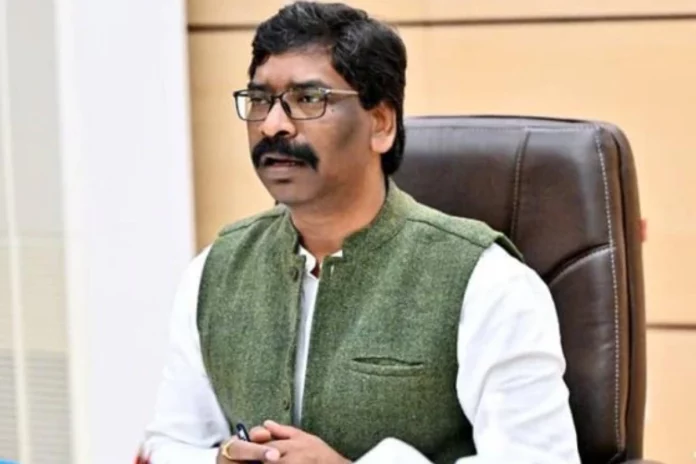
Jharkhand News: Hemant Soren Urges Devotees to Report Issues at Shravani Mela 2026 Through QR Code System

News: The Jharkhand government has introduced a QR code-based grievance system for Shravani Mela 2026, allowing pilgrims to report civic and public service issues directly from the fairgrounds.

Jharkhand News: Hemant Soren Urges Devotees to Report Issues at Shravani Mela

According to information shared by the state’s Information and Public Relations Department (IPRD), visitors can scan the QR code and upload a photograph along with details of the problem. Complaints related to cleanliness, drinking water, toilets, health camps, holding points, and other public facilities can be submitted through the digital platform.

Shravani Mela 2026 Through QR Code System

The initiative, promoted under the leadership of Chief Minister Hemant Soren, aims to improve the overall management of the annual pilgrimage by enabling authorities to respond more quickly to issues reported by devotees.

Officials said the QR code-based complaint mechanism is designed to strengthen real-time monitoring and ensure that essential services remain accessible throughout the fair. The move is expected to enhance the experience of thousands of pilgrims visiting Jharkhand during the Shravani Mela.

The government has encouraged all visitors to make use of the digital facility whenever they notice any inconvenience or shortcomings in public arrangements within the mela area.

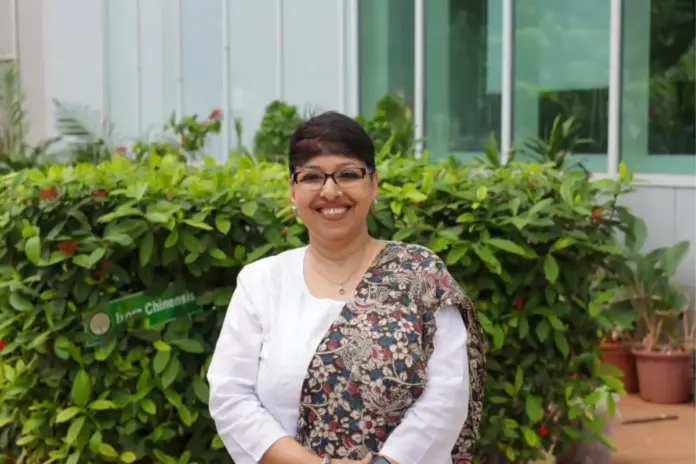
The Psychology of Harassment: It Was Never About the Victim

Dr Srabani Basu

One morning, a highly competent professional walked into work with a knot in her stomach. Nothing overt had happened the previous day. No shouting. No public humiliation. No threatening email.

Just a few familiar moments.

Her suggestions had once again been ignored until someone else repeated them. A sarcastic smile followed her presentation. A passing remark questioned whether she was “really ready” for greater responsibility. The room laughed. She smiled too. What else could she do?

By the end of the day, she was no longer questioning her colleagues.

She was questioning herself.

The tragedy of harassment is that it often succeeds long before it becomes visible. Before reputations are damaged, confidence is quietly eroded. Before careers are affected, identities begin to fracture. The deepest wounds are rarely inflicted in a single dramatic event. They are created through countless psychological paper cuts that eventually make a person doubt their own worth.

Harassment is often mistaken for aggression. It is not.

Aggression can erupt in a moment of anger. Harassment is something else entirely. It is repetitive, deliberate, and psychological. It is less about hurting someone once and more about teaching someone where they “belong.” Its true currency is not violence but control.

That is why psychologists increasingly view harassment not as an expression of temperament but as an expression of power.

The uncomfortable truth is this: people rarely harass because they are emotionally strong. More often, harassment is the behavioural language of insecurity wearing the costume of authority.

Harassment is often mistaken for aggression. It is not.

Aggression can erupt in a moment of anger. Harassment is something else entirely. It is repetitive, deliberate, and psychological. It is less about hurting someone once and more about teaching someone where they “belong.” Its true currency is not violence but control.

That is why psychologists increasingly view harassment not as an expression of temperament but as an expression of power.

The uncomfortable truth is this: people rarely harass because they are emotionally strong. More often, harassment is the behavioural language of insecurity wearing the costume of authority.

One of the most consistent findings across decades of psychological research is that harassment flourishes where there are significant power differentials. Whether in schools, workplaces, academic institutions, families, or online communities, the harasser typically occupies or attempts to create a position from which another person becomes psychologically smaller.

The National Academies of Sciences, Engineering, and Medicine argues that harassment is fundamentally intertwined with the misuse of power. Hierarchical environments, where authority is concentrated and accountability is weak, consistently show higher rates of harassment. The greater the imbalance of power, the greater the psychological harm experienced by those who are targeted.

This immediately shifts the conversation. Harassment is not merely interpersonal conflict. It is an attempt to regulate another person’s psychological space.

Social psychologist David McClelland described one of the fundamental human motives as the need for power. In psychologically healthy individuals, power is expressed through leadership, influence, mentoring, or responsibility.

In unhealthy forms, power becomes domination. The objective is no longer “to lead.” The objective becomes “to make someone feel smaller.”

French and Raven’s classic theory of social power reminds us that individuals can exercise power through authority, rewards, punishments, expertise, or control over information. Harassment often represents the abusive side of these power mechanisms, especially coercive power, where fear becomes the preferred method of influence.

Perhaps the greatest irony is that many chronic harassers do not possess exceptionally high self-esteem. They possess fragile self-esteem.

Research in personality psychology has repeatedly distinguished secure confidence from narcissistic vulnerability. Secure individuals rarely require constant demonstrations of superiority. Fragile egos, however, depend upon comparison.

Someone else’s competence becomes threatening. Someone else’s popularity becomes offensive. Someone else’s independence becomes intolerable.

Harassment therefore functions as an unconscious strategy to restore psychological equilibrium.

“If I cannot become taller, I shall reduce your height.”

The behaviour is cruel. The underlying psychology is surprisingly fragile.

Carl Jung suggested that what remains unintegrated within ourselves often appears intolerable when encountered in others.

Modern psychology describes a similar process through projection.

The colleague accused of arrogance may simply possess the confidence the harasser secretly wishes they had.

The outspoken employee may activate the harasser’s own fear of inadequacy. The creative thinker may expose intellectual insecurity. Instead of integrating these uncomfortable emotions, the psyche externalises them. The internal conflict becomes an interpersonal conflict. The victim becomes the screen upon which unresolved anxieties are projected.

Harassment becomes psychologically easier once empathy begins to disappear.

Albert Bandura described this process as moral disengagement—the cognitive mechanisms through which people justify behaviours they would otherwise consider unethical.

Victims become “overly sensitive.” Complaints become “jokes.” Cruelty becomes “feedback.” Exclusion becomes “team culture.” Language gradually sanitises behaviour. Once empathy is replaced by justification, harassment no longer feels immoral to the perpetrator. It feels deserved.

One of the least discussed psychological aspects of harassment is not the harasser.

It is everyone else. Classic research by John Darley and Bibb Latané demonstrated the bystander effect: responsibility diffuses when many people witness wrongdoing. But organisational psychology adds another layer. People calculate consequences.

Will speaking up affect my promotion?

Will I become the next target?

Will anyone believe me?

Silence, therefore, is often not agreement. It is self-preservation. Unfortunately, every silence also communicates something to the harasser:

“No one will stop you.”

Physical injuries announce themselves. Psychological injuries often do not. Repeated harassment activates the body’s stress systems, increasing vigilance, anxiety, emotional exhaustion, sleep disturbances, impaired concentration, and, in some individuals, symptoms resembling trauma.

Martin Seligman’s work on learned helplessness offers another explanation. When repeated attempts to stop mistreatment fail, individuals may gradually stop trying—not because they lack courage, but because the mind begins to believe that nothing it does will change the outcome.

This is why harassment can continue for years. The victim is not passive. The nervous system has simply adapted to survive.

Research reviewed by the American Psychological Association similarly concludes that workplace harassment is not merely an interpersonal inconvenience but an occupational health issue with significant psychological consequences. Organisational climate, leadership behaviour, and perceived accountability strongly influence whether harassment flourishes or diminishes.

Many organisations invest heavily in compliance training. Far fewer invest in culture. Policies punish behaviour. Cultures shape behaviour before punishment becomes necessary.

Psychological safety; the belief that one can speak without fear of humiliation or retaliation, has emerged as one of the strongest protective factors against harassment. Where questioning authority is welcomed, harassment struggles to survive. Where fear governs communication, harassment becomes remarkably adaptive.

Perhaps the greatest misconception about harassment is that it reveals strength. Psychologically, it reveals dependence. A genuinely secure mind does not need smaller people in order to feel larger. It does not require humiliation to establish significance. It does not manufacture fear to maintain influence.  Harassment is not confidence expressed loudly. It is insecurity seeking witnesses.

The healthiest societies, classrooms, families, and organisations are not those without differences in power. They are those in which power is exercised with accountability, empathy, and respect because the opposite of harassment is not punishment. The opposite of harassment is psychological maturity.

By – Dr Srabani Basu, Associate Professor, Department of Literature and Languages, SRM University AP