Home Blog Page 8

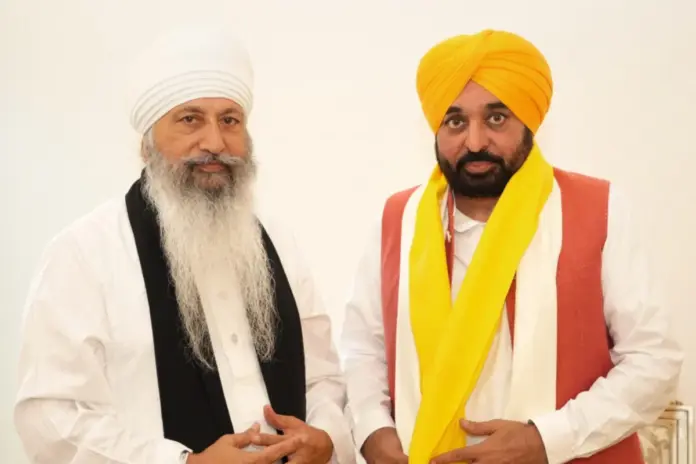
Sikh Leaders Bestow Blessings on CM Bhagwant Mann for Uncompromising Stance on Beadbi Legislation, Check

Bhagwant -Mann
Google

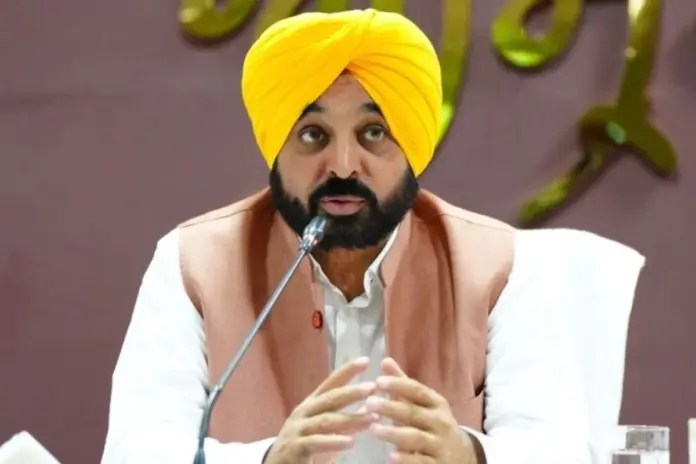
For Sikhs, Sri Guru Granth Sahib Ji is not just a holy book. It is the living Guru. Beadbi, the desecration or disrespect of the Guru Granth Sahib, has hurt the community deeply for years. Many families waited a long time for a strong law that would give real protection and justice. Now Sikh leaders and the wider Sangat are offering their blessings to Chief Minister Bhagwant Singh Mann for taking a firm stand on the issue.

How the Beadbi Law Came Into Force

The Punjab Vidhan Sabha passed the bill on 13 April 2026, the day of Vaisakhi. Reports say it was passed unanimously. Governor Gulab Chand Kataria then gave his assent, and it became law as the Jaagat Jot Sri Guru Granth Sahib Satkar (Amendment) Act, 2026. The Chief Minister has said the law provides harsher punishment for beadbi. He also said it was drafted with legal experts so that future loopholes cannot weaken it.

Thanksgiving Across Punjab

After the law came into force, gurdwaras and communities across the state began holding thanksgiving prayers. On 11 May 2026, CM Mann attended the bhog of an Akhand Path at Gurdwara Jyotisar Sahib in Sangrur. He offered Ardas and thanked the Almighty for the chance to serve. A “Shukrana Yatra” was also held to give thanks. Mann said Sikhs around the world had expressed joy over the law.

What Leaders and Ministers Are Saying

Several Punjab ministers and MPs called the day historic and said the law reflects the faith of millions of people. Malvinder Singh Kang said it answers a long-pending demand for strict punishment. Harjot Singh Bains said it matters to people of all religions who revere the Guru Granth Sahib.

Will the Law Stop Beadbi?

Supporters say the tougher penalties will make anyone think twice before committing such an act. The Chief Minister has said he hopes no one will dare to commit beadbi again. Not everyone agrees on the politics around it. Mann himself has acknowledged that some people still oppose the legislation, and his comments about the previous Akali government were sharply critical. As with any law, its real impact will depend on how fairly and quickly it is enforced.

CM Yogi Adityanath Inspects Kushinagar Floods, Distributes Relief Material to Affected Families

CM- Yogi- Adityanath
Google

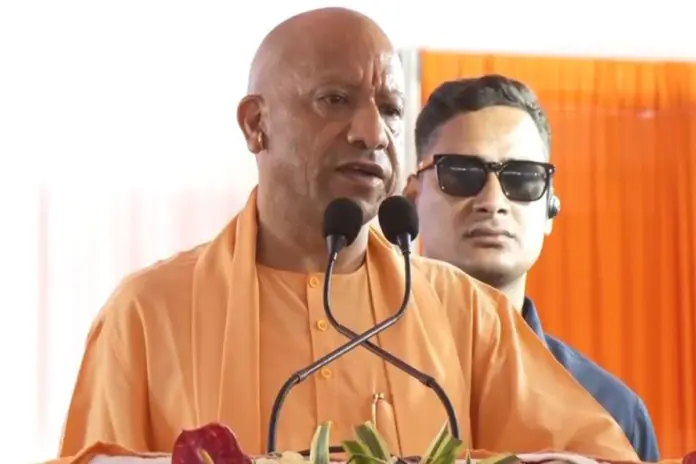
CM Yogi Adityanath: Uttar Pradesh Chief Minister Yogi Adityanath visited flood-affected areas of Kushinagar on Tuesday, September 29, 2026, distributing relief material and announcing compensation for families hit by a sudden embankment breach that flooded several villages overnight.

What Triggered The Flooding

The crisis began late on September 28, when the Narayani River’s AP embankment breached near Chain Patti and Jawahi Mali Ehtmali in the Tatwa Tola area of Tamkuhiraj tehsil, Kushinagar. Floodwaters surged rapidly into nearby villages, displacing residents overnight. Local resident Ritesh Singh told reporters that 12 to 13 villages were affected and several families were left homeless, while another villager, Lalbagh Gupta, said the impact extended to around 200 villages in the wider area. Gorakhpur Flood Division Chief Engineer Vikas confirmed roughly 100 metres of embankment erosion, with teams working to contain the damage using sandbags.

CM’s Immediate Response

After the breach, Adityanath held a high-level meeting with the Gorakhpur Commissioner, Additional Director General of Police, and Kushinagar District Magistrate, and ordered the immediate evacuation of residents to safer ground. National Disaster Response Force (NDRF) and State Disaster Response Force (SDRF) teams were deployed for large-scale rescue operations.

On-Ground Visit And Relief Distribution

Adityanath personally visited the flood-hit villages on Tuesday, assuring families that the state government stood with them during the disaster. He announced that 5,000 relief packets had been arranged for affected families, each containing around 35 items, including 10 kg of rice, 10 kg of flour, 10 kg of potatoes, pulses, oil, spices, salt and a bucket, with each packet weighing over 50 kg.

Compensation Announced

CM Yogi Adityanath: The Chief Minister said families who suffered loss of life would receive Rs 4 lakh in assistance, alongside compensation for damaged homes and crop losses. He directed officials to ensure food, drinking water and electricity at relief camps, and asked health centres to maintain adequate stocks of anti-sera and anti-rabies vaccines for affected areas.

₹1 Lakh Transferred From SGPC Secretary’s Account to Bahrain Woman’s Account in July; Harjinder Dhami Must Explain Where Sangat’s Money Was Spent: Baltej Pannu

Baltej Pannu

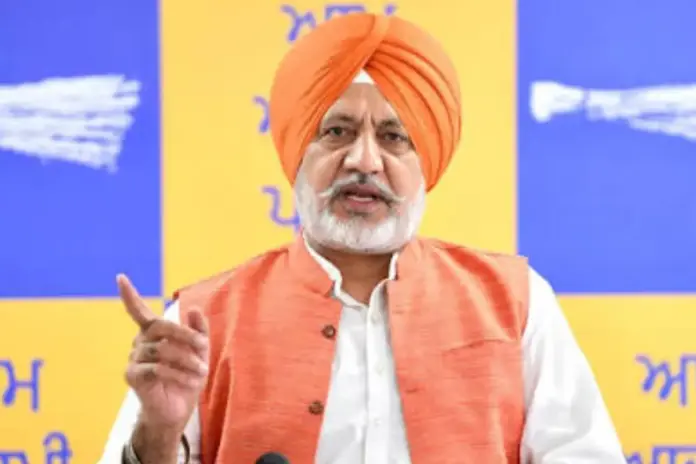
Aam Aadmi Party (AAP) Punjab General Secretary and Media In-charge Baltej Pannu on Tuesday questioned the continued silence of Shiromani Akali Dal (Badal) leaders Sukhbir Singh Badal, Harsimrat Kaur Badal and Bikram Singh Majithia, as well as Shiromani Gurdwara Parbandhak Committee (SGPC) President Harjinder Singh Dhami, over the allegations raised by a woman from Bahrain regarding her stay at an SGPC-run sarai at Sri Anandpur Sahib. Baltej Pannu said he had already held nearly four press conferences on the matter, but the questions raised by the Sikh sangat remained unanswered.

Addressing a press conference, AAP Punjab Media In-charge Baltej Pannu said, “Harsimrat Kaur Badal is participating in programmes and rallies around women’s issues, but there is complete silence on the allegations concerning the woman who stayed in the SGPC sarai for several months. Why is she not answering these questions? Why is there silence when questions are being raised about the treatment of a woman and the use of SGPC resources?”

Baltej Pannu said, “Bikram Singh Majithia is also putting out videos instead of holding press conferences where he would have to face questions from journalists. If Bikram Singh Majithia has answers, he should come before the media and answer the questions.”

Questioning Harjinder Singh Dhami, Baltej Pannu said, “Dhami Sahib has also put out a video instead of facing the media. Today, when the media asked him questions in Patiala, he again said that he would not answer anything about this matter because he had come there for another matter. When will Harjinder Singh Dhami hold a press conference and answer these questions?”

The AAP Punjab Media In-charge pointed out, “This is not an ordinary political controversy. Questions are being raised about an SGPC institution, SGPC resources and the manner in which a woman was accommodated there for months. The Sikh sangat has every right to ask questions and receive clear answers.”

Baltej Pannu questioned the four-member inquiry committee constituted by the SGPC and said, “I had raised this question in my previous press conference as well: how will junior people question senior people?”

He said, “The woman has said that she conveyed everything to Harjinder Singh Dhami and Sukhbir Singh Badal. Will this committee question Harjinder Singh Dhami? Will it question Sukhbir Singh Badal? Will it examine what they knew, when they knew it and what action was taken?”

The AAP Punjab Media In-charge said, “If the SGPC genuinely wants a proper investigation, then it should be entrusted to experienced people. A retired Sikh judge or a retired senior police officer could have been asked to conduct the inquiry. Neither are these junior members experts in law nor are they experts in administration. How can a matter involving senior people be properly investigated without an independent and experienced inquiry?”

Baltej Pannu said the SGPC had given the inquiry committee 15 days to submit its report, but questioned whether the move was simply intended to push the matter into the background. “The SGPC has given the committee 15 days. Is the idea that after 10 or 15 days the matter will go into the background and people will forget it? People will not forget this matter. The Sikh community across the world is talking about it, and the issue is also being discussed by Punjabi media channels,” he said.

He said, “The questions will remain even after 15 days. They will remain after 10 days and they will remain after 10 months unless proper answers are given.”

Baltej Pannu questioned, “Who brought this woman to the SGPC sarai? Why was she kept there for months? Who provided her accommodation and facilities? Who paid for them? What was the role of Sarabjit Singh Jhinjer? What was the role of Virsa Singh Valtoha? These are basic questions and the SGPC must answer them.”

The AAP Punjab Media In-charge said, “This matter is particularly serious because the sarai, the vehicle, the driver and the sewadars involved were connected with the SGPC. If SGPC resources were used, then the SGPC must place the complete expenditure before the Sikh sangat.”

Baltej Pannu made a fresh revelation in the matter, saying, “On July 23, 2026, ₹1 lakh was transferred from an account in the name of the SGPC Secretary at Punjab National Bank to the account of the woman from Bahrain. Why was this ₹1 lakh transferred? For what purpose was it given? Who authorised this payment? Under which head was this money transferred? The SGPC must answer these questions.”

“Is there any bigger proof than this? The FIR itself was a major piece of evidence, but nobody answered those questions. Now this is a transaction from an SGPC account to the account of the same woman who made the allegations. Why was this ₹1 lakh transferred? For what purpose was it given?” Baltej Pannu asked.

Baltej Pannu said, “This is only one transaction. What about other payments? What about cash expenses? What about the expenses incurred on her accommodation, food, travel and other facilities? The vehicle was provided by the SGPC, its fuel was paid by the SGPC, the driver was paid by the SGPC and the sewadars were SGPC employees. Apart from this, if she was also being given money for personal expenses, the entire expenditure for those eight months must be accounted for.”

Baltej Pannu demanded that the SGPC disclose the complete expenditure incurred in connection with the woman’s stay and explain who authorised each payment.

The AAP Punjab Media In-charge stated, “The Sikh sangat contributes its hard-earned money to the SGPC with faith and devotion. An ordinary Sikh family may be able to contribute only ₹10 or ₹20 at a time. If you count ₹10 contributions, ₹1 lakh represents 10,000 people who may have put their money in the golak with faith. How can that money simply be transferred to someone’s account? The SGPC must answer. This is the money of the Sikh sangat and there must be complete accountability for every rupee.”

He also questioned the broader functioning of SGPC institutions. “People have heard allegations and controversies relating to expenses and functioning at various SGPC institutions over the years, including the dry rotis matter, the sabji matter during Covid and the building matter. But this case has raised particularly serious questions because the facility involved was directly under the control of the SGPC. The answer cannot simply be that an inquiry committee has been formed. The Sikh sangat wants to know who took the decisions, who authorised the expenditure and who was responsible for the facilities provided.”

Baltej Pannu also questioned the political influence over the SGPC and said, “Harjinder Singh Dhami has himself publicly described himself as a ‘soldier’ of Sukhbir Singh Badal. So today the question is simple: will Harjinder Singh Dhami answer the questions being raised about the use of SGPC resources and the woman’s stay?”

He said, “Sukhbir Singh Badal must also explain what he knew about this matter. If the woman says that she conveyed everything to Sukhbir Singh Badal, then Sukhbir Singh Badal should come before the media and clarify his position.”

Baltej Pannu said, “These institutions were built with sacrifices. The Sikh sangat across the world contributes to them. They do not contribute so that you can bring a woman to an SGPC sarai, keep her there for eight months, harass her and nobody tells the sangat why she was kept there or for what purpose. The Sikh sangat has the right to know how its institutions are being run. It has the right to know how its money is being spent. Nobody has the right to treat the sangat’s contributions as personal or political resources.”

Baltej Pannu further questioned the role of those who, according to him, arranged the woman’s travel and brought her to Punjab. “Who arranged her travel? Who brought her to Punjab? Who received her? Who arranged her accommodation? Who instructed the SGPC staff? These questions cannot be brushed aside. Sukhbir Badal should explain what he knew. Harjinder Singh Dhami should explain what he knew. Those who arranged her travel and stay should also be questioned. The Sikh sangat deserves a complete account of what happened.

He also questioned why SGPC elections had not been held for 11 years. “Why have SGPC elections not been held for 11 years? Why is the Sikh sangat being kept away from choosing its representatives? These are questions that the Sikh sangat and Sikh intellectuals must ask,” Baltej Pannu said.

Baltej Pannu pointed out that the Shiromani Akali Dal (Badal) had reached an understanding with the BJP under which it would seek minimum seats for the Vidhan Sabha elections while retaining control over the SGPC. “The Sikh sangat and Sikh intellectuals must ask how the institution is being run and how its funds are being used. These institutions belong to the Sikh sangat, not to any individual or political family,” he said.

He said, “Today, Dhami Sahib again ran away from the questions. He did not answer them. He may think that if he does not answer for 10 or 15 days, people will forget. People will not forget. Sukhbir Badal and Harjinder Singh Dhami will continue to face these questions. The Sikh sangat will continue to demand answers. The matter will not disappear simply because an inquiry committee has been given 15 days,” Baltej Pannu said.

Baltej Pannu reiterated that the SGPC must provide a complete account of the woman’s stay, the use of its resources, the alleged ₹1 lakh transfer and the roles of all those whose names have been raised in connection with the matter. “The Sikh sangat is asking questions. Instead of making videos, instead of avoiding journalists and instead of waiting for 15 days, those responsible should come before the media and answer every question,” he said. Tv


Opposition’s Empty Rallies vs People’s Ultimate Love and support for CM Bhagwant Mann — Is 2027 Verdict Clear?

Bhagwant- Mann
Google

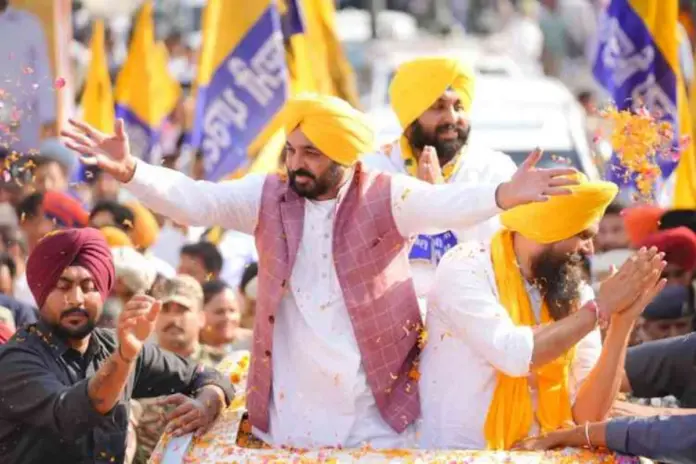
CM Bhagwant Mann: With Punjab‘s 2027 Assembly election approaching, the state’s political battle lines are sharpening, and Chief Minister Bhagwant Mann’s camp is betting heavily on its delivery record against a visibly divided opposition field.

Mann’s Confidence On Display

At a rally in Dhuri, Mann declared that AAP‘s return to power in 2027 is “writing on the wall,” pointing to the party’s claim of fulfilling its pre-poll guarantees within four years rather than five. He has repeated similar messaging at events across the state, including a Jantar Mantar rally with Arvind Kejriwal, where he projected AAP winning 100 seats and accused the BJP and Congress of having “looted Punjab turn by turn” for decades.

AAP’s Civic Poll Boost

AAP has pointed to its recent municipal election performance, winning 958 of nearly 1,977 wards, as evidence that its 2022 mandate, when it swept 92 of 117 seats, still holds ground.

A Fractured Opposition Response

The opposition picture looks messier. Congress has battled visible internal rifts, with supporters publicly pushing for Charanjit Singh Channi as its CM face even as state president Raja Warring insists the party is on track to form the next government. The BJP and SAD, meanwhile, are each trying to rebuild after 2022’s near-wipeout, with all three opposition parties holding separate, competing shows of strength at events like the Baba Bakala rally.

Not A Settled Question

CM Bhagwant Mann: Despite AAP’s confident messaging, Congress leaders continue to cite Mann’s alleged governance lapses and unresolved issues like withheld GST dues, while BJP and SAD contest AAP’s civic poll narrative. With four parties preparing for what analysts call a genuinely four-cornered contest, Punjab’s 2027 verdict remains very much an open question rather than a foregone conclusion.

Jharkhand News: Hemant Soren Govt’s Abua Awas Yojana Redefines New Chapter In Housing Support, Check Eligibility

Jharkhand- News
Google

Jharkhand News: Abua Awas Yojana is a housing scheme of the Jharkhand government under which all eligible families who lack proper housing facilities will be given permanent houses. The scheme has been introduced for families living below the poverty line. You will not be surprised to know that the Jharkhand government, led by Hemant Soren, has been emphasizing the housing scheme, as it is a major welfare scheme here. This scheme aims to uplift the living standards of every eligible beneficiary of the state.

What is Abua Awas Yojana?

Abua Awas Yojana is a housing scheme recently launched by the Jharkhand state government under which three-room permanent houses will be provided to eligible households. The scheme has been designed to cater to families abandoned by permanent housing. The help is offered in steps so the winners could build their homes slowly. The scheme is run through the relevant government departments and district administrative authorities.

Key features of the Abua Awas Yojana

This scheme for eligible households has aspects such as:

  • Financing for the construction of a permanent house.
  • Allowances for a three-room house with a kitchen.
  • Focus on economically weaker and housing-deprived families.
  • Help distributed in phases based on degree of buildout.
  • Acts as a priority for those households who are the most eligible by government criteria.
  • Implementation through the state government’s administrative system.

Eligibility under Abua Awas Yojana

The scheme will be applicable to those according to the conditions of the Jharkhand government. Approved criteria. In general, the scheme will provide permanent housing. Eligible beneficiaries must be checked before submitting the requests or details to ensure that they meet the requirements for the benefit. The benefit identification could be checked with government records and may be verified locally.

Who may get priority?

The scheme puts housing-related problems and lower-income groups as its main areas of concern. Some weaker sections of the community may get priority as per the government norms. But admission and eligibility criteria may be based on official records for that matter verification and the fresh rules issued by the Jharkhand government. Hence, aspirants may follow the official notifications and not the unofficial lists floating on the web.

What is the process to check the Abua Awas Yojana beneficiary list?

The residents who are eligible can verify the particulars of the scheme from the official Jharkhand government portal or through their Gram Panchayat, Block office, or the relevant authority. The organization or the company may ask candidates for information like address or other details for screening purposes.

Documents that may be required

Depending on the application and verification process, you may require papers like:

  • Aadhaar card or another valid identity document
  • Residence or domicile proof
  • Ration card, where applicable
  • Bank account details
  • Income-related documents, if required
  • Passport-size photograph

Why Abua Awas Yojana matters for Jharkhand families?

Jharkhand News: Access to a permanent house can provide families with greater security and improved living conditions. Through housing assistance, the scheme seeks to support households that may otherwise find it difficult to finance the construction of a permanent home. For eligible families, the assistance can also reduce the financial burden associated with house construction and provide a structured route towards obtaining better housing.

Thousands Jailed, Tons Seized! How Bhagwant Mann’s ‘War on Drugs’ is Dismantling Syndicates

Bhagwant- Mann
Google

Bhagwant Mann: Punjab has battled drug addiction for decades, and families across the state have felt its cost. Since March 2025, Chief Minister Bhagwant Mann’s government has responded with a campaign that, according to officials, has not paused for a single day.

What Is Yudh Nashian Virudh?

Yudh Nashian Virudh means “war against drugs.” The mission is to make Punjab drug-free. Police carry out raids every day across all 28 police districts, led by the Anti-Narcotics Task Force and local police. A five-member Cabinet sub-committee headed by Finance Minister Harpal Singh Cheema monitors progress.

The Numbers So Far

Police figures show how far the drive has grown:

  • Day 82: 12,650 total arrests, with more than 200 teams raiding 460 locations in one day.
  • Day 453: over 60,000 arrests.
  • Day 571: a total of 79,463 alleged smugglers arrested.

On Day 571 alone, police arrested 117 people and recovered 20.3 kg of heroin, 2 kg of opium, 15 kg of poppy husk and 737 intoxicant pills.

How Does the Crackdown Work?

The strategy has three parts. Teams act on intelligence to find suppliers and sellers, not just street-level users. Daily raids and checks across the state keep pressure on trafficking routes. Seizing drug money aims to weaken the financial base of these networks. Because the campaign is sustained, dealers have little time to regroup, and this is why officials describe it as one of the longest anti-narcotics operations in Indian policing.

Not Just Arrests: The Recovery Side

Punishment is only half the plan. During raids, police also counsel people struggling with addiction and encourage them to enter de-addiction and rehabilitation programmes. On Day 571, 21 people were persuaded to seek treatment. The idea is simple: arrest the traffickers, but help the addicted get better.

What This Drug War Means for Punjab’s Families 

Bhagwant Mann: Drugs damage health, drain family savings and push young people away from education and jobs. A state-wide, daily campaign sends a clear message that trafficking will be pursued relentlessly. Long-term success will depend on whether arrests lead to convictions, supply chains stay broken, and rehabilitation reaches everyone who needs it. Still, the scale and consistency of the effort mark a major shift in how Punjab confronts its drug problem.

Big Relief for Power Consumers! Bhagwant Mann’s Govt Halts Disconnections Over Faulty Billing

Bhagwant- Mann
Google

Bhagwant Mann: Few things worry a household more than a wrong electricity bill followed by a disconnection warning. Under the Bhagwant Mann government, Punjab‘s domestic consumers now have some relief. PSPCL directed its field offices to keep disconnections in abeyance with immediate effect where the dues come from incorrect or inflated bills. 

What Has the Punjab Government Decided?

No disconnection action will be taken against domestic supply (DS) consumers whose bills were wrong or inflated. In simple words, if your unpaid amount exists only because the bill was wrong, your power should not be cut for it. Field offices have been told to follow the order strictly. 

Why Did Electricity Bills Go Wrong?

Two things happened together. A recent meter readers’ strike meant many consumers were billed on an average or assumed basis instead of actual readings. At the same time, PSPCL is moving its older SAP and non-SAP systems to an Oracle-based Smart Billing System (SBS). Think of it like shifting a shop to a new building: while things settle, records can get lost or mixed up. The wrongly billed amounts then appeared as outstanding dues in the system. 

Who Benefits From This Decision?

The relief is meant for household consumers who received incorrect or inflated bills and were shown as defaulters because of them. Complaints had been reaching field offices in large numbers. The order makes it clear that people should not face disconnection just because an amount was generated by wrong billing rather than their real consumption. 

How Long Will the Relief Last?

The pause continues until the SBS system stabilises and incorrect or inflated bills are corrected. So this is temporary, not a waiver. Once bills are fixed, consumers should expect to pay the corrected amount. 

What Should You Do Now?

  • Compare your bill with your actual meter reading.
  • If the units look far higher than usual, file a written complaint at your local PSPCL office and keep a copy.
  • Keep all payment receipts safe.
  • Pay any amount you know is correct, so genuine dues don’t pile up.

What This Means for Punjab Power Consumers 

Bhagwant Mann: This decision protects honest consumers from paying for a system change and a strike they had no part in. The real test now is speed: how quickly PSPCL corrects the bills and restores trust in the new billing system.

Historic Victory! CM Yogi Adityanath Congratulates Neeru Dhanda for Gold at Asian Games

CM- Yogi -Adityanath
Google

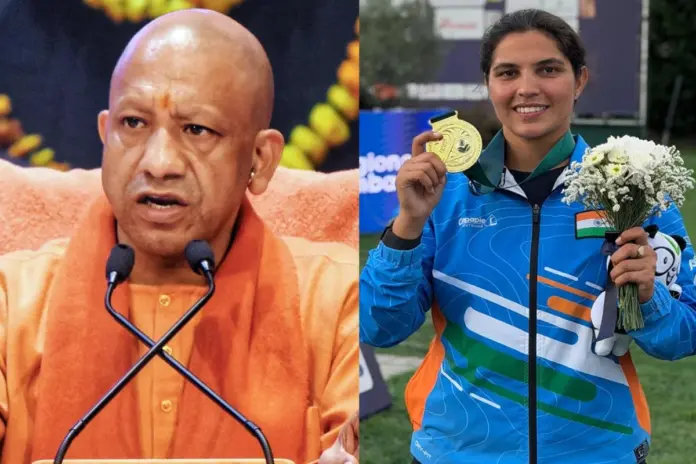
CM Yogi Adityanath: India’s Neeru Dhanda made history at 2026 Asian Games by clinching the yellow metal in Women’s Trap Individual. Indian shooter wins gold medal in women’s trap shooting at 2026 Asian Games. Indian shooter Neeru Dhanda was congratulated by UP CM Adityanath for winning gold in women’s trap shooting. Throughout the event, Dhanda showed her composure and accuracy while keeping her exceptional form intact when it truly mattered. Her gold medal was also a historic one, as she became the first Indian woman to clinch an individual Asian Games gold in women’s events.

Neeru Dhanda makes history with gold

Dhanda wins her third individual medal on the 3rd day of competition, to Nepalese shooter, clinching her third individual medal against a Nepalese shooter. This time she was competing against some of the top shooters of Asia in the field. The historic gold highlights the increasing participation of Indian women in the sport of shooting and takes India’s medal tally at the Aichi-Nagoya Asian Games.

Yogi Adityanath congratulates the shooter

A message from the UP Chief Minister After her sensational win in the 3000 m race, Uttar Pradesh Chief Minister Yogi Adityanath said, “I congratulate the girl of the state for making India proud by winning a gold medal in the competition.” The feat has also caught the eye of the sports fraternity, where Dhanda’s success was termed an important day for Indian shooting.

A landmark moment for Indian shooting

Dhanda’s success at Asian Games coincides with a good period in her shooting career. Her consistency in the international circuit has cemented her position as one of the most prominent names in women’s trap shooting in India. Her success at the Asian Games will be a proud personal achievement but also an important one for Indian shooting. It highlights the ever-expanding number of successful Indian athletes on the world stage and adds yet another highlight to the 2026 Asian Games for India.

‘New Low In Indian Democracy…’ Anurag Dhanda Questions Why No FIR In Parvesh Verma Slapping Case

Anurag- Dhanda
Google

A political row has erupted in Delhi after a video emerged purportedly showing PWD Minister Parvesh Verma hitting AAP worker Saheb Singh while inspecting a road in West Delhi. Anurag Dhanda of the Aam Aadmi Party asked why an FIR was not first registered over the incident and labelled the incident a “new low in Indian democracy.”

What happened during the road inspection?

The clash occurred when the inspector was checking on the ongoing work on the road in the Tilak Nagar locality. In the video doing the rounds on social media, Verma can be seen snatching Singh’s mobile before punching him when the latter was filming. The clash broke out over an argument over the state of a new road that had been constructed and the behavior of some persons present there during the inspection. Verma denied the allegations against him and said an AAP worker had abused his family.

Why did Anurag Dhanda question the FIR?

AAP leader Anurag Dhanda took to Twitter and publicly hit out at Delhi Police for not registering an FIR after the video. “Why is no FIR registered if the incident was captured on camera?” He questioned. The matter added to the political fight between the two, with Opposition leaders calling for Verma’s resignation, and the government making a different charge connected to the road check.

What action did Delhi Police take?

Early reports on September 28 claimed that Delhi Police had received five complaints related to the row but had yet to lodge an FIR against Verma. The state later changed the course of the case. Delhi Police filed a non-cognisable report (NCR) against Verma under Section 115 of the Bharatiya Nyaya Sanhita relating to voluntarily causing hurt. There was an FIR in the case of an AAP MLA, Jarnail Singh, after the complaint of a PWD official.

What is the difference between NCR and FIR?

There are different legal situations regarding the FIR and non-cognizable report. For a non-cognisable crime, police, unlike in a cognizable crime where an FIR can start a police investigation, require permission from the court to launch an inquiry.

The road dispute behind the controversy

The clash occurred in the context of questions being raised over the road construction quality in West Delhi. Jarnail Singh, an AAP MLA, had raised the issue of the construction quality of the newly repaired road, while Verma and his associates leveled counter-complaints regarding how those who inspect the roads conduct themselves. These versions are still involved in the fight.

From Jails to Jurisdictions, How Bishnoi Network Don Goldy Brar Ran a Global Hit Syndicate on Smuggled Phones

Goldy- Brar
Google

Goldy Brar: US federal prosecutors have detailed how jailed gangster Lawrence Bishnoi allegedly ran a transnational crime syndicate from an Indian prison, with lieutenant Satinderjeet Singh, alias Goldy Brar, executing operations across North America, in a sweeping indictment under “Operation Hard Ball.”

A Syndicate Directed From A Jail Cell

According to the indictment filed in Los Angeles, Bishnoi, imprisoned in Sabarmati Central Jail since 2015, used contraband cellphones and internet-calling devices smuggled into his cell to direct “political assassinations, murders, shootings, extortions, kidnappings, drug trafficking, human smuggling, and other crimes” worldwide.

Goldy Brar’s Role

Prosecutors allege Brar, operating out of Canada, effectively spoke for Bishnoi and helped run the enterprise’s day-to-day operations across the US and Canada, directing associates and members involved in violent acts including targeted killings and drug trafficking. The FBI has since added Brar to its Most Wanted list, offering a $50,000 reward.

From Student Politics To Global Crime

The indictment traces Bishnoi’s transformation from a Punjab University student leader in the early 2010s into a criminal organiser, alleging he “refashioned his associates and followers into a criminal organisation” after abandoning campus politics.

Linked To High-Profile Killings

The syndicate has been tied to several major cases, including the 2022 murder of singer Sidhu Moose Wala and the 2023 killing of Khalistani activist Hardeep Singh Nijjar in Canada. Court documents also allege the group stole 520 kilograms of cocaine from rival trafficking networks in the Los Angeles area.

Operation Hard Ball marks the first time US prosecutors have formally charged the rival Bishnoi and Bhagwanpuria syndicates for operating on American soil, with 24 people arrested globally. The case underscores how prison walls have failed to stop the network’s international reach, raising fresh questions about smuggled-phone security inside Indian jails.

Bigger Smog Season, Harder Rules: New Delhi Pollution Restrictions To Mean More PUCC Enforcement From October 1, Here’s What’s Planned

Delhi- Pollution
Google

Delhi Pollution: The national capital is gearing up for tougher steps to curb air pollution as the winter season nears. One of the key components of the plan is more rigorous implementation of the No PUCC, No Fuel policy from October 1, which could see vehicles without a Pollution Under Control Certificate being refused fuel. 

PUCC checks get stricter

Delhi to crack down on vehicles without valid PUCCs from 1st October. PUCC stands for Pollution Under Control Certificate, which confirms the vehicle’s emissions are within the set limit. Technology will be used to enforce the rules by means of Automatic Number Plate Recognition cameras at fuel stations. The government claims there are 500 petrol pumps in Delhi with ANPR cameras.

PUCC Becomes Essential for Refueling

Under the new enforcement guideline, a valid PUCC could become necessary even before refueling. The Commission for Air Quality Management has issued directions to ensure that fuel stations in the NCR region don’t sell fuel to any vehicle without a valid PUCC from October 1 onwards, and a technology-based system for identification will be put in place. For motorists, it makes it more important to verify the pollution certificate before each journey or refueling.

Fines for non-compliance

Vehicles without a valid PUCC can also attract a fine under the current provisions. The fine can be as high as 10,000 for contravention, an official has said. Essentially, the PUCC requirement applies to petrol, diesel, and CNG vehicles. Electric vehicles do not have tailpipe emissions and therefore do not need a PUCC.

More checks on vehicles

The Delhi government is also working on introducing more automated vehicle testing. The Burari Automated Testing Station will check vehicles on points like brakes, suspension, headlights, side-slip, and emissions. 

Construction curbs ahead

The plan will also include a stipulation on dust and construction activity: A ban on dust-producing demolition and outdoor civil construction activities will be in effect from Nov. 1. A complete ban on all construction and demolition activities will be in effect Dec. 10 through Jan. 20. This is a sample provided to Carcase.org by the author for personal use only These measures are part of a broader program to tackle all winter sources of pollution, not just vehicles.

Parking and Office Changes

Our winter action plan will also include measures to deter the use of private cars. Parking fees at authorized locations will rise twofold on November 1. Office timings will be staggered, and 50% work from home will be in place in government and private offices from 1 November to 28 February, the government also said.

More public transport

Public transport is also part of the equation. The government has revealed plans to introduce 150 electric buses and increase the use of public transport throughout the pollution period.

What motorists should check?

If you own a vehicle, the first thing to do is to find out whether the PUCC is still valid. It is not if it is past 1 October. The seller will have to take action, and you will have to refuel whether you like it or not – when the more rigorous system is deployed. Further restrictions will be phased in over winter to include zones for vehicle emissions, construction sites, parking, workplaces, burning waste and pollution hotspots.

A broader winter pollution plan

Delhi Pollution: The Winter Action Plan 2026-27 for Delhi integrates vehicle enforcement actions with dust, construction, burning of waste, industrial pollution, and traffic congestion actions. As authorities gear up for the seasonal spike in pollution, experts have raised concerns over whether people’s own actions will have any impact without persistent effort on the key emissions sources.

CEC’s Removal A Cakewalk? Why Gyanesh Kumar’s Case Is Different From an Ordinary Parliamentary Motion, Details Here

Gyanesh- Kumar
Google

Gyanesh Kumar: The proposal to remove the Chief Election Commissioner, Gyanesh Kumar, has once again raised a constitutional process that is much more complex than simply deciding to pass a resolution in Parliament. According to Article 324(5), a CEC has the same security as the Supreme Court judge and cannot be ousted by Parliament through a resolution.

Why does the CEC have special protection?

The Constitution bestows the Chief Election Commissioner a special status to ensure autonomy of the Election Commission. As per Article 324(5), the CEC can be removed in the same way and for the same reasons that a Supreme Court judge can be removed. This can be hugely different from a typical parliamentary motion.

A notice is only the beginning

It begins with a removal notice with a minimum of 100 signatures from MPs in the Lok Sabha or 50 MPs in the Rajya Sabha; the notice has to be submitted to the Speaker or the Chairman of the Rajya Sabha. Nevertheless, fulfilling this numeric requirement will not begin an inquiry. The relevant presiding officer must make a decision as to whether to permit the motion.

Inquiry comes before the vote

Notice is admitted by the court if a three-member inquiry committee is formed. The inquiry committee consists of; Supreme Court judge/Chief Justice of India, and High Court Chief Justice, and an eminent jurist. The committee considers the allegations and gives the CEC a chance to answer, by way of a written defense and recording of any evidence.

Parliament needs a special majority

But still, removals aren’t automatic even after an inquiry. If the committee finds the claims to be substantiated, the issue goes to Parliament. The motion for impeachment shall be supported by a special majority in both the Lok Sabha and the Rajya Sabha, which is at least half of the total membership of each of these houses, and two-thirds of those voting. It cannot actually initiate the removal process until the motion has been passed in both Houses.

The president has the final role

Once a motion gets passed by the both the Houses of the Parliament, a prayer addressed to the President requesting for the removal of the CEC is tabled in each House. Then, an order for removing the CEC is issued by the President. 

What happened with earlier notices?

It’s not the first time the Opposition tried to remove Gyanesh Kumar. Hindustan Times reported that the Opposition MPs gave notice of moving no-confidence motion in the Parliament in March 2026 that was signed by 130 MPs in Lok Sabha and 63 MPs in Rajya Sabha. Both notices were subsequently rejected by the presiding officers at the scrutiny stage. Another Rajya Sabha notice, filed on April 24, was signed by 73 Opposition MPs and included nine new allegations; the Hindustan Times reported that this notice was still valid as of the explainer on September 28.

Why do the numbers matter?

The first signature requirement and the last voting requirement are two thresholds. You need 100 Lok Sabha MPs or 50 Rajya Sabha MPs to give a notice, but you will need the higher special majority in both houses to remove it. So getting enough signatures to give the notice does not guarantee that the MP will be removed.  The Congress lacked a two-thirds majority in the Lok Sabha, and the BJP had 240 MPs in the House. While such figures are relevant to the parliamentarian arithmetic in favor of the proposal, they cannot alone decide the outcome of the constitutional process.

Why is this not an ordinary motion?

A normal parliamentary bill or motion may have different procedures, depending on what it’s about and the law for the particular bill or motion. What protects the removal of the CEC?nThere is a threshold for the notice to be initiated, then the notice is scrutinized by the presiding officer, then there is an autonomous inquiry mechanism, then a special majority in both the houses of Parliament, and then comes the presidential order. Our framework does not leave the question of resignation to the kiss of the MPs who sign a notice  it creates legal conditions and protections at each step.

Ujjain News: Viral Clip Changed the Mood? AI Videos, Rumours and Police Action After Shahi Masjid Clashes, Check Details

Ujjain- News
Google

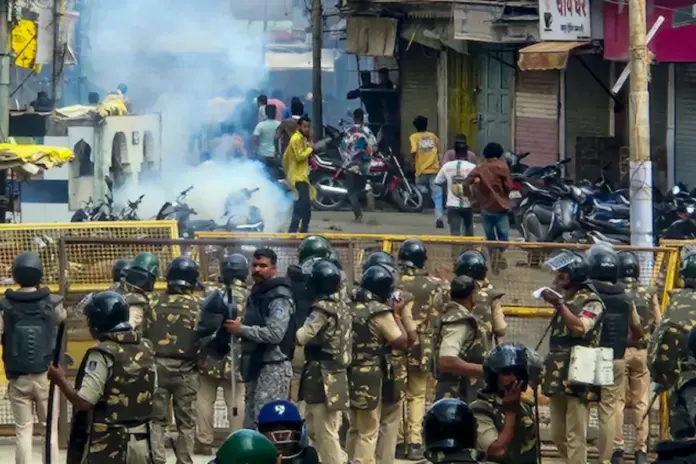
Ujjain was tense over the altercation that took place near the Shahi Masjid as some roads were to be widened by demolishing part of the structure. Officials have said that the police are now investigating the AI-generated videos and Facebook postings that incorrectly claimed the entire mosque was being demolished. Five content creators are among the 20 booked in three police stations in the FIRs.

What happened in Ujjain?

The fights broke out on September 28 after a mob gathered in the vicinity of the Shahi Masjid to protest against the move to raze the structures. The police said they resorted to tear gas and “mild force” after some stones were pelted. The row relates to the road-widening work being carried out as part of the plans for the 2028 Simhastha Kumbh. It has been reported that only part of the mosque is positioned in the new road alignment.

AI videos come under scrutiny

Videos produced using AI that were being shared on social media were the center of the police probe, authorities said. One of the videos falsely depicted the demolition of the complete Shahi Masjid, while the matter was of a part of the mosque. Police said the posts led to a group of hundreds gathering around the mosque. The content was being investigated on more than 100 Instagram accounts, police said.

FIRs registered

The police have filed 8 FIRs against 20 individuals in three police stations. Among the FIRs, there are five content creators for sharing AI-generated videos and other inflammatory social media posts. Investigators are also analyzing online activity, and authorities have called for people not to disseminate rumors.

Road widening behind the dispute

The Shahi Masjid matter is related to the Ujjain Road Widening scheme. The scheme is about easing the traffic movement before the Simhasatha Kumbh in 2028. Earlier, a settlement between the mosque side and the Ujjain Municipal Corporation had permitted the removal of the affected part to be carried out voluntarily. Madhya Pradesh High Court disposed of the appeals in this matter after noting the settlement and the commitments made by the civic body.

Police appeal over online rumours

After the violence, police stepped up their watch on social media posts associated with the incident. Officials asked people to double-check facts before posting content or video that could escalate the situation. The investigation remains ongoing as authorities are analysing the accounts and content related to the riot.

What happens next?

In the police probe, the investigation is likely to center on the source and spread of these videos, the social media pages used and the people mentioned in the FIRs. At the same time, work on dismantling that section of the mosque has begun again after the settlement.

From Truck Driver’s Daughter to Athletics Royalty, Vithya Ramraj Smashes Historic National Record at Asian Games 2026

Asian- Games- 2026
Google

Vithya Ramraj etched her name into Indian athletics history on Monday, September 28, 2026, breaking PT Usha’s 42-year-old national record in the women’s 400m hurdles at the Aichi-Nagoya Asian Games, clocking a personal best of 54.75 seconds to claim bronze.

A Record Chased For Years

The mark had been within Ramraj’s reach for a while. At the 2023 Asian Games in Hangzhou, she equalled Usha’s iconic 55.42-second time, set at the 1984 Los Angeles Olympics, and went on to win bronze in that final too. On Monday in Nagoya, she finally went one better, lowering the record by 0.67 seconds and becoming the first Indian woman to break the 55-second barrier in the event.

From Coimbatore To The Podium

The 28-year-old hails from Coimbatore, Tamil Nadu, where her father works as a truck driver and her mother Meena is a homemaker. Her identical twin sister, Nithya, is also a competitive athlete. Ramraj’s journey has not been without setbacks; she once considered quitting the sport altogether before breaking through onto the international stage.

A Closely Fought Final

Ramraj cleared all 10 hurdles to finish third in a tightly contested final. UAE’s Mariam Kareem won gold in a Games record time of 54.31 seconds, while Kazakhstan’s Adelina Zems took silver in a personal best of 54.58 seconds. India’s other finalist, Anu Raghavan, finished fifth with a personal best of 55.88 seconds.

A Season Of Milestones

The 400m hurdles bronze was Ramraj’s second medal of the Nagoya Games, after she helped India win silver in the mixed 4x400m relay earlier in the competition, successfully defending the medal India had won at the 2023 Hangzhou edition. She is now set to compete in the women’s 4x400m relay on the final day of athletics action.

PT Usha’s Gracious Response

Legendary athlete and current Indian Olympic Association President PT Usha congratulated Ramraj on social media, calling the moment “a special moment of pride” and saying the true legacy of a record lies in inspiring the next generation to surpass it.

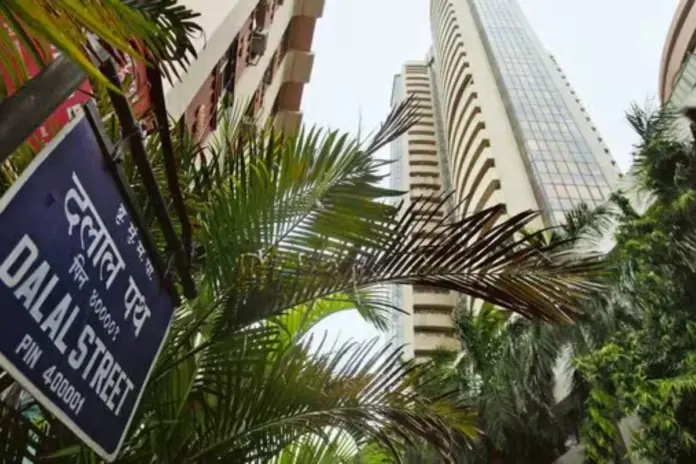
Dalal Street Bleeds! FPIs Pull Out Funds as West Asia Crisis Upends Indian Growth Story amid US Iran War, What’s In Store

US- Iran- War
Google

US Iran War: Indian equities extended their sell-off on Monday, September 28, 2026, with the Nifty 50 slipping below the 22,900 mark and the Sensex tumbling more than 900 points in morning trade, as renewed US-Iran tensions triggered a fresh wave of foreign investor selling.

The Numbers Behind The Sell-Off

Foreign Portfolio Investors (FPIs) sold shares worth Rs 5,353.22 crore on September 28 alone, even as Domestic Institutional Investors (DIIs) stepped in as net buyers to the tune of Rs 5,189.02 crore, cushioning some of the blow. FPIs have now sold a net Rs 29,255.58 crore in Indian equities in September so far, reversing the momentum from July and August, when foreign investors had turned net buyers with inflows of Rs 6,731.97 crore and Rs 17,366 crore respectively.

What Triggered The Latest Slide

The immediate trigger was President Donald Trump‘s rejection of an Iranian proposal linked to reopening the Strait of Hormuz, deepening uncertainty around a conflict that has run for nearly seven months. The development pushed crude oil prices higher and raised fresh concerns over prolonged supply disruptions, a critical worry for oil-importing India. 

A Pattern That’s Repeated All Year

This is not the first time West Asia tensions have rattled Dalal Street in 2026. When the conflict first erupted in late February, FPIs pulled out roughly Rs 52,704 crore in the first fortnight of March alone, contributing to a record monthly outflow of over Rs 1.14 lakh crore, the worst on record, as Brent crude surged past $100 a barrel and the rupee weakened past the 92-per-dollar mark. 

Why India Feels The Pinch More

US Iran War: Market experts note that India’s relative valuation premium over global benchmarks has narrowed sharply this year, while earnings growth has remained comparatively muted, making Indian equities less attractive next to markets like South Korea and Taiwan.