- Advertisement -
Home Blog Page 7

Punjab Govt takes possession of 10.50 acres for Sri Guru Ravidass Bani Adhyayan Centre: Harpal Singh Cheema

Harpal Singh Cheema

Punjab Finance Minister Harpal Singh Cheema on Thursday said the Chief Minister Bhagwant Singh Mann led Punjab Government has taken a decisive step towards establishing the Sri Guru Ravidass Bani Adhyayan Centre by securing physical possession of 10.50 acres of acquired land at villages Naugajja and Faridpur on Kartarpur Road, Jalandhar, reaffirming the government’s commitment to honouring the legacy of Guru Ravidass Ji in a concrete and time-bound manner.

The entire possession process was completed in the presence of Finance Minister Harpal Singh Cheema, MLA Balkar Singh, Chairman Punjab Agriculture Development Bank Pawan Teenu, Deputy Commissioner Dr. Himanshu Aggarwal and representatives of Dera Sachkhand Ballan.

Speaking on this occasion, Punjab Finance Minister Harpal Singh Cheema said, “It is a matter of immense pleasure that the Punjab Government has secured physical possession of 10.50 acres of land for the construction of a state-of-the-art Sri Guru Ravidass Bani Adhyayan Centre. This land will now be utilised to create a world-class institution dedicated to the teachings of Guru Ravidass Ji.”

He further announced, “The Punjab government will bear an expenditure of ₹55 lakh to shift the high-tension electricity wires from the site so that construction work can proceed smoothly and without delay.”

The Finance Minister informed, “With the registration of sale deeds completed earlier and physical possession now secured, the project has entered a crucial execution phase. The design and layout plan of the Centre is being prepared by experts in consultation with representatives of Dera Sachkhand Ballan. Tenders will be floated at the earliest so that construction begins without any further delay.”

Reiterating the Bhagwant Mann government’s resolve, Minister Harpal Singh Cheema stated, “The Sri Guru Ravidass Bani Adhyayan Centre will play a pivotal role in spreading the teachings of Guru Ravidass Ji across the world and in nurturing scholars who are dedicated to propagating his message. The Punjab Government remains firmly committed to preserving and promoting the spiritual and social legacy of Guru Ji.”

He also highlighted that the Punjab Government has already announced year-long celebrations to mark the 650th Parkash Purab of Sri Guru Ravidass Ji Maharaj. “A series of programmes will be organised across the state on a grand scale to honour the legacy of Sri Guru Ravidass Ji Maharaj and to promote communal harmony as laid down by Guru Ji. These celebrations will reflect the deep respect and reverence that the people of Punjab hold for his teachings,” he added.

Representatives of Dera Sachkhand Ballan thanked the Punjab Government for executing the project in a time-bound manner and for ensuring that the long-pending demand of the Sangat is being fulfilled with sincerity and speed.

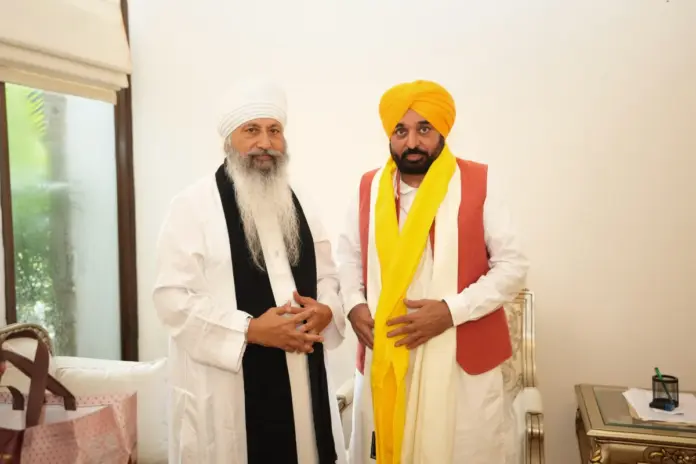
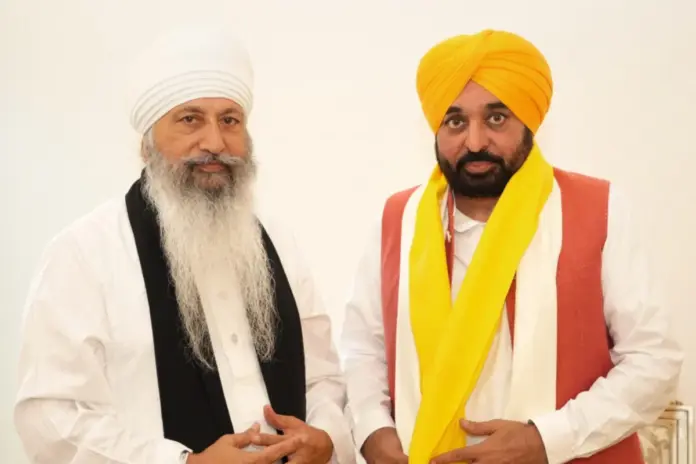
Later, Minister Harpal Singh Cheema, along with MLA Balkar Singh, Chairman Pawan Teenu, Senior AAP Leader Nitin Kohli and Rajwinder Kaur Thiara, paid obeisance at Dera Sachkhand Ballan and sought the blessings of Dera Chief Sant Niranjan Dass Ji.

MP News: Madhya Pradesh Presents ₹4.38 Lakh Crore Budget With Welfare and Infrastructure Push

Budget 2026
Image Credit: Google

MP News: The government of Madhya Pradesh has presented a ₹4.38 lakh crore budget for the financial year 2026–27, outlining an ambitious roadmap focused on welfare schemes, infrastructure expansion, agriculture, and inclusive development. The budget was tabled in the Assembly by Finance Minister Jagdish Devda.

MP News: No New Taxes, Revenue Surplus Target

The government announced that no new taxes will be imposed, while maintaining a revenue-surplus position. Officials stated that fiscal discipline and improved revenue management enabled higher allocations without additional tax burden.

Welfare Focus on Women, Farmers, Youth

A major portion of spending has been directed toward social welfare. Over ₹1.27 lakh crore has been earmarked for women-centric schemes, including expansion of the Ladli Behna assistance programme and support infrastructure such as working women’s hostels.

The state has also declared 2026 as the “Year of Farmers’ Welfare,” with large allocations for agriculture, irrigation support, solar pump subsidies, and rural livelihoods.

Infrastructure and Urban Development Push

Capital expenditure has been significantly increased, with more than ₹1 lakh crore allocated for roads, connectivity, urban transport, housing, and municipal services. Plans include expansion of urban transport systems, green mobility initiatives, and large-scale housing projects.

Social Sector and Nutrition Initiatives

New measures include nutrition programmes for schoolchildren, healthcare infrastructure expansion through public-private partnerships, and investments in education facilities.

Political Reactions

The ruling Bharatiya Janata Party described the budget as development-oriented and inclusive, highlighting its focus on rural growth and social security. Meanwhile, the opposition Indian National Congress criticised it, alleging that it masks concerns related to state debt and fiscal deficit.

Long-Term Planning Approach

The budget introduces a rolling financial planning approach designed to ensure continuity of major projects and long-term economic growth, signalling the state’s intention to balance welfare spending with infrastructure-led development.

Overall, the budget positions the state’s policy direction around social welfare expansion, agricultural support, and accelerated infrastructure investment while attempting to maintain fiscal stability.

Bhagwant Mann Highlights Revival of Traditional Sports at Rural Olympics 2026

bhagwant-mann

Punjab Chief Minister Bhagwant Mann announced that the state government is actively reviving traditional rural sports through the ongoing “Rural Olympics 2026” being held live from Kila Raipur. Describing Punjab as a “vibrant and joyful land,” he said the initiative aims to reconnect the younger generation with the state’s rich cultural and sporting heritage.

Bhagwant Mann Highlights Revival of Traditional Sports

According to the Chief Minister, the revival of these heritage games is not merely about entertainment but about preserving identity, tradition, and community spirit. He emphasized that such events celebrate rural strength, talent, and local pride while giving athletes from villages a platform to showcase their skills.

Officials said the Rural Olympics feature a variety of indigenous competitions

Officials said the Rural Olympics feature a variety of indigenous competitions, including traditional athletic contests and rural sports that once formed the backbone of Punjab’s village fairs. The administration believes these events help strengthen social bonds and promote physical fitness among youth.

Mann added that the government is committed to promoting Punjab’s cultural legacy alongside modern development, noting that heritage sports festivals play a vital role in keeping traditions alive in public memory. Authorities expect large participation and public enthusiasm throughout the multi-day celebration.

CM Yogi Adityanath Govt Expands Tap Water Access in Rural UP, Residents Report Relief

Yogi Adityanath

Under the leadership of CM Yogi Adityanath, the Uttar Pradesh government has intensified implementation of the Jal Jeevan Mission, aiming to provide clean drinking water to every household across the state. Officials say the initiative is transforming daily life in rural regions by reducing the burden of fetching water from distant sources.

CM Yogi Adityanath Govt Expands Tap Water Access in Rural UP

Residents in villages such as Didwara in Mahoba report that earlier they had to travel long distances for water, a task that largely fell on women and often caused physical strain, time loss, and health concerns. With piped water connections now reaching homes, villagers say their routine has become easier and safer.

Residents Report Relief

Satish Sahu, a local resident, shared that the availability of clean tap water has significantly improved living conditions and brought a sense of relief to families. According to state officials, such testimonials reflect the broader impact of the scheme across rural Uttar Pradesh, where thousands of households have recently been connected.

Government sources state that the program is part of a wider push to strengthen rural infrastructure, improve public health, and ensure basic amenities reach underserved communities. Authorities maintain that expanding safe drinking water access remains a priority, particularly in drought-prone and water-scarce districts.

Officials added that continued monitoring and local-level verification are being carried out to ensure supply quality, functionality of connections, and timely grievance redressal, with the administration aiming for full coverage in the coming phases.

Bullock cart races were halted during tenure of previous govts in Rural Olympics; we amended law & resumed them: CM Bhagwant Singh Mann

CM Bhagwant Mann

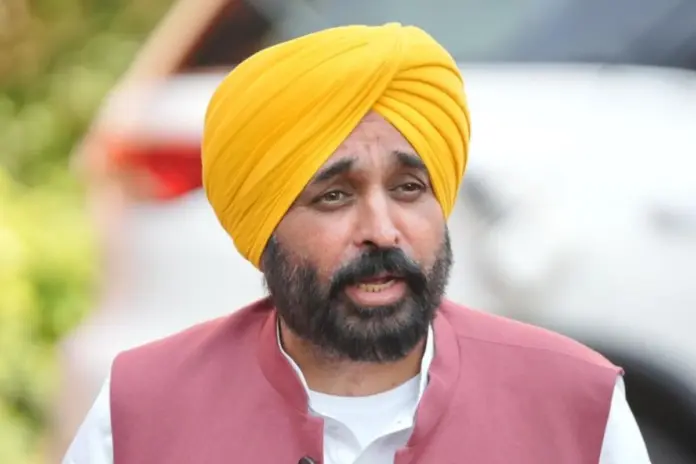
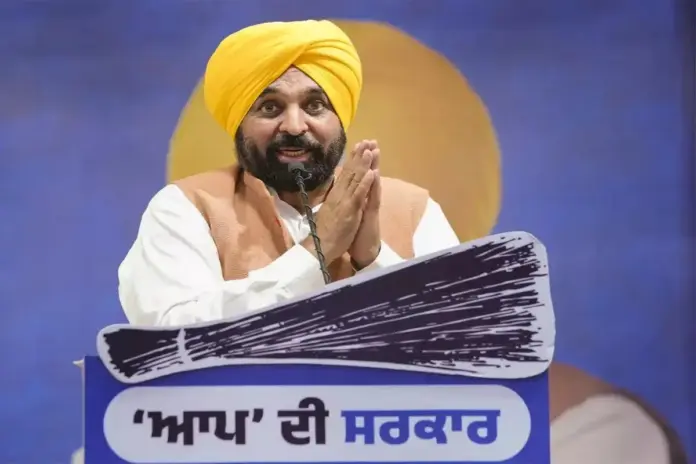
At the historic Kila Raipur Rural Olympics, Punjab Chief Minister Bhagwant Singh Mann on Thursday declared sports to be the most lethal weapon against the drug menace and announced that the sports budget will be enhanced in the forthcoming state Budget, underlining a determined push to channelise the energy of Punjab’s youth into constructive avenues. Stating that bullock cart races, halted during the tenure of previous governments, have now resumed after the law was amended, the Chief Minister said that when children sweat it out on the field and bring home medals, there will be no need for any anti-drug campaign.

Calling the revival of the Kila Raipur Games a reflection of Punjab’s rural pride and cultural strength, the Chief Minister highlighted the New Sports Policy 2023 as a step towards restoring the state’s sporting glory, with stadiums to be built in every village. He also announced that the eight-acre pond in Kila Raipur will be beautified and a modern library constructed, and said that the government is plugging leakages left by previous regimes, saving public money and spending it directly on the people.

Addressing a gathering during the Kila Raipur Sports Rural Olympics, CM Bhagwant Singh Mann said, “Sports are the most lethal weapon against the drug menace and the state government will enhance the budget for Sports in the ensuing budget for the state.” He said that the government is already promoting sports in a big way and added, “While the previous governments had neglected this important sector aimed at youth development, our government has duly focussed on it.” He said that sports are being promoted to channelise the unbounded energy of youth in a positive direction.

Highlighting structural reforms, the Chief Minister noted, “The New Sports Policy 2023 was launched to restore Punjab’s sporting glory and now the sports budget too will be enhanced further.” He added that the government has successfully organised three seasons of “Khedan Watan Punjab Diyan” in which three generations of a family are seen participating. “Due to strenuous efforts of the state government, Punjab today leads the country in sports and the captains of key Indian teams are from Punjab,” he said.

Reiterating the Punjab government’s war against drugs, CM Bhagwant Singh Mann said, “The Punjab government has unleashed a ‘Yudh Nashean Virudh’ in Punjab and sports are the biggest weapon in this fight.” He added that stadiums are being constructed in every village across Punjab and said it is a matter of immense pride and satisfaction that children are bringing glory to Punjab and the nation by bagging medals at national and international events.

Describing the Kila Raipur Games as a reflection of rural culture and heritage, CM Bhagwant Singh Mann said, “It is heartening that the Punjab government has revived this heritage.” Calling it a historic occasion, he said the games are popular globally and noted that there had been a long-standing demand for the resumption of bullock cart races.

He said, “We are witnessing historic moments. People have deep affection for their bulls and raise them like their own sons.” CM Bhagwant Singh Mann said that the Punjab Government is organizing the Rural Olympics 2026 for the third consecutive year at Grewal Stadium in Kila Raipur and added that bullock cart races, the main attraction of this fair, have resumed after 13 years.

Referring to legislative measures, CM Bhagwant Singh Mann said, “On July 11, 2025, the ‘Prevention of Cruelty to Animals (Punjab Amendment) Act, 2025’ was unanimously passed in the Punjab Vidhan Sabha, paving the way for the resumption of bullock cart races.” He added that after the law was passed, a grand event was organised by heritage sports enthusiasts on July 29, 2025, at village Mehma Singh Wala in Ludhiana. “Bullock cart races reflect our rural heritage and keep us connected to our culture and traditions. This is the revival of traditional sports,” he said.

Underscoring cultural continuity, CM Bhagwant Singh Mann said, “Bulls are an integral part of the cultural heritage of the state and the first Sikh Guru, Sri Guru Nanak Dev Ji, spent a long time farming with bulls at Kartarpur Sahib.” He added that when the law banning bull races was enforced, it dealt a major blow to heritage sports lovers and damaged the traditional sports legacy. “This sports fair is a living picture of Punjabi culture, where one can witness the vibrant spirit of Punjab through sports like wrestling, dancing, and singing,” he said.

Recalling the legacy associated with the event, Bhagwant Singh Mann said that legendary hockey players like Dhyan Chand, Balbir Singh, Udham Singh, Prithipal Singh, Ajitpal Singh and Surjit Singh have showcased their talent at this event. He added that top athletes from across the country including Milkha Singh, Makhhan Singh, Praduman Singh, Gurbachan Singh Randhawa and Parveen Kumar have also run on this track. Tracing its origins, he said the dream of building this stadium was envisioned in 1933 under the patronage of Sardar Inder Singh, when the Grewal Education Society and Grewal Sports Association were formed.

He said that the first wrestling matches were held here in 1933 and in 1942 chariot races began on this ground, which evolved into bullock cart races in 1950 after removing the canopies from the chariots. “Along with bullock cart races, athletics events also began in this stadium which inspired several generations to excel in sports,” he said, adding that in 1964 girls’ athletics events were started here, making it the first rural stadium to introduce girls’ athletics.

CM Bhagwant Singh Mann said that the games, which began in 1933, are now popularly known as the “Mini Olympics” or “Rural Olympics” and even the President of India has attended them in the past. Emphasising communal harmony and unity in villages, he praised the residents of Kila Raipur for promoting sports heritage with unity and urged all villages to rise above political differences and contribute to rural development.

Addressing the demands of villagers, Bhagwant Singh Mann announced a slew of development works. He said the village circular road will be widened at a cost of ₹1.5 crore, the village cooperative society will be revived, the village pond will be developed on the Seechewal Model at a cost of ₹95 lakh, the village library will be upgraded at a cost of ₹10 lakh and ₹2 crore will be spent on construction of a six-a-side hockey astroturf. He added that the Dehlon to Pakhowal road will be renovated at a cost of ₹30 crore and work will begin soon, and that floodlights will be installed in the stadium.

Urging people to enrol for the ₹10 lakh health insurance card under Mukh Mantri Sehat Yojna, CM Bhagwant Singh Mann said, “It is the state’s largest health reform program. Every family is now entitled to receive up to ₹10 lakh in cashless treatment.” He added that around 65 lakh families are being benefitted from this ambitious scheme aimed at the welfare of every section of society.

The Chief Minister further stated that the Punjab Government has written to the Central Government to name Halwara Airport after Kartar Singh Sarabha, who was martyred at the age of 19. “This will be a real tribute to the legendary hero who had sacrificed his life for emancipating the country from foreign imperialism,” he said, adding that the state government is committed to perpetuating the glorious legacy of these martyrs for coming generations.

On the occasion, senior AAP leader and Punjab Prabhari Manish Sisodia, Cabinet Ministers Hardeep Singh Mundian and Tarunpreet Singh Sond, and other dignitaries were present.

Iran US Tensions Trigger Global Evacuation Concerns, Donald Tusk Issues Urgent Warning for Citizens in Iran, War on Cards?

Iran-US-Tensions
google

Iran-US tensions are rising rapidly, creating a sense of fear and uncertainty worldwide. What was once a political disagreement is now turning into a serious global concern. Countries are closely watching the situation and taking steps to ensure the safety of their citizens. Recently, Donald Tusk urged Polish citizens in Iran to leave immediately. His warning has led people to question whether the situation could soon escalate into a war.

A Warning That Cannot Be Ignored

Iran US Tensions: Donald Tusk clearly advised citizens to exit Iran without delay. He mentioned that in a few hours, evacuation may not even be possible. This shows how serious the situation has become. Such urgent warnings are usually given only when there is a high risk of sudden conflict.

Understanding the Rising Tensions

The conflict between Iran and the United States has been building for years. Issues like nuclear programs, sanctions, and regional power struggles have increased tensions. Now, recent developments and military movements have made the situation more sensitive and unpredictable.

Why Is the World Getting Concerned?

When governments ask their citizens to leave a country, it signals danger. It means there is a risk of conflict, travel restrictions, or sudden shutdown of routes. This creates panic not just locally but globally, as people fear what might happen next.

War on Cards or Just a Warning Phase

There is no official announcement of war yet. However, the signs of escalation are clearly visible. Military presence is increasing, and leaders are issuing strong warnings. While diplomacy is still possible, the risk of conflict cannot be ignored.

Possible Global Impact

If the situation turns into a war, it will affect the whole world. Fuel prices may rise, and global markets could become unstable. Trade routes may be disrupted, and many countries could face economic challenges.

SRM AP hosted Seminar on The Political Economy of Cash Transfers in India

SRM University AP

The Department of Economics, Easwari School of Liberal Arts, organised a seminar titled “Cash Transfers and the Politics of Welfare: Rethinking Social Protection in India.” The session brought together three eminent scholars and policy practitioners namely, Dr Dipa Sinha, Associate Professor at the Centre for the Study of the Indian Economy, Azim Premji University; Prof. Ramakumar R, Professor at the Centre for Study of Developing Economies, School of Development Studies, Tata Institute of Social Sciences, Mumbai; and Mr Akshaya Limal, Senior Consultant (Nutrition), UNICEF India, Odisha. The seminar provided a rich platform for critical engagement and scholarly deliberation on the evolving landscape of social protection in India.

Dr Dipa Sinha spoke on the politics underpinning cash transfer programmes, helping participants conceptualise their expansion within India’s welfare architecture. She examined both conditional and unconditional cash transfers, particularly those targeted at women, and discussed their increasing prominence during electoral cycles. Referring to schemes such as Subhadra Yojana (Odisha), Stree Suraksha (Kerala), Kalaignar Magalir Urimai Thogai Thittam (Tamil Nadu), and Lakshmir Bhandar (West Bengal), she analysed their design, scope, and political economy. She emphasised that while these schemes are often associated with particular parties or states, their adoption reflects a broader, cross-party consensus on direct income support. Drawing parallels with Latin American experiences, she situated India’s welfare shifts within a global context. At the same time, she raised important concerns regarding fiscal prioritisation, noting that state-level cash schemes sometimes assume greater visibility than national programmes. She concluded by posing a critical question to the audience: can such transfers substitute for sustainable livelihoods? In this context, she briefly introduced debates around Universal Basic Income (UBI) as a conceptual reference point.

Mr Akshaya Limal examined the interplay between cash, in-kind transfers, and welfare politics in Odisha, drawing from his extensive experience in public health and nutrition monitoring. He discussed programmes such as the Mamata Scheme and the Mukhyamantri Sampoorna Pushti Yojana (MSPY), highlighting their role in addressing maternal and child nutrition. His lecture emphasised the importance of monitoring systems, evidence-based design, and the integration of welfare schemes with broader public health objectives. He reflected on how implementation challenges, targeting mechanisms, and institutional capacity shape the effectiveness of both cash and in-kind modalities.

Prof. Ramakumar offered a critical assessment of contemporary welfare mechanisms, questioning whether cash transfers alone can meaningfully alleviate poverty in the long run. Tracing the intellectual origins of social protection to the Universal Health Coverage movements of the 1960s, when welfare was framed as a social right rather than a market instrument, he highlighted the shift in policy language toward cost efficiency and fiscal minimisation. He argued that cash transfers have become the most “visible” form of social assistance, often overshadowing the “invisible” yet foundational role of public services. This shift, he suggested, reflects a broader transformation in which welfare increasingly appears as an individual entitlement rather than a collective social commitment. He concluded by calling for a reassessment of the normative foundations of social policy, emphasising the strengthening of labour rights and the reaffirmation of welfare as a fundamental social right. The seminar thus fostered a rigorous and multidimensional debate on the economics, politics, and future trajectory of social protection in India.

Weather Update February 20 2026: IMD Predicts Umbrellas Out For Northeast Rajasthan And MP Residents! Uttarakhand Under Clouds And Snowfall Yet Again

Weather Update February 20 2026
Image Credit: Google

Weather Update February 20 2026: The India Meteorological Department (IMD) has predicted that several parts of Western Uttar Pradesh, Uttarakhand, Delhi NCR, Rajasthan and Madhya Pradesh are likely to experience moderate to heavy rainfall.

Weather Update February 20 2026-Uttar Pradesh Weather Update

Modinagar, Hardoi, Fatehpur, Raebareli, Orai, Sultanpur, Hapur, Firozabad, Jhansi, Muzaffarnagar, Ayodhya, Mathura, Shahjahanpur, Rampur, Etawah and Sitapur are likely to experience rainy showers during early morning hours; stable and dry weather would stay prevalent in late afternoon.

Punjab Weather Update

Faridkot, Fatehgarh Sahib, Rupnagar, SAS Nagar, Kapurthala, Patiala, Bathinda, Mohali, Firozpur, Pathankot, Hoshiarpur, Gurdaspur, Malerkotla, Ludhiana, Amritsar and Jalandhar are likely to experience little to moderate rainfall during early morning and late evening/night hours. Otherwise, the weather is likely to stay pleasant throughout the day.

Uttarakhand Weather Update

Jagjitpur, Mohanpur Mohammadpur, Natthanpur, Mehuwala Mafi, Sunhaira, Fatehpur Range, Jivangarh, Bandia, Haridwar, Roorkee, Haldwani, Rudrapur, Kashipur, Rishikesh, Manglaur, Kotdwar, Pithoragarh, Champawat, Bageshwar, Raipur, Mukhani, Umru Khurd, Dhalwala, Rawli Mahdud, Bandia and Shafipur may experience a drop in maximum temperatures though rainfall and snowfall are expected in early morning and late night hours.

Rajasthan Weather Update

Ajmer, Udaipur, Bhilwara, Alwar, Bharatpur, Sri Ganganagar, Sikar, Baran, Bundi, Chittorgarh, Churu, Dausa, Deeg, Didwana, Jaisalmer, Jhalawar, Jhunjhunu, Jaipur, Jodhpur, Kota and Bikaner are likely to witness moderate to heavy rain showers.

Haryana Weather Update

Gurugram, Panipat, Ambala, Yamunanagar, Rohtak, Hisar, Karnal, Sonipat, Narwana, Pehowa, Safidon, Samalkha, Shahbad, Tohana and Radaur are likely to witness heavy rain showers in most places. Panchkula, Bhiwani, Sirsa, Rewari, Bahadurgarh, Jind and Kaithal are also likely to experience the same set of weather conditions till February 21.

Madhya Pradesh Weather Update

Bhind, Khargone, Hoshangabad, Itarsi, Sehore, Betul, Seoni, Murwara, Singrauli, Katni, Datia, Vidisha, Chhindwara, Neemuch, Shivpuri, Damoh, Morena, Rewa and Guna are likely to experience a pleasant day. Gwalior, Ujjain, Sagar, Dewas, Satna, Ratlam and Burhanpur are also likely to enjoy the same set of weather conditions.

Alcohol Effects Nobody Talks About: Liver Damage, Sleep Loss, Cancer Risk And More, Mumbai Doctor Explains – Check Video!

Alcohol Effects - Liver Damage, Sleep Loss, Cancer Risk and more
Photo Credit: X

Alcohol Effects: Many people believe that moderate or occasional drinking is harmless. A drink on weekends or once a month is often seen as safe. But according to Mumbai orthopaedic surgeon and sports doctor Manan Vora, even occasional alcohol consumption can have hidden effects on your body that most people overlook.

In a video shared on Instagram, Dr Vora breaks down how alcohol impacts the liver, metabolism, sleep and overall health – even if you think you’re drinking responsibly. His explanation is a wake-up call for anyone who believes moderation is risk-free.

Alcohol Effects On Liver, Sleep And Metabolism

Dr Vora shared, “Bro, I only drink occasionally. But how occasional is occasional? Once a month? Your body manages. Once a week? Liver starts complaining. 3–5 times a week? Hormones go haywire. Daily? You’re gambling with your life. Alcohol doesn’t just hit your head. It hits your sleep, gut, metabolism, and future.”

He explained the progressive effects in simple terms:

  • Once a month – The liver handles the load, but metabolism is slightly affected. Sleep may be mildly disturbed.
  • Once a week – Liver stress begins. Sleep quality drops, and subtle dehydration can occur.
  • 3–5 times a week – Cortisol spikes, insulin resistance develops, metabolism slows and sleep is seriously disturbed.
  • Daily drinking – Risks escalate to liver damage, potential liver failure, metabolic breakdown, and a higher risk of cancer.

Dr Vora emphasises that even “occasional” drinking can set off a chain reaction in the body, impacting hormones, digestion, and overall health over time.

Why They Are Often Underestimated

Many adults think that drinking socially or occasionally is harmless. However, the reality is different:

  1. Sleep disruption – Alcohol may help you fall asleep initially, but it reduces restorative sleep cycles.
  2. Hormonal imbalance – Drinking frequently disrupts cortisol and insulin, affecting weight, mood and energy.
  3. Metabolic slowdown – Regular alcohol intake slows metabolism, making it harder to process fats and sugars.
  4. Long-term risks – Prolonged stress on the liver increases the likelihood of liver disease, failure and even cancer.

Dr Vora concludes by urging viewers to reconsider their drinking habits. He says, “Send this to someone who thinks drinking alcohol in moderation is okay.”

Even occasional alcohol can quietly harm your body. Understanding alcohol effects early can help you make better choices and protect your liver, sleep, and long-term health.

High Uric Acid: What to Eat, What to Ditch? Top Foods from AIIMS Dietician’s Playbook

High Uric Acid
Image Credit: Google

High Uric Acid: Millions in India unknowingly suffer from high uric acid before the signs and symptoms of this health condition start to worsen. Commonly linked to rich diets that are heavy on purines, it is now a common reality in urban areas like Delhi NCR, Bengaluru, Mumbai, Pune and Hyderabad, because of dehydration and processed foods.

AIIMS-certified dietician Sonia Narang recommends the best foods, flours and vegetables to manage high levels of uric acid among Indians.

Understanding High Levels Of Uric Acid

Uric Acid forms when purines (colourless crystalline compounds such as adenine and guanine with basic properties lead to the formation of high levels of uric acid) from food break down, accumulating in blood and crystallizing in joints.

Diets rich in seafood, red meat and certain pulses such as Chana (Gram/Chickpeas), Masoor Dal (Red Lentils), Lobia (Black-eyed peas), Toor Dal (Pigeon Peas) and Rajma (Kidney Beans) could exaggerate the formation of uric acid in the dal when excessively consumed. Genetics, obesity and alcohol could also result in high levels of uric acid.

It is highly recommended that you should limit the quantity of purines to less than 150mg every day, balance meals with anti-inflammatory foods and hydrate with 2-4 litres of water every day.

What To Eat?

Ideally, you should consume fresh vegetables such as gourds (lauki, tinda), pumpkin, okra (bhindi), potatoes, carrots, bell peppers, cabbage and cucumbers. Fruits such as bananas, pineapple, apples, strawberries and oranges could also be excellent choices. Whole wheat in limits, Millet rotis (jowar, bajra, ragi) and brown rice khichdi could also be excellent choices. Include poha with seasonal vegetables, buttermilk, almonds, brown rice khichdi, carrot-gourd sabzi, paneer, oats upma, salad, oranges and apples to your diet.

Disclaimer: This content, including advice, provides general information only. It is not a substitute for a qualified medical opinion in any way. The methods and claims mentioned in this article should be considered as suggestions only; DNP India neither confirms nor denies them. Always consult a doctor before following any such suggestions/treatments/medications/diets.

Birth Control Pills: From Estrogen And Progesterone Balancing To Hormone Regulation And PCOS Management, FRM Infertility Consultant Shares Benefits

Birth Control Pills
Image Credit: Google

Birth Control Pills: It may come as a surprise to you but birth control pills are more than just pregnancy stoppers. These tiny tablets could be used to prevent acne, regulate estrogen and progesterone production and help manage polycystic ovary syndrome (PCOS). However, they are not a magic fix and surely far from one-size-fits-all.

The Science Behind Birth Control Pills-How They Work?

Oral Contraceptives or birth control pills come in two different types: progestin-only pills (mini pills) and combined pills (with progestin and estrogen). These pills primarily prevent ovulation, thicken the cervical mucus to prevent sperm and thin the uterine’s lining to deter implantation.

Surprising Benefits: More Than Just Contraception

Birth Control Pills are a highly effective way for girls and women struggling with polycystic ovary syndrome (PCOS). This is primarily because these pills helps in balancing the levels of estrogen and progesterone while also curbing irregular menstrual cycles and excess androgens levels in the body.

In addition to these advantages, birth control pills demonstrate unmatched efficacy in shrinking oil glands and reducing testosterone (the primary male sex hormone that is also present in small quantities in women) levels in the body. These pills are also useful to treat dysmenorrhea or painful periods that affect almost 50-90 percent of women. They also reduce the production of prostaglandin that slashes cramps by as much as 8 percent.

Birth Control Pills are also useful in cutting down the risk of ovarian cysts by as much as 50 percent, which reduces the risks of lower endometrial and ovarian cancer by 30-50 percent and even the symptoms of premenstrual dysphoric disorder (PMDD).

Disclaimer: This content, including advice, provides general information only. It is not a substitute for a qualified medical opinion in any way. The methods and claims mentioned in this article should be considered as suggestions only; DNP India neither confirms nor denies them. Always consult a doctor before following any such suggestions/treatments/medications/diets.

Is Golgappa Water Safe? Doctor Flags Hidden Virus Risk In Your Favourite Snack

Is Golgappa Water Safe - Doctor Warns of hidden virus
Photo Credit: Google Images

Is Golgappa Water Safe: Golgappas are more than just a street snack. For many people, they are a craving, a weekend treat, and a burst of flavour in one bite. The spicy, tangy water is what makes them irresistible. But have you ever paused to wonder what actually goes into that pani? A recent warning from a doctor will spark concern among street food lovers.

In a recent Instagram video, AIIMS doctor Priyanka Sehrawat shared an important health message. Her video answers the question – “Is golgappa water safe?”

What Did The Doctor Say?

According to Dr Priyanka Sehrawat, the water used in golgappas is often not as clean as we assume. She explained that:

  • Golgappa water is frequently not hygienic
  • It may be contaminated with bacteria and viruses
  • One concerning virus linked to contaminated food and water is Hepatitis A

Hepatitis A is widely known for causing jaundice. It spreads mainly through unsafe food and water. Once inside the body, the virus infects the gut and can lead to liver-related symptoms.

The doctor further highlighted an important difference between children and adults:

  • In children: Hepatitis A is usually self-limiting. It often resolves without major complications.
  • In adults: The infection can sometimes become serious. It may present as progressive jaundice or, in rare cases, even acute liver failure.

This does not mean every plate of golgappas is dangerous. However, it does mean hygiene should never be ignored.

Is Golgappa Water Safe? Key Precautions To Remember

Food safety experts often stress that street food hygiene varies greatly. Dr Sehrawat’s warning serves as a reminder to be cautious rather than fearful.

Here are some practical precautions you can follow:

  1. Choose vendors carefully
    Prefer stalls that look clean and maintain good hygiene.
  2. Watch how the water is handled
    Is it stored properly? Is the vendor using clean utensils?
  3. Avoid eating from visibly unhygienic places
    Contaminated water is a major risk factor for infections.
  4. Listen to your body
    Seek medical help if you notice symptoms such as:
    • Stomach pain
    • Loose motions
    • Fever
    • Yellowing of the eyes
    • Dark yellow urine

Dr Sehrawat advised that such symptoms should not be ignored. Consulting a doctor early can prevent complications.

Golgappas will always remain a favourite. But enjoying them safely is just as important as enjoying their taste. A little awareness and smarter choices can help you protect your health while still indulging in your favourite snack.

Rajasthan Viral Video: Anything For Reel Making? Cigarette, Beer And Young Child Coughing! Netizens Stand For Child Safety, Demand Justice!

Rajasthan Viral Video
Image Credit: Google

Rajasthan Viral Video: In a shocking video that has gone viral, a village biker could be seen giving a young boy a cigarette to smoke and beer to drink. In a shocking turn of events, the adult biker could be seen guiding the young child to take cigarette puffs and beer sips while the incident is getting recorded.

In the video, the child could be seen coughing after smoking the cigarette and sipping from the beer.

Rajasthan Viral Video-Punishable Offence Under Bharatiya Nyaya Sanhita

The registration number of the bike in the video could be clearly sign (RJ25 SS 8392). The video was shared on X by Divya Tandon who tagged @PoliceRajasthan to take immediate and strict action. Divya reminds social media users that offering tobacco and alchol to minors in India is a punishable offence under the Bharatiya Nyaya Sanhita (BNS). She also emphasized on the fact that young children and toddlers should never be treated as props for creating reels and social media content.

Divya commented that strict legal action must be taken if this video is verified. She added that protecting minors is non-negotiable.

Under the Juvenile Justice (Care and Protection of Children) Act, offering alcohol to minors in India is considered a severe offense that is punishable under the law. Offenders could face rigorous imprisonment of up to 7 years along with a fine of ₹1 lakh.

Social Media Reactions

A social media user commented, “In the name of “reels” and quick fame, some people are crossing all limits”. Another user commented, “A child is not a toy. A child is not a prop for likes and views.” Netizens blasted the man saying, “For the purpose of making reels , people have become mad – both educated and uneducated.” Another commented, “Minors’ safety comes first. Hoping authorities investigate quickly and hold the responsible person accountable.”

Jaipur Metro: Jalmahal And Kanota Metro Expansion In Pipeline! Sitapura And Todi Mod DPR Approved, How Would This Benefit Commuters?

Jaipur Metro
Image Credit: Google

Jaipur Metro: The Bhajan Lal Sarkar led Rajasthan government has announced that the possibility of metro expansion from Transport Nagar to Kanota and Badi Chaupar to Jal Mahal via Subhash Chowk is presently being assessed.

Jaipur Metro- Detailed Project Report Soon

The government made this announcement while replying to a query from Tika Ram Jully, leader of the opposition. It was also communicated that a detailed project report (DPR) would soon be prepared upon feasibility of the project.

It was also communicated by the Rajasthan government that the phase would include a proposed metro route from Pralhadpura in the Sitapura Industrial Area to Ambabari in the Todi Mod region. The Ministry of Housing and Urban Affairs has already approved its DPR and the funds would be shared in a ratio of 50 percent each by the state and central governments.

Key Benefits For Jaipur & Rajasthan Passengers

The proposed Prahladpura (Sitapura Industrial Area)–Ambabari/Todi Mod corridor would help in connecting an important institutional and industrial belt to the region’s northern residential areas. This would offer lakhs of students, workers and other staff a predictable, economical and faster commute instead of relying on crowded buses and two-wheelers.

It would help in improving regional connectivity while cutting down travel costs, time and hassles while also reducing pollution and congestion. In addition to these advantages, the corridor would help in the creation of new job, economic and educational opportunities for people living and working along these corridors. The decongestion of Tonk Road, Sikar Road and Walled City would ease jams and shorten surface travel time for everyone, including non‑metro users.

The corridor would also offer a direct, comfortable way to tourists and local visitor to reach the Walled City markets and Jal Mahal area, cutting dependence on cabs and autos. Metro connectivity typically raises land‑use intensity around stations, encouraging offices, retail, PG/hostel accommodation and services, which can create new jobs and amenities for nearby residents in areas like Sitapura, Ambabari/ Vishwakarma Industrial Area side and extended northern stretches.

Toxic Teaser To Drop Tomorrow At THIS Time, Yash Mocked Over New Poster – ‘Rocky Bhai Kitna Daru Peete Ho…’

Toxic Teaser Release Date and new poster of Yash
Photo Credit: X

Toxic Teaser: Yash’s upcoming film Toxic: A Fairytale for Grown-Ups is once again drawing attention online. Since the actor’s birthday glimpse earlier this year, the film has sparked steady conversation. While some viewers liked its dark visual style, others questioned its tone.

Now, the makers have announced the next key update. 

Toxic Teaser Release Confirmed With New Poster

The Toxic teaser will be released on February 20 at 9.35 am. Along with the announcement, the team shared a new poster featuring Yash. In the image, the actor is seen drinking directly from a bottle, highlighting the film’s gritty mood.

Soon after the poster dropped, social media reactions began pouring in. Have a look at some user comments on Reddit below:

“Rocky Bhai Kitna Daaru Peete Ho.”

“Would be funny if Dhurandhar team releases their teaser at 9 AM.”

“Kal pata chalega…if it’s truly a clash or a one-sided win.”

“Another Durex ad is coming tomorrow.”

“Bro shifted from KGF’s ship to drinking in snow.”

“It will be a disaster. Looks like a tapori version of Bombay Velvet..”

The teaser announcement has also reignited discussions about the film’s reported clash with Dhurandhar: The Revenge, starring Ranveer Singh. Both films are scheduled to arrive around the same time, leading to comparisons among fans.

Meanwhile, new story details about Toxic have surfaced. The film’s UAE distributor, Phars Film, recently listed the project on its website. The synopsis reveals that the story is set in Goa between the early 1940s and the 1970s.

It reads: “Set in Goa between the early 1940s and the 1970s, Toxic is a savage action-thriller saga that plunges into the rot festering beneath paradise. In this coastal land of fading colonial shadows and rising crime syndicates, a man forges his empire through blood, fear, and betrayal.”

The description suggests a period gangster drama with darker themes.

“Power is not granted – it is seized, and it always demands repayment. As smuggling routes become battlegrounds and loyalties unravel into suspicion, paranoia turns into a means of survival. In the end, the only force more powerful than the consequences of his choices is the abyss within him.”

The listing also mentions an “18 TBC” rating, indicating mature content, though final certification is pending.

About The Film: Cast And Controversies

Directed by Geetu Mohandas, Toxic marks Yash’s 19th film. It is his first major release after the highly successful KGF franchise. The film is produced by Venkat K Narayana and Yash under KVN Productions and Monster Mind Creations.

The cast includes Kiara Advani, Nayanthara, Huma Qureshi, Tara Sutaria and Rukmini Vasanth. The film began production in 2024 and was shot simultaneously in Kannada and English. It will also be released in Hindi and other South Indian languages.

Earlier promotional content had already created controversy. The teaser released on Yash’s birthday on January 8 triggered debate over a scene many viewers found explicit. Following this, the women’s wing of the Aam Aadmi Party reportedly filed a complaint with the Karnataka State Commission for Women.

In February, another complaint was said to have been lodged with the CBFC by the National Christian Federation. The organisation raised objections over certain visuals. Despite these issues, the promotional campaign has continued.