

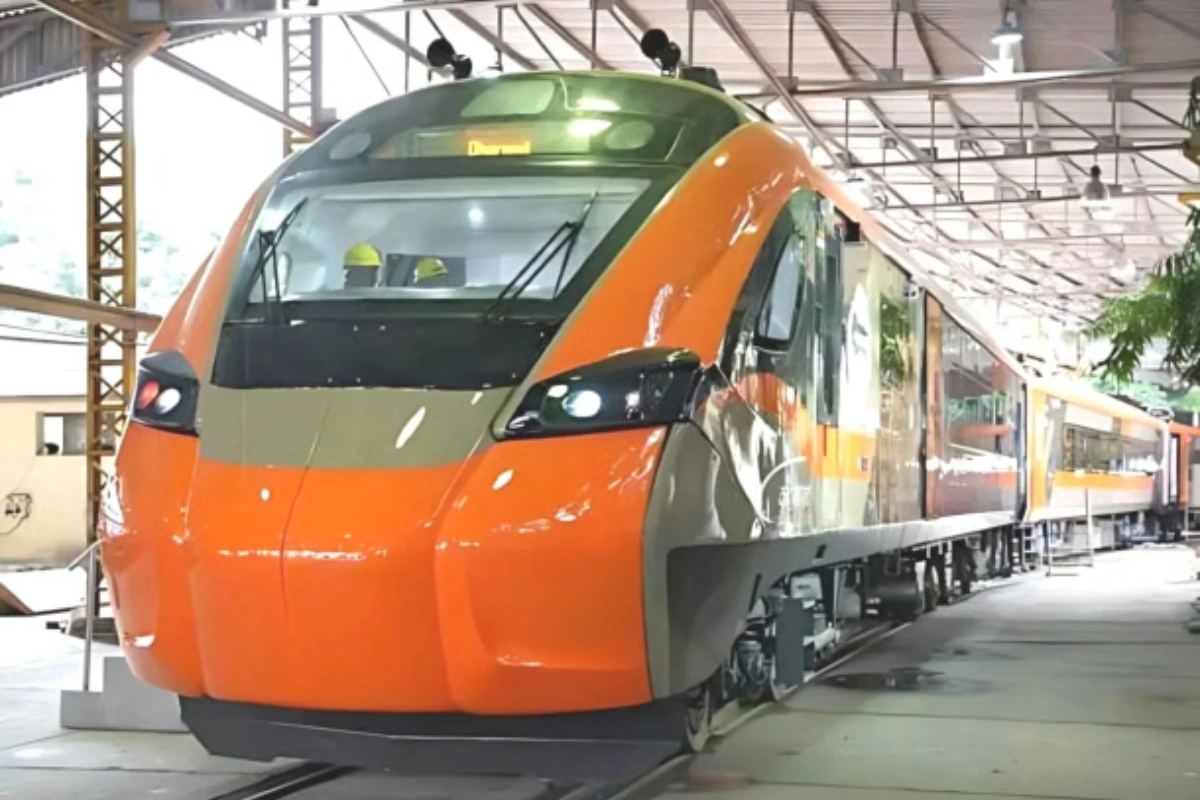
Vande Bharat: The Ministry of Railways has announced that the first maintenance depot for Vande Bharat sleeper trains would be developed at Bhagat Ki Kothi in Rajasthan.
The facility would fall under North Western Railway (NWR) zone’s administrative jurisdiction and would be developed at an estimated cost of Rs. 360 crore in a phased manner.
Vande Bharat-Announcement By North Western Railway
The North Western Railway announced that maintenance facilities for the Vande Bharat sleeper trains and other trains would be commissioned at the Bhagat Ki Kothi depot.
NWR also remarked that a modern and specialized facility for the maintenance of Vande Bharat sleeper trains would be designed, constructed and managed via a seamless and strategic collaboration involving Kinet Railway Solutions (Russia), Rail Vikas Nigam Limited (RVNL) and Indian Railways (North Western Railway).
Maintenance Depot At Rajasthan
The Bhagat Ki Kothi depot includes a track of 600 meters for supporting maintenance of 24-coach trains. A covered area of approximately 1200 square metres under phase 1 would be developed. It would characterize a covered inspection bay with 3 pit lines along with a store, an office and a training centre at an approximate cost of Rs. 167 crore. The Phase 1 stage is likely to be covered by June 2026.
DON'T MISS
On the other hand, phase 2 would likely see the development of a 200 metres covered shed that would feature pit lines equipped with OHE (Overhead Equipment) facilities. Phase two will introduce advanced workshops, training centres and simulator-based learning facilities for railway personnel.
Why Jodhpur-Economic Ripple Effects
The city serves as an important node in the North Western Railway zone and is strategically positioned along major corridors connecting Delhi, Gujarat and western India. The presence of an existing locomotive shed and established railway infrastructure at Bhagat Ki Kothi makes it an ideal base for expansion.
Additionally, the Delhi-Jodhpur-Ahmedabad corridor is expected to see a surge in premium overnight travel demand. By placing a maintenance hub here, Indian Railways reduces operational inefficiencies such as long-distance empty train movements for servicing, ultimately improving turnaround time and punctuality.
The facility will generate direct employment for engineers, technicians and operational staff, along with indirect jobs in logistics, cleaning, catering and supply chains. From spare parts suppliers to maintenance contractors, a wide ecosystem of small and medium enterprises is likely to emerge around the depot. This could stimulate industrial activity in and around Jodhpur, particularly in engineering and manufacturing services.


